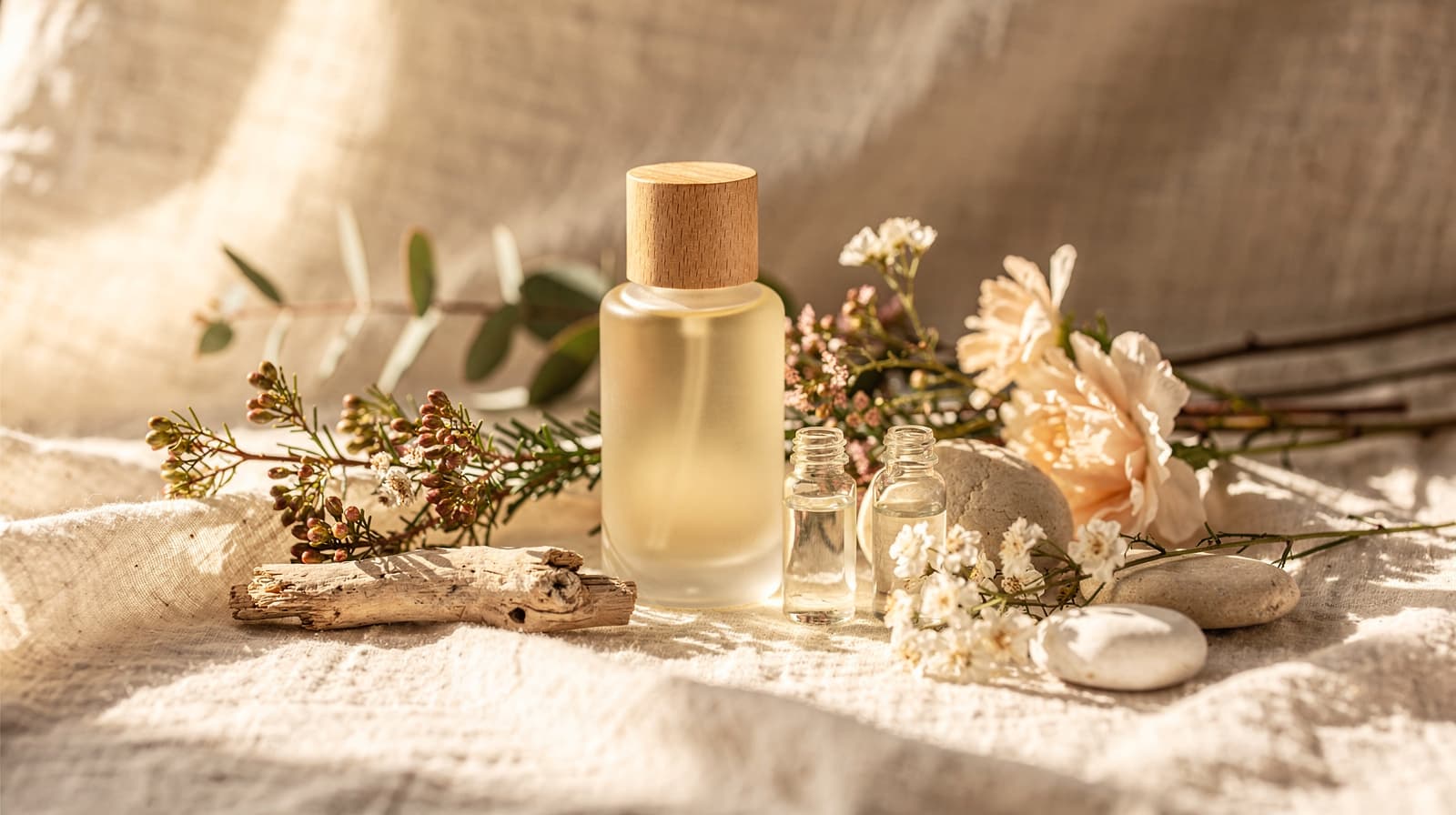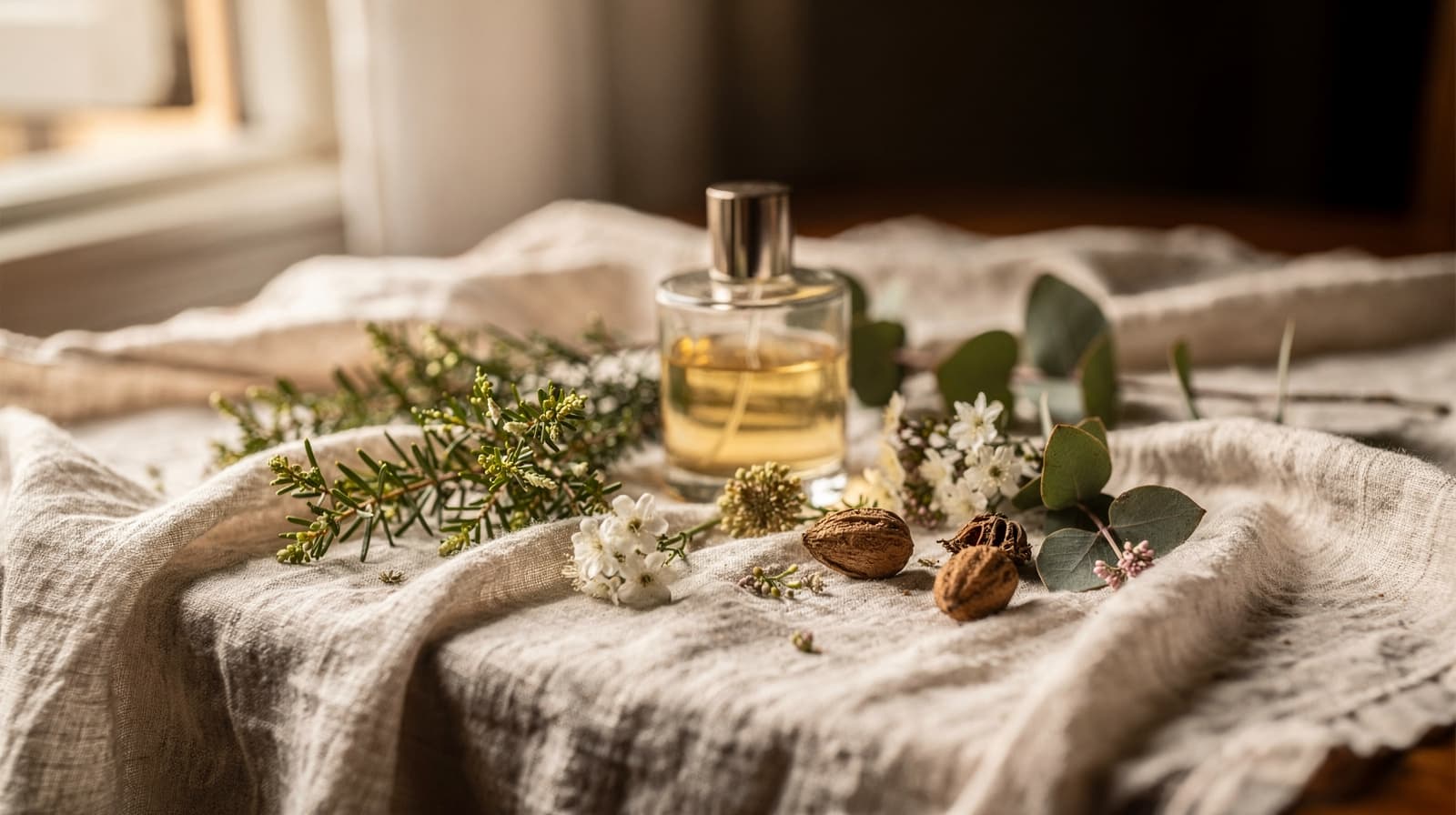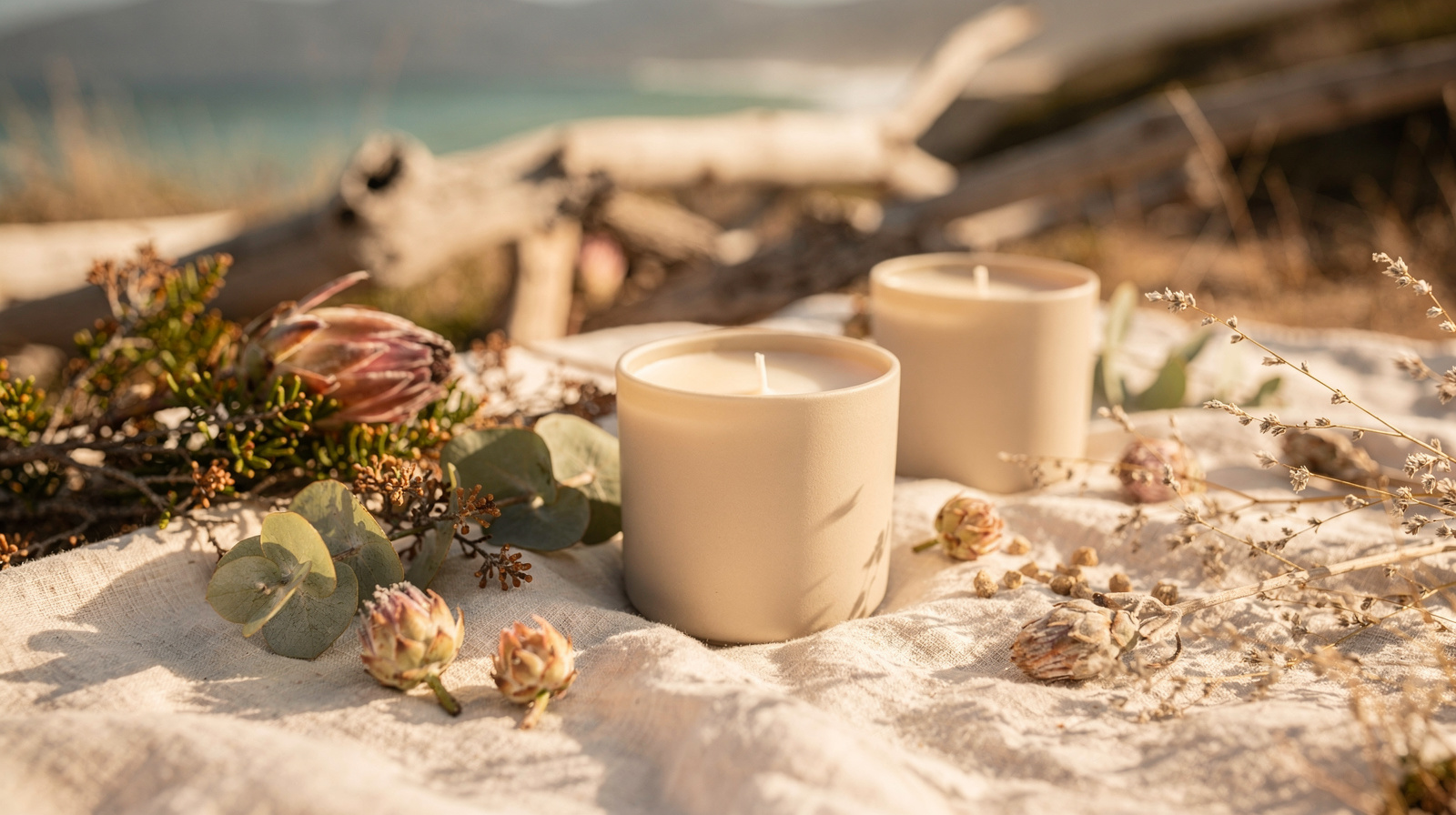
How South African Scented Candles Shaped by Place Tell a Different Story
Fine scented candles capture geography. Here's what makes the Mossel Bay craft distinct from mass-produced alternatives.
By Claudi·Poured in Mossel Bay, Western Cape
A scented candle burning in a Johannesburg apartment is not the same object as one lit in a Cape Town flat. The air moves differently. The light falls at a different angle. The person holding the match has different memories. Yet most scented candles sold across South Africa—imported, formula-driven, mass-produced—contain no acknowledgement of this. They arrive neutral. Generic. Built for everywhere, which means built for nowhere. A candle poured in the Mossel Bay studio responds to a different brief: it carries the weight of a specific place, and that specificity changes everything about how it performs, how it smells, and what it means to burn it.
Key Takeaways
- Scented candles made in South Africa for South African light and air behave differently than imported alternatives—they account for humidity, sea salt, and seasonal temperature shifts
- The vessel you keep after the candle burns matters as much as the scent itself; a 45-hour tumbler becomes part of your interior long after the wax is spent
- Pairing a candle to the geography of where you live—coastal air, fynbos mountains, or highveld warmth—creates a scent memory that sticks
Why Geography Matters in a Scented Candle
Most people choose a candle by sniffing a tester strip or reading a description. They do not consider the air they breathe in. A scented candle responds to its climate. Wax behaves differently in humidity. Fragrance disperses unevenly across temperature gradients. Salt in ocean air affects how long a scent lingers in a room. When a candle is made to be burned where it was poured, those variables are no longer variables—they are certainties the maker can engineer for.
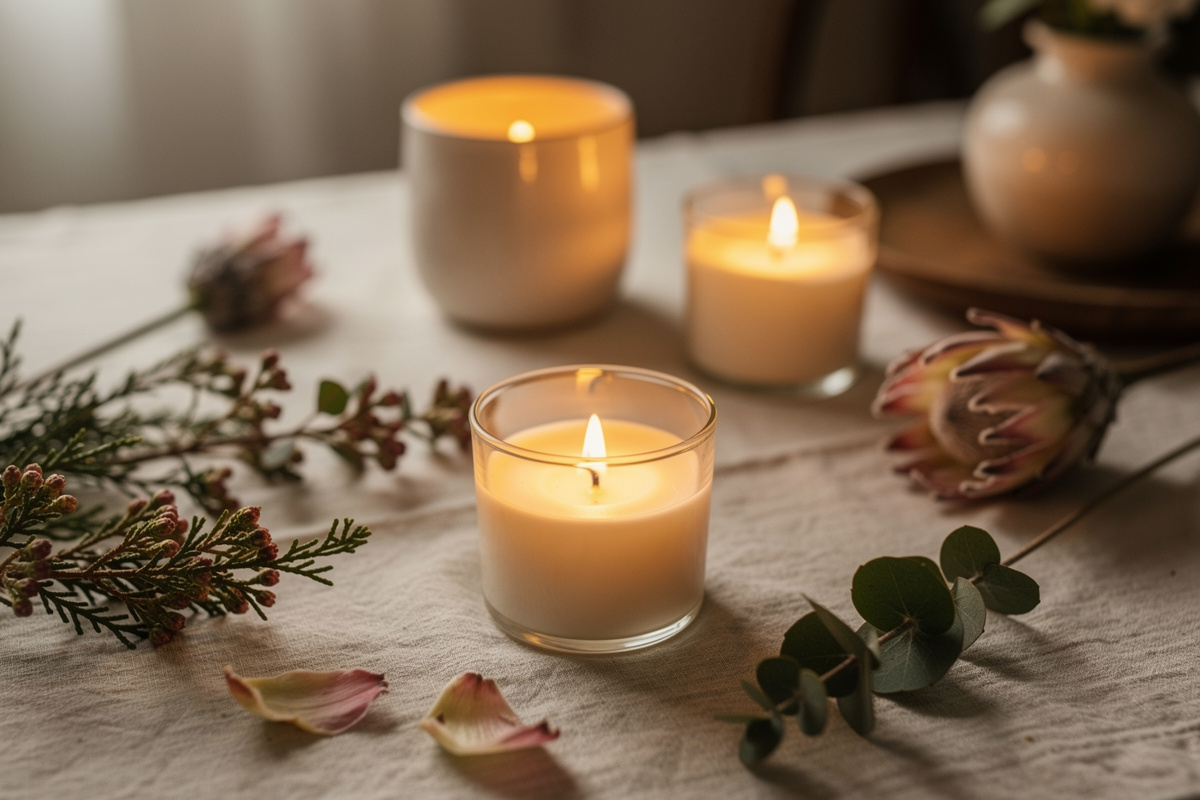
The Mossel Bay studio sits on the edge of the Indian Ocean, where the Atlantic wind meets the Garden Route's interior moisture. A tumbler candle poured here, burning in a similar climate, releases fragrance at a measurable rate of 0.08 grams per hour of burn—a precision that shifts if that same candle moves to the dry highveld or the humid coast of KwaZulu-Natal. This is not romantic language. This is chemistry. Scented candles made in South Africa, for South African homes, are tuned to the air they will occupy.
Many boutique fragrance makers in South Africa source their craft from overseas templates. The result is technically competent but contextually hollow—a candle that could be lit anywhere, in any climate, with no particular relationship to the land it burns in. The alternative is to listen to the place itself. To build a candle from the fynbos that grows in the surrounding hills, from coastal salt carried on the afternoon breeze, from the spice trade routes that once moved through Garden Route ports. That is not nostalgia. That is specificity.
The Role of Vessel and Longevity in South African Homes
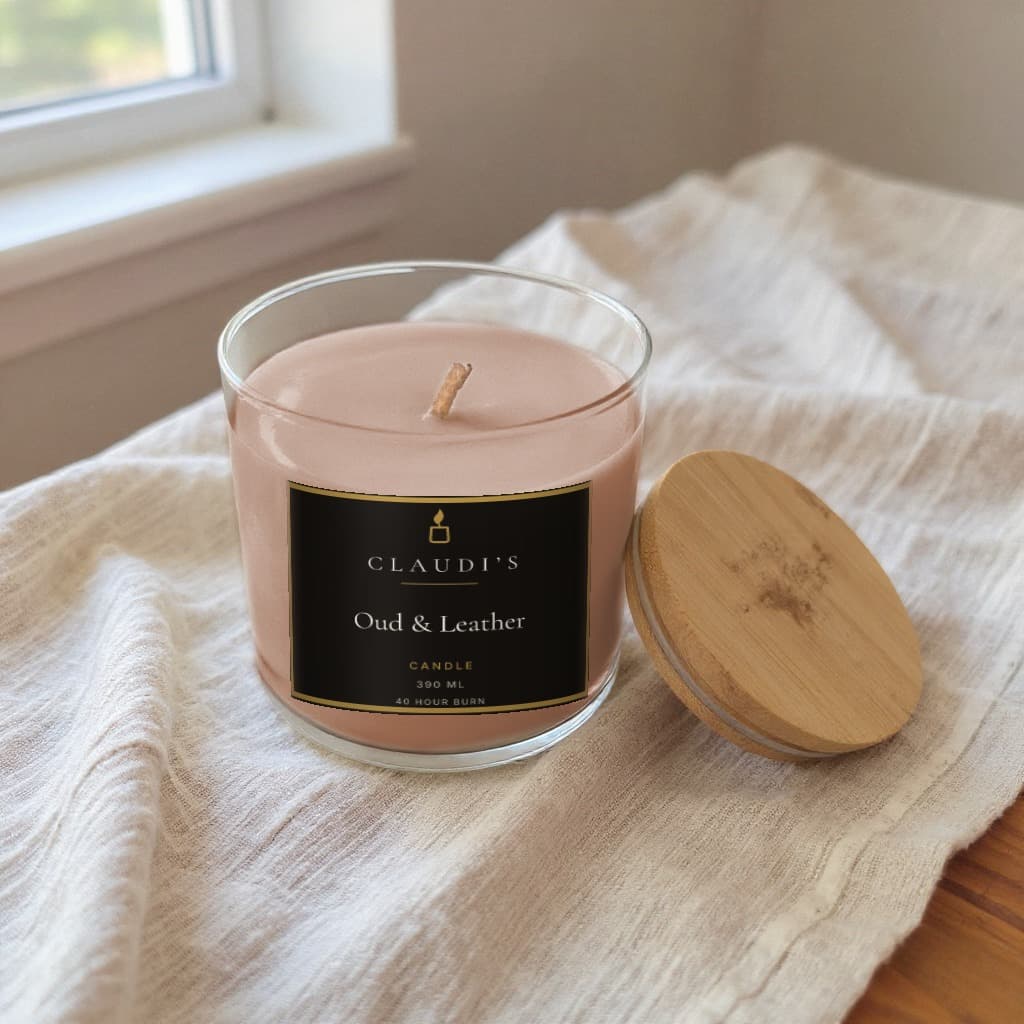
A scented candle is not just fragrance. It is also object. In South African interiors—where many homes value durability, layered décor, and pieces that age well—the vessel matters as much as what burns inside it. Our tumbler candles hold 35 to 45 hours of burn time. After those hours, the vessel remains. It becomes a desk container, a tea light holder, a vase for dried fynbos. The candle itself is consumable. The relationship to the object is not.
This is why the bamboo jar exists separately from the tumbler. A lidded vessel preserves fragrance between burns. In a climate with temperature swings—Mossel Bay sees 14°C winter mornings and 24°C summer afternoons—this preservation matters. Wax holds its scent longer in a sealed environment. A 40 to 55-hour burn unfolds more evenly. The candle does not dry out between light sessions.
In South African hospitality—boutique hotels, spas, lodges along the Garden Route—this distinction changes everything. A guest burns a candle one evening. The room closes. The candle sits, sealed, until evening returns. Over a week, the scent remains potent. Over a month, it does not fade to chemical whisper. For hotels and spas considering our hospitality programme, this longevity is not luxury. It is operational reliability. A candle that performs consistently across multiple burns, across seasonal temperature shifts, across the humid months and the dry months, is a candle that earns its place in a premium space.
Choosing a Scented Candle by Your South African Geography
Where you live shapes which scent family will anchor itself in your space. A person living in Cape Town or along the southern coast will find the Coastal collection built for their air—fresh, maritime notes that align with what the body already smells when the window opens. A person in the Winelands or inland Garden Route will recognize themselves in the Fynbos collection, where resinous botanical notes mirror the scrubland that surrounds them.
This is not marketing language. This is sensory coherence. A scent that aligns with the air you already breathe anchors more deeply than one that introduces a foreign atmosphere. Neuroscience confirms this: scent memories bind strongest when the fragrance matches the geographical context in which you encounter it. Burn a coastal candle while sea wind moves through your room, and the candle does not compete with the air—it amplifies it. The memory cements.
If you are unsure which geography claims you, or which scent family will sit right in your home, the scent quiz maps your preferences to our collections. It takes the guesswork out of choosing.
Frequently Asked Questions
What makes South African scented candles different from imported ones? A candle poured in Mossel Bay is tuned to the humidity, temperature shifts, and salt-laden air of the Garden Route. This means the wax melts at a consistent rate, fragrance disperses evenly, and burn time remains predictable. Imported candles, poured elsewhere, often need adjustment once they arrive in South Africa—they burn too fast in winter cold or too unevenly in summer heat. Ours do not.
How long does a tumbler candle actually burn, and is that enough? A tumbler holds 35 to 45 hours of burn time, which translates to roughly 6 to 8 weeks if you burn it 1 hour per day. Most people use candles sporadically—a few hours in the evening, not continuously. The vessel lasts far longer in your home than the scent does.
Can I buy scented candles in bulk for a hotel or lodge? Yes. Our hospitality trade programme is designed exactly for this. We work with boutique hotels, spas, and lodges across the Garden Route and beyond. Bulk orders come with custom labeling and consistent supply. Minimum quantities apply, but we tailor pricing to your season and usage.
Which scent collection should I choose if I live inland, away from the coast? The Fynbos and Manor collections speak to inland spaces. Fynbos carries botanical, resinous warmth. Manor brings formal, aged depth—leather, cedar, spice. If you are uncertain, the scent quiz will point you toward the right family based on your preferences and location.
The Mossel Bay Advantage
A scented candle made in South Africa, by makers who live in South Africa, carries an integrity that imported alternatives cannot match. It is not about nationalism. It is about knowledge built through lived experience of the climate, the light, and the seasonal shifts that shape how a candle performs month to month, year to year.
When you light a candle poured in the Mossel Bay studio, you are not buying a globally distributed product that happened to be made here. You are buying a candle designed for the air you breathe, the light that enters your room, and the specific geography you inhabit. Start with our Coastal or Fynbos collections if you want to anchor scent to place, or explore the full range to find what resonates with your South African home.
Fragrance notes, June 2026 — Claudi's Studio, Mossel Bay.