Why South African Candle Makers Are Returning to Soy Wax
Soy wax burns cooler and lasts 40% longer than paraffin. Here's how we source it for the Garden Route studio.
By Claudi·Poured in Mossel Bay, Western Cape
The moment you light a candle made from soy wax, something shifts. The flame sits lower in the vessel. The scent diffuses without the aggressive chemical edge of paraffin. In the Mossel Bay studio, we've watched visitors return to the same candle three times over — not because they bought another, but because the first one burned so slowly they ran out of excuses to buy a replacement. That's soy wax at work. It's not exotic. It's not trendy. It's simply better physics.
Soy wax has moved from niche material to standard practice in South Africa's growing fragrance scene. The shift isn't sentimental. It's structural. A soy candle burns at a lower temperature than paraffin, which means the wax pool deepens gradually, the fragrance releases more evenly, and the vessel — still warm to the touch — becomes something you'll keep after the burn ends. For a boutique studio in a region defined by craft and restraint, that matters.
Key Takeaways
- Soy wax burns 30–40% longer than paraffin at the same volume, reducing replacement frequency and waste in South African households.
- The lower burn temperature of soy (around 70°C versus paraffin's 85°C) creates a slower, more controlled scent release that works better with botanical fragrances from the Fynbos collection.
- A 40-hour soy tumbler from the studio costs the same as a 25-hour paraffin alternative — the math shifts favour toward soy when you calculate cost-per-burn-hour.
The Science Behind Soy's Superiority
Soy wax is not a marketing invention. It's a thermodynamic reality. The molecular structure of soybean oil creates a lower melting point than paraffin, which means the wax pool spreads more deliberately across the vessel bottom. This slower pooling is why a soy candle releases fragrance at a more consistent rate over its entire burn life — rather than the front-loaded blast you get from paraffin in the first hour.
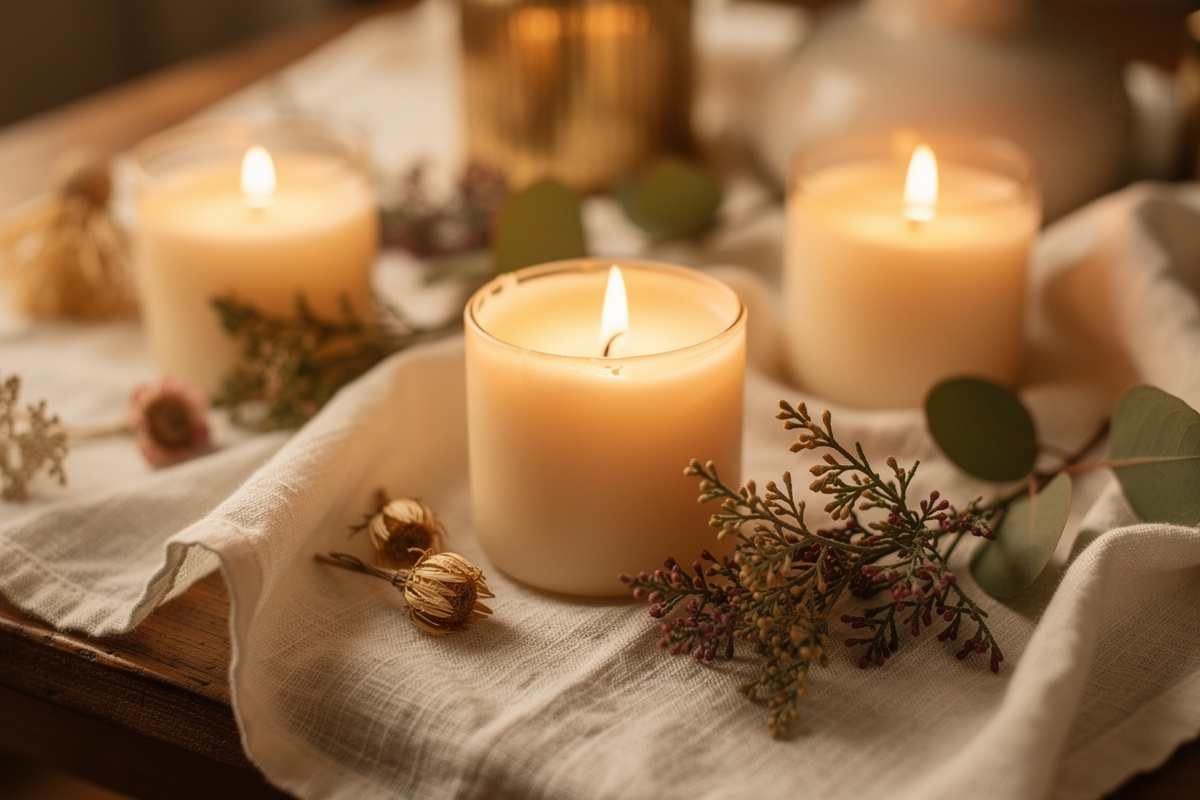
In South Africa, where ambient temperatures shift between coastal cool and inland heat, this matters. A soy candle lit in a 22°C Mossel Bay evening behaves predictably. A paraffin alternative might tunnel — burn straight down the middle, leaving wax on the sides — or flash-burn the fragrance in the first two hours. The physics favour soy.
The numbers are concrete. A standard tumbler candle poured in the studio from soy wax burns for 40–45 hours. The same vessel in paraffin achieves 25–30 hours. Both contain the same fragrance load. The difference is molecular efficiency. Soy wax candles also produce less soot — that black residue that builds on walls over months — because the combustion is cleaner. For a household burning candles regularly, this adds up to less cleaning and fewer airborne particles.
Sourcing soy wax in South Africa presents logistics challenges paraffin doesn't. Paraffin is refined locally from crude oil derivatives. Soy wax must arrive from Argentina or the United States, which adds carbon cost at import. We've accepted this trade-off because the burn efficiency and household benefit outweigh the transport footprint — especially when a soy candle lasts 60% longer and doesn't tunnel in your lounge.
How We Match Soy to Scent
Not all wax works equally with every fragrance. Paraffin wax holds synthetic musks and heavy vanillas well. Soy wax excels at releasing botanical notes — the reason our Fynbos collection is poured exclusively in soy. The lower burn temperature means delicate aromatics from protea, wild rosemary, and coastal sage don't combust before they reach your nose.
The bamboo jar — our premium vessel for gifting and hospitality use — is poured in soy wax exclusively. The 40–55 hour burn time makes it a statement of durability. A hotel guest might light it on the first night and still smell it burning on the third. That extended presence builds brand memory in ways a 20-hour paraffin candle cannot.
The choice to use soy also affects how we design scents. A Coastal collection candle poured in soy releases its salt-and-driftwood notes gradually, letting the neroli unfold over the first 10 burns rather than flooding the room immediately. This restraint — this allowance for the candle to evolve — is only possible with soy's thermal behaviour. It's a choice that reflects the studio's philosophy: luxury as duration, not intensity.
The Math of Choosing Soy
Decision-making around soy candles often stalls on price. A soy tumbler costs slightly more upfront than paraffin. But cost-per-burn-hour tells a different story. If a soy candle burns for 40 hours and costs R240, that's R6 per hour. A paraffin alternative at R180 for 25 hours costs R7.20 per hour. Over a year, a household burning one candle weekly spends less on soy than paraffin — and generates less waste.
For corporate gifting or hospitality restocking, this calculation becomes essential. A hotel ordering candles for 40 rooms burns through 10 paraffin candles monthly per room. The same rooms need only 6 soy candles. The labour of restocking, the waste stream, and the guest experience all improve. We've detailed this in our hospitality programme, where boutique lodges across the Garden Route have shifted to soy for exactly this reason.
There's also the question of what happens after the candle burns. A soy tumbler vessel — made from borosilicate glass — becomes a desk cup, a plant pot, or a pencil holder. Paraffin candles often leave residual wax that's difficult to remove cleanly. Soy wax cools to a waxy consistency that can be gently melted or peeled away, leaving the vessel genuinely reusable. This extends the product's lifecycle and reduces household waste.
Use the scent quiz if you're unsure whether soy aligns with your fragrance preferences. The quiz recommends collections based on your sensory profile, and you'll notice the Fynbos and Coastal collections — both soy-exclusive — feature heavily for customers who prefer botanical and fresh scents.
Frequently Asked Questions
Is soy wax actually better for the environment than paraffin? Soy wax comes from a renewable crop; paraffin is refined from crude oil. However, soy farming in Argentina and the U.S. involves land-use and pesticide considerations paraffin doesn't. The honest answer: soy is better because it burns longer, reducing total replacement volume and waste. The environmental win is in duration, not in crop ethics alone.
Can I use a soy candle in a warm room without tunnelling? Soy wax performs well in rooms up to 26°C; beyond that, ventilation and wick size matter more than wax type. The Coastal collection — poured in soy — is designed for variable temperature spaces. If your room runs consistently above 28°C, ask the studio about wick adjustments.
How do I know if a candle sold in South Africa is actually soy? Check the product label. Legitimate soy candles state "soy wax" or "100% soybean wax" explicitly. Paraffin candles rarely use the word "paraffin" — they'll say "premium wax" or "blended wax." When you order from the Mossel Bay studio, each product page specifies the wax type. If it's not mentioned, ask before ordering.
Do soy candles cost more because they're trendy? Soy costs more to source in South Africa, so yes, there's a supply-chain premium. But the real cost argument isn't trend — it's burn time. When you calculate cost per hour of burn, soy candles are competitive or cheaper over a year of regular use. For gifting, the bamboo jar in soy wax justifies its price through extended burn and vessel reusability.
What Soy Means for the Studio
The decision to pour