How Wick Trim and First Burns Shape 40+ Hours of Fragrance
A wick trimmed to 5mm, a first burn of 90 minutes—small decisions that determine whether your candle performs or disappoints over its full lifespan.
By Claudi·Poured in Mossel Bay, Western Cape
A candle begins to fail the moment it is lit if the wick is not prepared. This is not theory—it is observed fact in the studio, where we watch customers return with candles that tunnel, that smoke, that release fragrance unevenly across a 40-hour burn. The discipline of burning a candle properly is invisible labor. It happens before the flame is even introduced. It is the decision to trim, to allow the wax to pool, to resist the urge to move the vessel. Most people assume candle care happens after purchase. The truth is more unforgiving: it begins on the first burn, and every subsequent burn depends on the choices made before.
Key Takeaways
- Trim the wick to 5mm before every burn—even the first one—to prevent tunneling, excess smoke, and premature fragrance loss.
- Allow the wax to melt pool across the entire surface on the first burn (typically 90 minutes for a standard tumbler), or the candle will tunnel for the remainder of its life.
- The vessel itself is part of care: lidded jars preserve scent between burns, while tumblers reward discipline with 35–45 hours of reliable fragrance performance.
The Physics of the First Burn: Why 90 Minutes Matters
Wax has memory. When you light a candle, the heat from the flame melts the wax nearest the wick in a circular pool. If you extinguish the flame before that pool reaches the outer edge of the vessel, the remaining wax will set in that partial state. The next time you burn the candle, the flame will track only through the tunnel created by the first burn, leaving a thick ring of unused wax on the sides. This is not a flaw in the candle. This is the result of incomplete first-burn practice.
For a standard tumbler poured in the studio, the first burn should last approximately 90 minutes. This is long enough for the melt pool to reach the vessel's perimeter, establishing a memory that subsequent burns will follow. If you extinguish the candle at 45 minutes, you have committed it to a narrow, inefficient burn for the rest of its life—potentially losing 10–15 hours of performance across the candle's full 35–45 hour span.
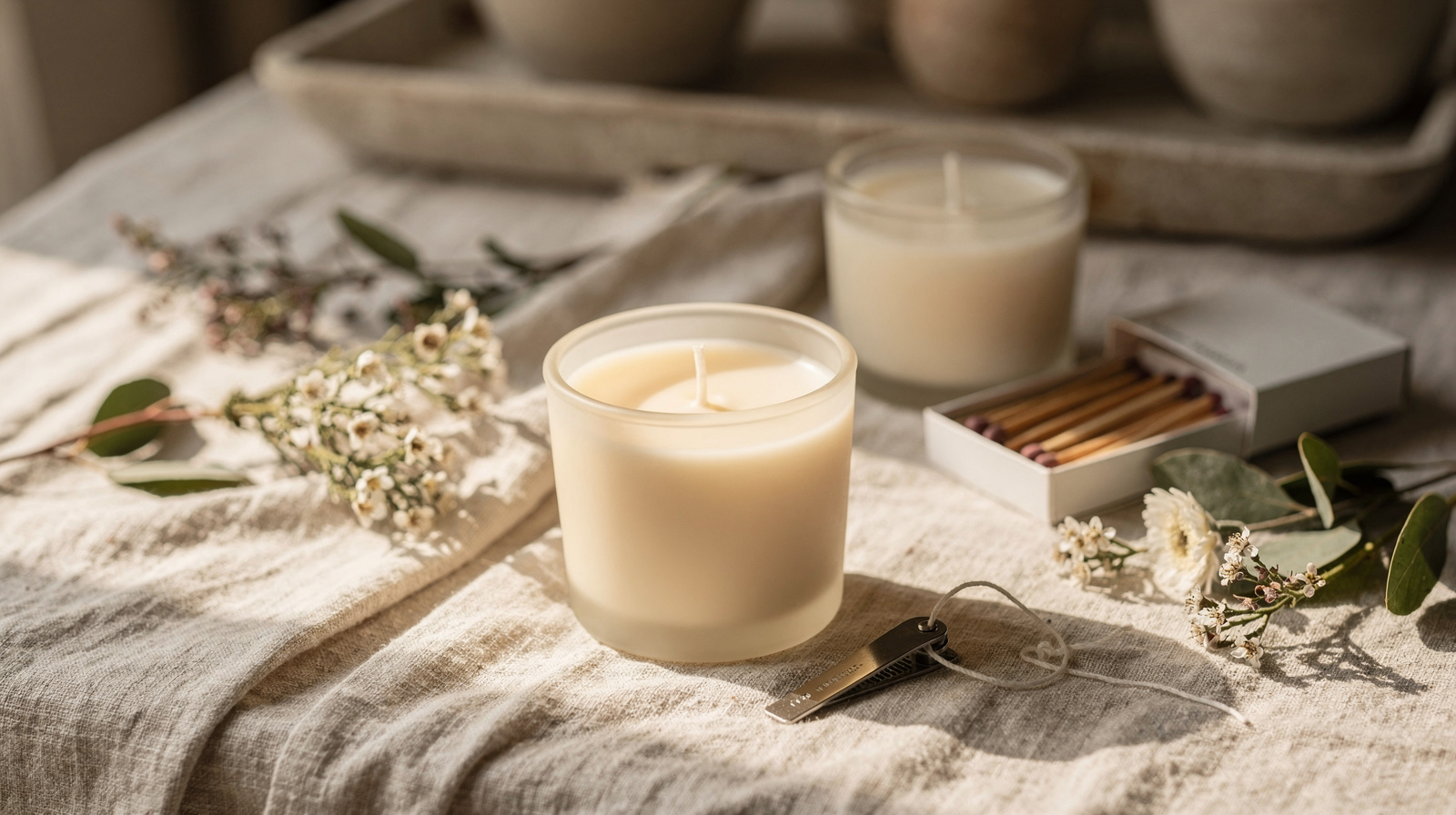
The second discipline is the wick itself. Trim to 5mm before each burn. A wick longer than 6mm will generate excess heat, causing the candle to burn faster, release carbon particles that appear as soot on the vessel wall, and fragment the fragrance release rather than diffuse it evenly. A wick shorter than 4mm may struggle to stay lit. 5mm is the target. It is specific. It is measurable. It is not a suggestion.
Why the Vessel Protects the Craft: Bamboo Versus Tumbler
Not all vessels are equal in their role as protectors of fragrance. A tumbler candle—the workhorse format—is open at the rim. Between burns, oxygen reaches the wax surface and fragrance compounds begin to oxidize. Over days or weeks, this reduces the intensity of the scent on subsequent burns. The bamboo jar solves this through its lid: the seal preserves the volatile aromatic compounds between burns, extending the perceived longevity of the fragrance and allowing you to experience the full scent profile for the entire 40–55 hour burn.
For those who burn candles frequently—in hospitality settings, or in a home where the candle is lit daily—this distinction is academic. But for gift-giving, or for candles burned intermittently over weeks, the lidded vessel becomes an investment in performance. The bamboo jar is designed for the person who values consistency: each burn smells as intentional as the first, because the scent has been protected since the last extinguishing.
This is a choice about craft. When you choose a bamboo jar, you are saying that the fragrance deserves a vessel that respects it between burns. The same principle applies to pillars in formal settings—a pillar candle standing on a mantelpiece in a dining room is part of the visual landscape. Its burn performance depends entirely on wick trim discipline, but its longevity as a fragrance object depends on the environment: drafts shorten burn time, heat accelerates oxidation, and humidity can affect the wax surface. Care is contextual.
The Practical Discipline: Your Burn Timeline
Create a burn schedule and stick to it. This is not fastidious; it is foundational. Write down the date of the first burn. Calculate the intended burn time: 90 minutes for the first burn, then 3–4 hours for subsequent burns (burn no longer than 4 hours at a time; this prevents overheating and excessive fragrance release in a single session).
If your tumbler candle is intended for a 35–40 hour total burn, and you burn it for 4 hours at a time, you have roughly 9–10 burn sessions ahead. Space them across weeks or months depending on your usage pattern. Before each lighting, trim the wick to 5mm and check the vessel for soot. If soot appears, allow the candle to cool for 30 minutes before trimming; hot wicks fray easily.
For hospitality settings—boutique hotels, spas, or lodges in the Garden Route—where candles burn for extended periods or are lit continuously, the hospitality trade programme provides guidance on burn management and bulk sourcing. The same principles apply: wick trim, melt pool discipline, vessel maintenance. The difference is scale and consistency. A hotel burning 20 candles simultaneously must track each one, or performance will degrade unevenly across the space.
Frequently Asked Questions
What does it mean if my candle is smoking? Smoke indicates a wick that is too long, a draft that is disturbing the flame, or wax that is burning too hot. Trim to 5mm, move the candle away from air vents and windows, and ensure it is burning in a still room. If smoking persists, extinguish and allow the candle to cool fully before relighting.
Can I relight a candle after only 15 minutes of burning? Yes, but do not make this a habit. A single short burn will not set the melt pool, but repeated short burns (under 1 hour) will cause tunneling. If you must extinguish early, allow the wax to cool, then relight for a longer session to allow the pool to reach the edge of the vessel.
How long should a tumbler candle last if I burn it properly? A standard tumbler from the Mossel Bay studio, burned with wick discipline and a full first burn of 90 minutes, will deliver 35–45 hours of even fragrance performance. This spans approximately 9–10 burns of 3–4 hours each, depending on your lighting pattern and room conditions.
Does the bamboo lid affect how much fragrance I smell while the candle burns? No. Remove the lid before burning—it exists to preserve scent between burns, not to contain it during use. Once lit, the candle releases fragrance at the same intensity as an open tumbler. The lid is closed only after you extinguish and allow the wax to cool.
Return to the Studio: Where Precision Begins
The discipline of burning a candle is not separate from the craft of making it. Every candle poured in the Mossel Bay studio is formulated with a specific wick thickness in mind, wax blend selected for even melt, and fragrance concentration calculated for a 40-hour release. Your role is to honor that precision through care. Trim the wick. Allow the first melt pool to reach the edge. Close the lid between burns if your candle is in a bamboo jar. Extinguish before 4 hours of continuous burn.
These small acts—invisible to anyone entering the room—are what separate a candle that disappoints from one that performs for its entire intended lifespan. If you are uncertain about the right vessel or scent profile for your needs, the scent quiz will guide you toward a format and fragrance that aligns with your burning habits. And if you want to extend the gift further, custom labels allow you to document the burn schedule directly on the candle—a note to the recipient about how to unlock its