Why Premium Candles in South Africa Cost What They Do—And Why That Matters
The true cost of luxury fragrance reveals itself in materials, time, and craft. Understanding it changes how you buy.
By Claudi·Poured in Mossel Bay, Western Cape
A 40-hour burn candle is not simply twice the investment of a 20-hour one. When you move into the territory of premium candles in South Africa, you're not paying for size alone—you're paying for a decision made long before the wax hits the vessel. You're paying for soy-paraffin blends sourced outside the commodity market. You're paying for natural fragrance oils that cost three times what synthetic alternatives do. You're paying for the labour of hand-testing every batch in a studio that doesn't batch-produce. And you're paying for the simple, unglamorous fact that real craft has margins that don't support advertising budgets.
Most buyers don't know this. They see a candle that costs more and assume the difference is markup. What they actually encounter, in the case of boutique South African makers, is transparency—the fragrance studio willing to show its costs rather than hide them behind brand mythology.
Key Takeaways
- Premium candles in South Africa reflect real material costs: natural fragrance oils, vessel quality, and wax composition are not negotiable; they drive price, not brand prestige alone.
- Burn time and vessel longevity are structural investments: a 45-hour tumbler or 55-hour bamboo jar is engineered to perform, not just exist on a shelf.
- Choosing where you buy reveals what you value: custom labelling, scent personalisation, and workshop transparency are services that mass-market candles cannot offer.
The Material Truth Behind Premium Candles in South Africa
Premium candles cost more because the raw materials are sourced differently. A standard commercial candle might use paraffin wax blended with a synthetic fragrance load of 5–6%, designed to perform across a wide temperature range with minimal variation. A premium blend—the kind poured in the Mossel Bay studio—uses a higher ratio of natural soy, a lower fragrance load (3–4% carefully selected botanicals and absolutes), and accepts that burning behaviour will vary slightly with season and ambient humidity. This is not a flaw. It's evidence the candle is real.
Fragrance sourcing alone accounts for 30–40% of production cost in premium candles. A single litre of synthetic "ocean breeze" fragrance oil might cost R120. The same volume of a true coastal blend—built from bergamot, ambroxan, and seaweed accord—sits closer to R380. When you're making a single batch of 12 candles rather than 5,000, you can't negotiate that cost away. You can only absorb it and pass it to the buyer honest.
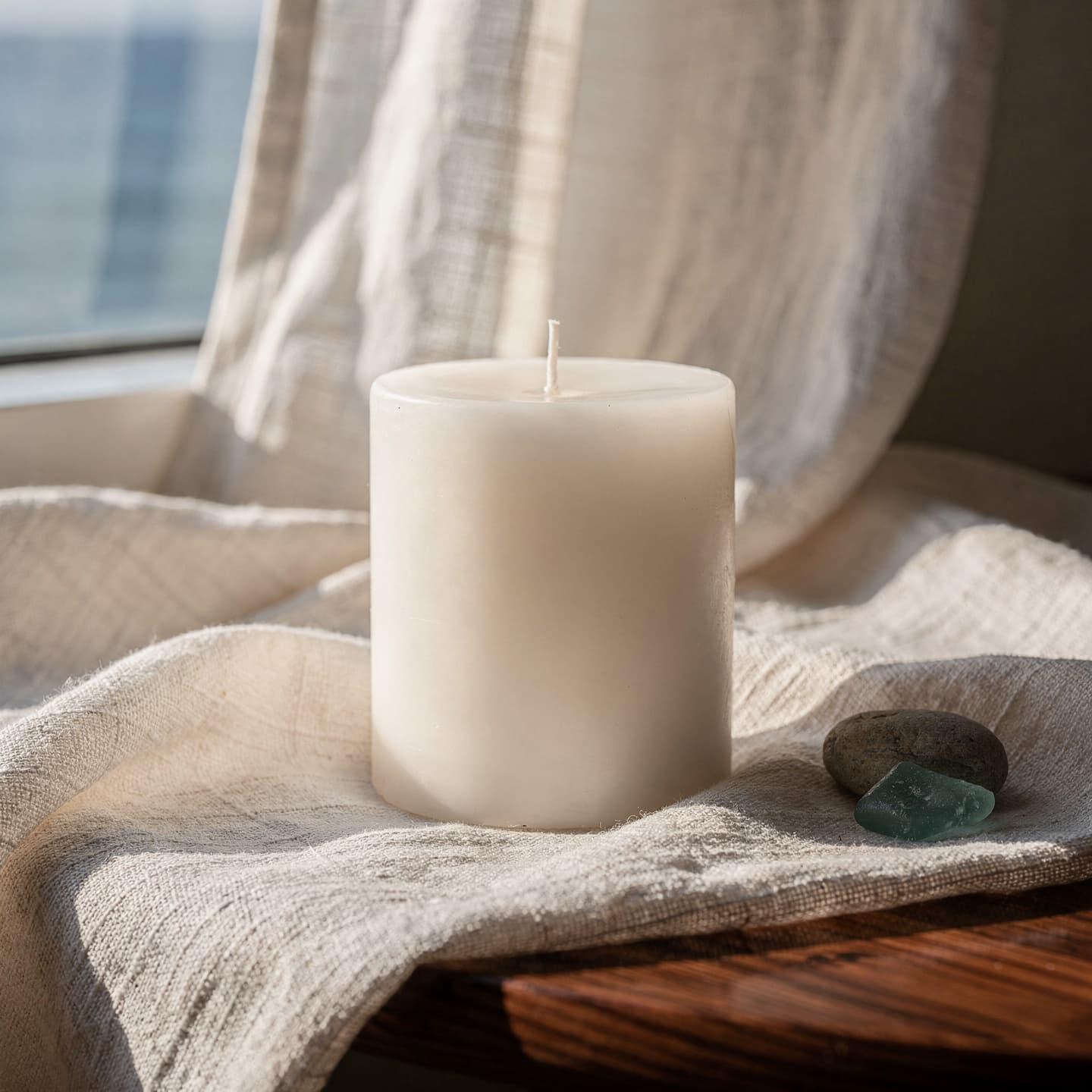
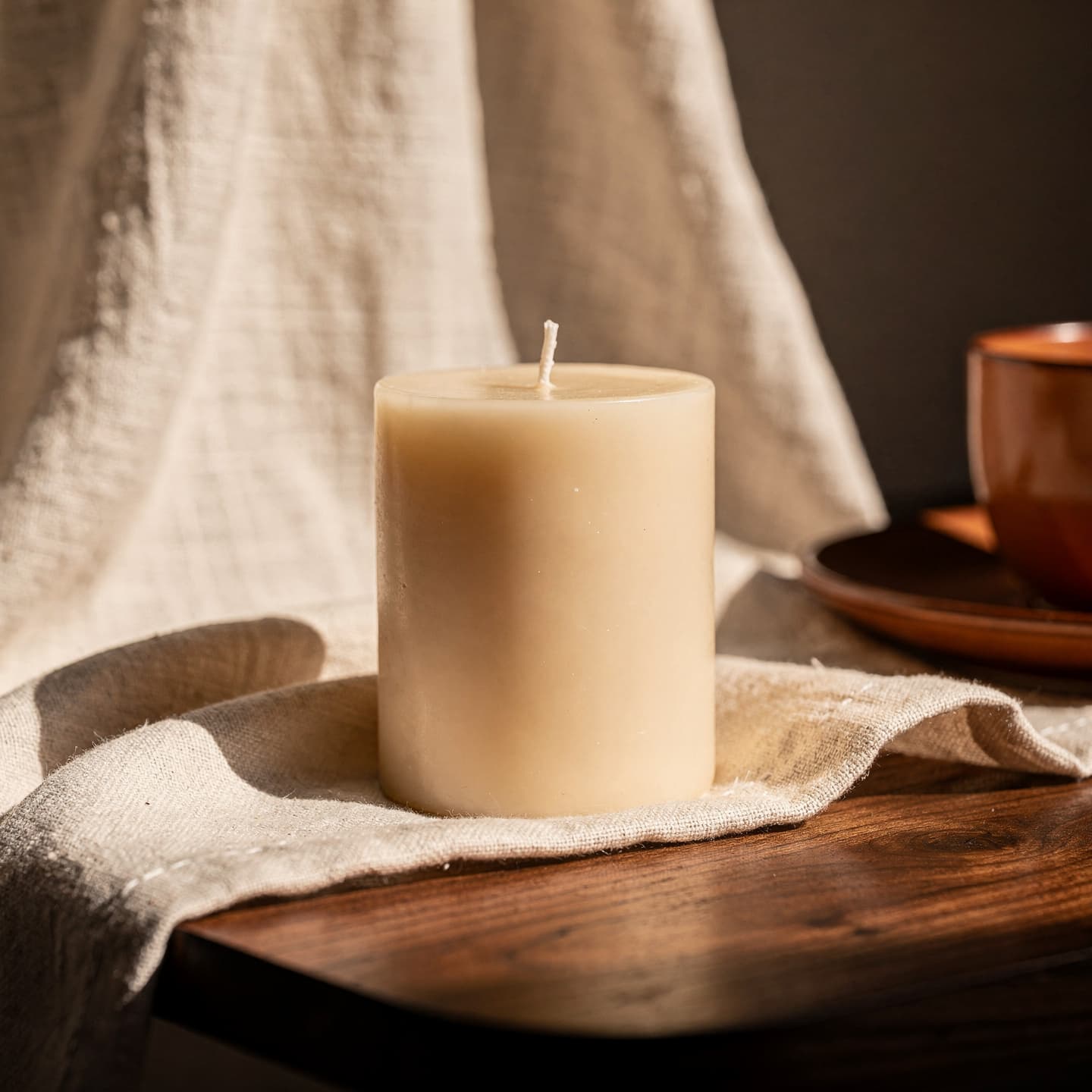
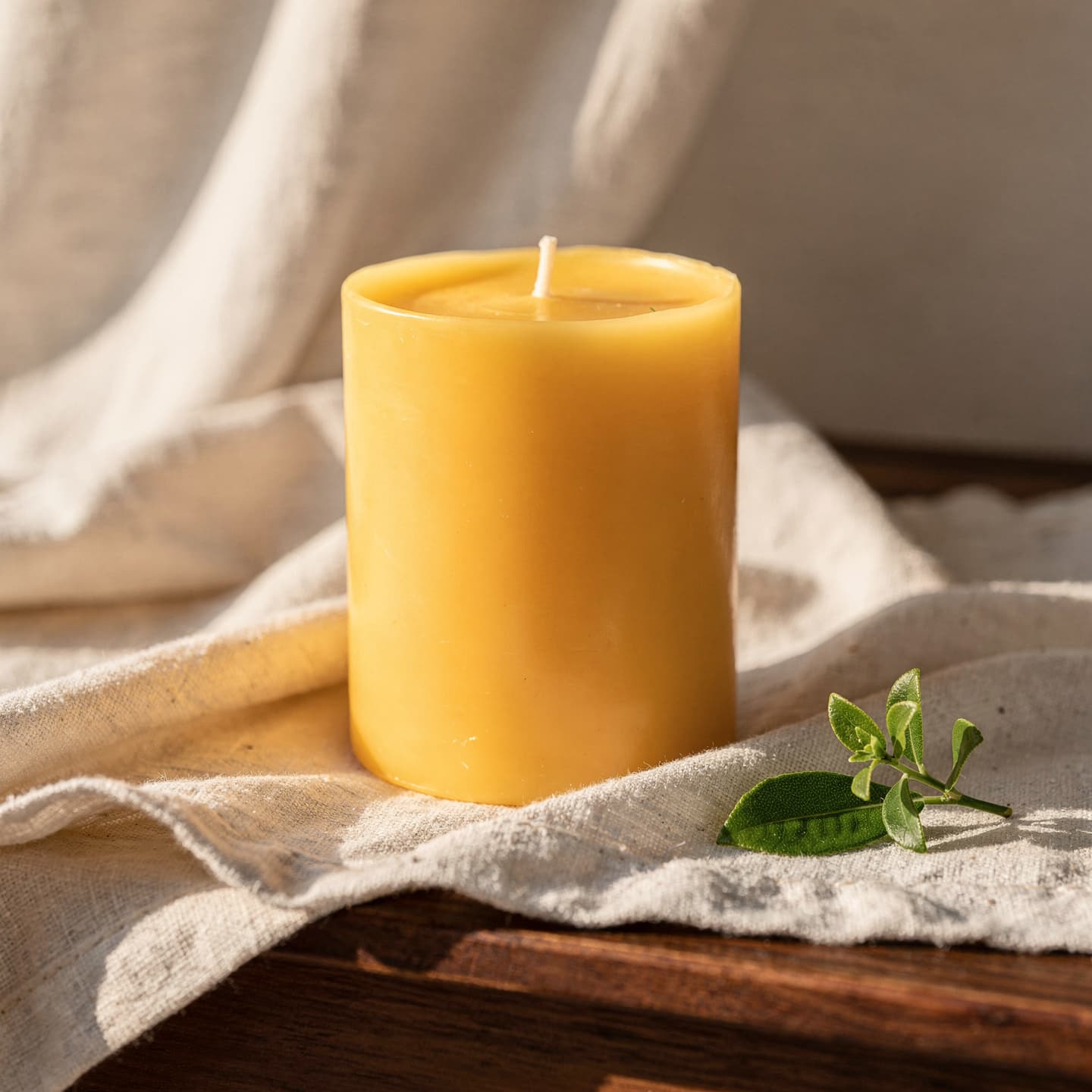
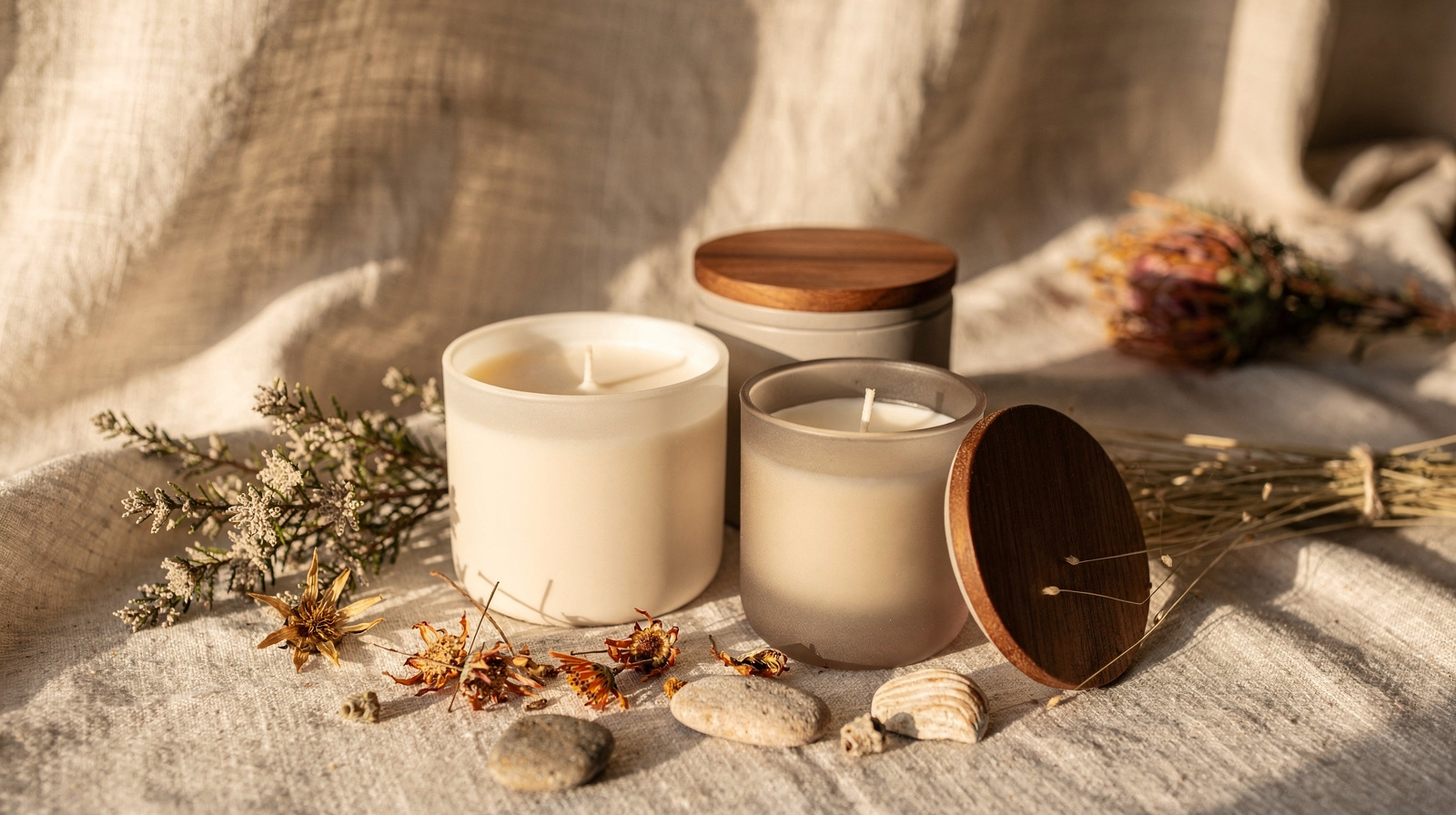
Then there is the vessel. A tumbler candle with a 35–45 hour burn requires a glass thickness that withstands repeated heating cycles without thermal shock. A lidded bamboo jar with a 40–55 hour burn sits in a guest's bathroom for months, its scent preserved between burns, its aesthetics part of the room. Neither vessel is disposable. Both are chosen as objects that survive use—and belong in a space after the fragrance fades.
This is what separates premium candles in South Africa from the mass-market category: the expectation that the vessel matters as much as the scent.
Craft, Consistency, and the Mossel Bay Standard
The Mossel Bay studio doesn't work with pre-blended fragrance concentrates or templated scent profiles. Each batch begins with a decision about which scent family the season calls for—Coastal, Fynbos, Manor, or Gather—and then moves into the labour-intensive work of testing pour temperature, fragrance load, and cure time to ensure the candle burns cleanly and releases scent evenly.
A tumbler candle takes 72 hours to cure properly. The studio doesn't accelerate this. A bamboo jar requires hand-finishing on the lid—a detail invisible to the buyer but essential to performance. These are not shortcuts available in premium production, and they are not available anywhere in South Africa at a lower cost because they are not shortcuts.
What distinguishes our bamboo jar from comparable products is the specific pairing of the vessel with a fragrance load that respects both the material and the space it will occupy. A hospitality buyer—a boutique hotel or spa in the Winelands or along the Garden Route—needs a candle that performs consistently across seasons and maintains its scent integrity whether the room is climate-controlled or open to the ocean air. The bamboo jar was engineered for exactly this problem. Its weight, its lid, its burn time: all are responses to real use, not aesthetic whim.
How to Evaluate a Premium Candle Before You Buy
The question is not "Why does this cost R380?" but rather "What am I buying?" Start with three concrete measures.
Burn time and vessel retention. A premium candle in South Africa should deliver at least 35–40 hours of burn in a vessel worth keeping. If the candle lasts 20 hours and the vessel is designed for disposal, you're not buying premium—you're buying packaging. Check the burn time on the label. Check whether the studio publishes it. Transparency is the first signal of craftsmanship.
Fragrance sourcing. Ask or look for evidence: Does the brand publish where its fragrance comes from? Are the notes specific—"bergamot from Calabria" rather than just "citrus"—or vague? Vagueness is a cost-saving measure. Specificity is a supply-chain commitment. Our scent quiz walks you through the decision, helping you match a fragrance family to your space rather than chase trend or trend-chasing descriptions.
Customisation and personalisation. Can you adjust the candle to your preference—your choice of scent, your choice of label? If the studio offers custom labels, it's comfortable with small runs and individual requests. That comfort comes from not depending on volume. It's a mark of premium practice.
Frequently Asked Questions
What makes a premium candle different from a standard one beyond price? Premium candles use higher concentrations of natural fragrance oils, higher-quality vessel materials, and longer cure times. They are also made in smaller batches by studios that prioritise consistency and performance over volume. A premium tumbler candle from the Mossel Bay studio burns for 35–45 hours; a standard commercial candle often burns for 15–25 hours and is designed to be replaced, not retained.
Why should I pay more for a South African-made candle when imports are cheaper? South African-made premium candles reflect local labour costs, material sourcing, and the studio's commitment to the region. The Mossel Bay studio sources vessels from local suppliers and hand-finishes each candle. Imports absorb currency fluctuations and shipping costs into lower prices by reducing the quality of materials or the time spent on each piece. You're not paying for patriotism; you're paying for verifiable craft.
How long do premium candles actually last, and does burn time justify the cost? A tumbler candle with a 40-hour burn at R280 costs approximately R7 per hour of fragrance. A cheaper 15-hour candle at R120 costs R8 per hour. The math is closer than it appears. However, the premium candle's vessel becomes a permanent object in your space—a bowl, a drinking glass, a storage container—while the cheap candle's vessel goes to landfill. Over time, cost per use drops significantly.
Can I customise a premium candle as a gift, or do I have to buy off-the-shelf? Yes. The custom label builder lets you personalise a candle with your own text, image, or design. Boutique hotels and corporate buyers often use this for guest gifting or hospitality gifting. Timelines are shorter than mass production (typically 7–10 days for small runs), and minimums are low—often a single candle.
The Choice in Front of You
Premium candles in South Africa sit at a fork. One path leads toward luxury branding: the studio spends on marketing, scale, and distribution, and the candle costs what it does because of that infrastructure. The other path leads toward craft transparency: the studio spends on materials, time, and consistency, and the price reflects the cost of doing those things well.
The Mossel Bay studio chooses the second path. It means you won