How Small Fragrance Studios Build Sustainable Craft in South Africa
Mossel Bay's approach to sustainable small business: real materials, honest burn times, vessels designed to outlast the scent.
By Claudi·Poured in Mossel Bay, Western Cape
Sustainability in fragrance isn't a marketing story told by the marketing team. It's a decision made at 6 a.m. in a studio workshop, when a candle maker chooses between a vessel that will be discarded after one burn and a jar that a customer will keep for years. For a sustainable small business in South Africa, these choices compound. They affect how much wax is sourced, how packaging is designed, what happens to a candle after it's used, and whether the business can still operate profitably in a market dominated by overseas imports and fast-fragrance cycles.
This article is for people building or supporting small businesses that care about impact — not the abstract kind, but the kind you can see when a customer repurposes a glass vessel or a hotel in the Garden Route reduces its packaging waste. We'll explore how craft-scale fragrance work sits within sustainability, and why the constraints of being small are, paradoxically, the advantage.
Key Takeaways
- A sustainable small business in South Africa reduces waste not through marketing claims but through design choices: vessel longevity, local sourcing where possible, and honest burn-time labeling that prevents customer waste.
- Poured in the Mossel Bay studio, our tumblers and bamboo jars are designed to be kept after use—turning a candle into a reusable vessel that extends the product's lifecycle by years.
- Small-scale production allows for ingredient transparency and batch accountability that larger manufacturers cannot offer, strengthening both craft credibility and customer trust.
The Real Constraint: Scale as an Advantage
Most sustainability conversations in fragrance begin with guilt. Buy natural wax. Use recycled packaging. Offset your carbon footprint. But for a sustainable small business in South Africa, the conversation starts differently. It starts with the fact that you are small.
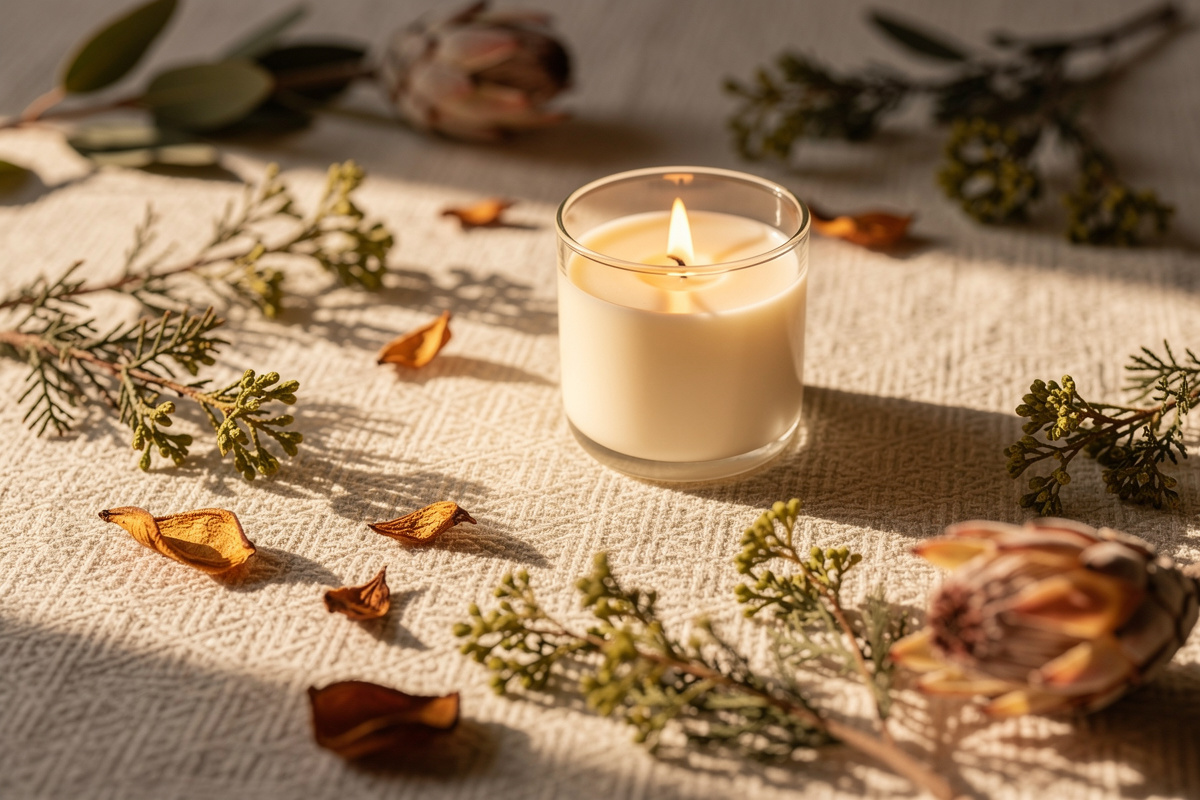
A boutique fragrance studio doesn't have the infrastructure to produce 10,000 units monthly. It can't negotiate bulk discounts on virgin plastic packaging or absorb the cost of sourcing sustainably and then undercut competitors. Instead, it works with real constraints: smaller production runs, fewer SKUs, deeper relationships with suppliers, and customers who visit the studio rather than discover the brand via an algorithm.
These constraints force honesty. When you pour 45-hour burn-time candles in a studio in Mossel Bay, you can't claim 60 hours and hope no one notices. When a customer holds a bamboo jar with a fitted lid, they understand immediately why you've chosen it—the lid preserves scent between burns, reducing the volatile organic compounds lost to air exposure, which means the candle lasts longer and performs better. That's not sustainable by accident. It's sustainable by design.
The Garden Route's climate—humid, coastal air with salt spray and wind—demands vessels that withstand storage and use. Cheap glass fragments. Thin-walled tumblers warp. A boutique studio serving this region learns fast that durability is sustainability. A candle that breaks after two burns is worse than no candle at all.
Honest Vessels, Real Burn Times
The difference between a sustainable small business and one that merely performs sustainability is measurable. It shows up in the vessel choice.
Mass-market candles are poured into vessels designed to be thrown away. They're cheap, lightweight, often made from virgin plastic or thin glass with no secondary use. A customer burns the candle, discards the vessel, buys another. The business model depends on repeat purchases of the vessel itself, not the scent.
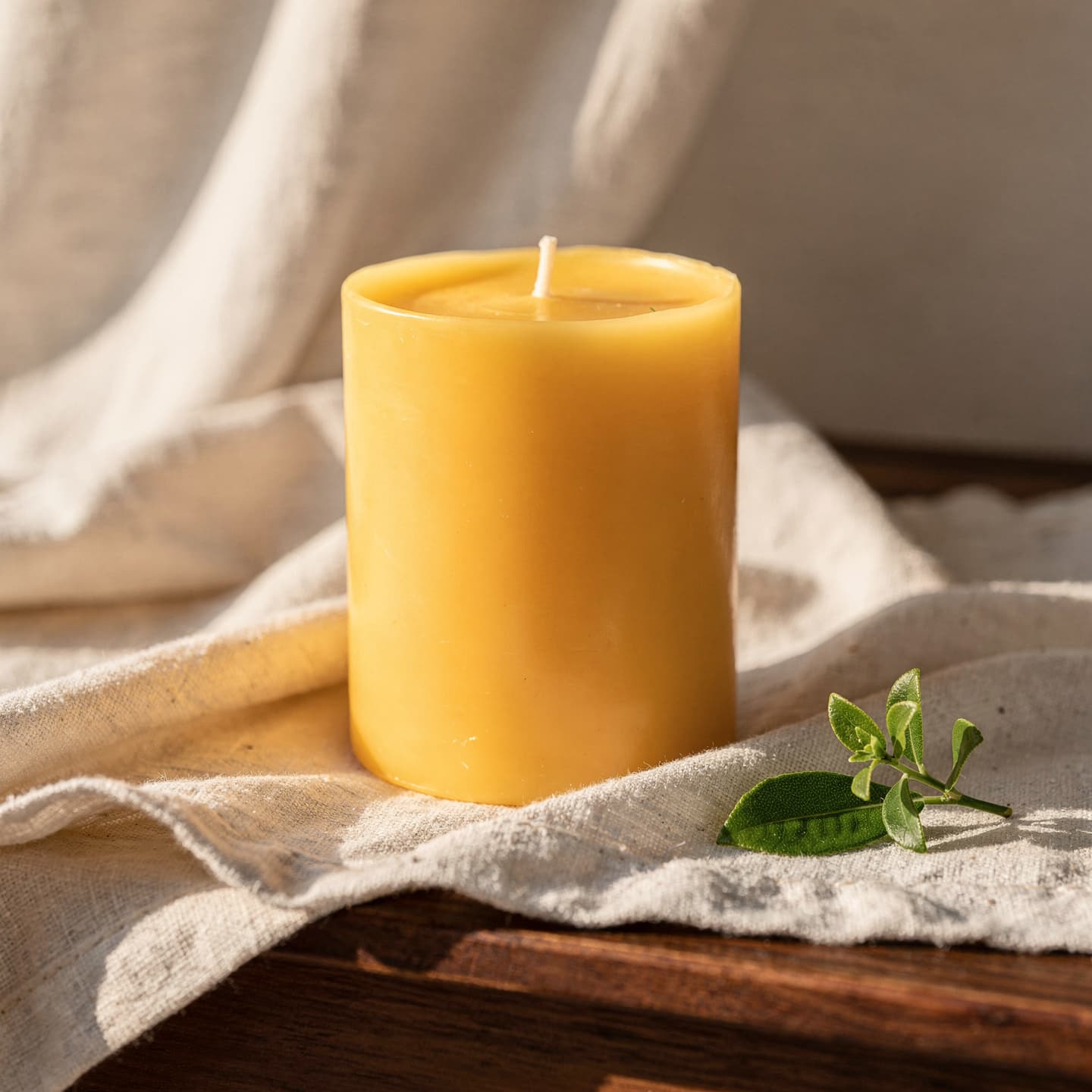
A boutique studio operates on a different principle. Our tumbler candles—35 to 45 hours of burn time—are poured in glassware substantial enough to hold plants, pencils, or tea after the wax is gone. The bamboo jar, with its fitted lid and 40 to 55-hour burn window, becomes a storage vessel for tea, spices, or office supplies. The vessel outlives the scent, which means one candle sale results in two or three uses for the glass.
This isn't green marketing. It's arithmetic. If a candle vessel is used four times instead of once, the carbon footprint per use drops by 75 percent. The environmental cost of manufacturing, shipping, and disposing of the glass is distributed across multiple purposes.
For a studio in Mossel Bay, vessel choice also reflects local availability. The bamboo jar suppliers we work with operate within the southern Africa region, which reduces transport distance and cost. We know the mills. We know the lead times. This transparency—the ability to trace a vessel from manufacturer to customer—is only possible at small scale.
Decision Framework: What Makes a Fragrance Studio Truly Sustainable
If you're choosing candles from a sustainable small business in South Africa, here's what to look for—and what questions to ask.
First: Ask about the vessel. If a candle maker can't tell you what happens to the glass or jar after the scent is gone, they haven't thought about sustainability seriously. A reusable vessel should be obvious. At minimum, it should be durable enough to last five years on a shelf without degrading. Bamboo jars with fitted lids are particularly effective because the lid prevents dust, oxidation, and scent loss—extending the life of the wax itself.
Second: Understand burn time honestly. A candle claiming 80 hours from a standard tumbler is either using low-quality wax that won't hold fragrance, or it's lying. Honest burn times are conservative—they account for different room temperatures, draft conditions, and wick quality. A 45-hour tumbler from the Mossel Bay studio reflects real conditions in a typical South African home, not ideal lab conditions.
Third: Check sourcing transparency. Can the maker tell you where the wax comes from? Is the fragrance blended in-house or imported pre-made? Are labels printed locally or shipped? A sustainable small business should be able to answer these without evasion. If a studio sources soy wax, they should know the farm region. If they use coconut wax, they should know the processing method.
If you want a custom approach, consider using our custom label builder to personalize a candle—it's one way to reduce overproduction and waste.
Frequently Asked Questions
What makes a small fragrance business more sustainable than a large one? Scale creates accountability. A studio that pours 50 candles weekly knows every batch, every vessel, every customer. There's no room for shortcuts or hidden waste. Larger operations depend on distributed supply chains that hide environmental costs. Smaller businesses can trace every decision back to impact.
How long should a quality candle vessel last after the wax is gone? A tumbler or bamboo jar poured in the Mossel Bay studio is designed to last indefinitely. Glass doesn't degrade. Bamboo, when properly finished, resists warping and water damage for years. We've had customers report using vessels as planters or desk organizers five years after purchase. That longevity is the metric that matters.
Are sustainable candles always more expensive? Not always more expensive—differently priced. A vessel designed to be reused costs more upfront than throwaway packaging. But over time, a customer who uses the same glass for five purposes spreads the cost across all five uses. A 45-hour tumbler at our studio costs less than buying four cheap candles that end up in landfill.
Where can I learn more about choosing a scent that aligns with my values? Start with our scent quiz—it helps match you to collections like Coastal or Fynbos based on your preferences and the materials we source. From there, you can ask us directly about ingredients and sourcing for any collection that interests you.
The Long View
A sustainable small business in South Africa doesn't compete by being cheaper than imports. It competes by being honest about what it makes, why it matters, and what happens after the sale. A candle poured in the Mossel Bay studio isn't a disposable product wrapped in sustainable marketing. It's a vessel with a second life, a burn time you can trust, and a relationship with the maker built into the purchase.
If you're drawn to fragrance that reflects craft, durability, and real sustainability choices, explore our bamboo jar collection—it's the clearest expression of our approach to vessels designed to last. Each one is ready to become something else when the scent is gone.
*Studio notes, September 2026 — Claudi's Studio,