Natural Candle Craftsmanship in South Africa: Beyond the Organic Label
Most 'natural' candles miss the mark. Here's what genuine craft-based fragrance demands in the South African market.
By Claudi·Poured in Mossel Bay, Western Cape
The term "natural candles" has become so stretched across the South African market that it barely registers as meaningful anymore. A candle labelled natural might contain refined paraffin wax blended with a single botanical extract, or soy wax poured in bulk offshore and shipped back to a local warehouse. The word natural has become a marketing position rather than a reflection of actual craft or ingredient integrity. What separates genuine natural candle craftsmanship from greenwashing is not a single ingredient, but a commitment to traceable sourcing, batch-based production, and the transparency to explain exactly why each decision was made. In Mossel Bay, where the Garden Route's botanical complexity shapes how fragrance behaves in salt-laden air, this distinction becomes unavoidable.
Key Takeaways
- Natural candle craftsmanship in South Africa requires verifiable sourcing for wax, fragrance, and vessels—not just a "natural" label on packaging.
- Mossel Bay's coastal climate and fynbos-adjacent botanical profile demand specific burn characteristics and scent retention strategies that mass-produced candles overlook.
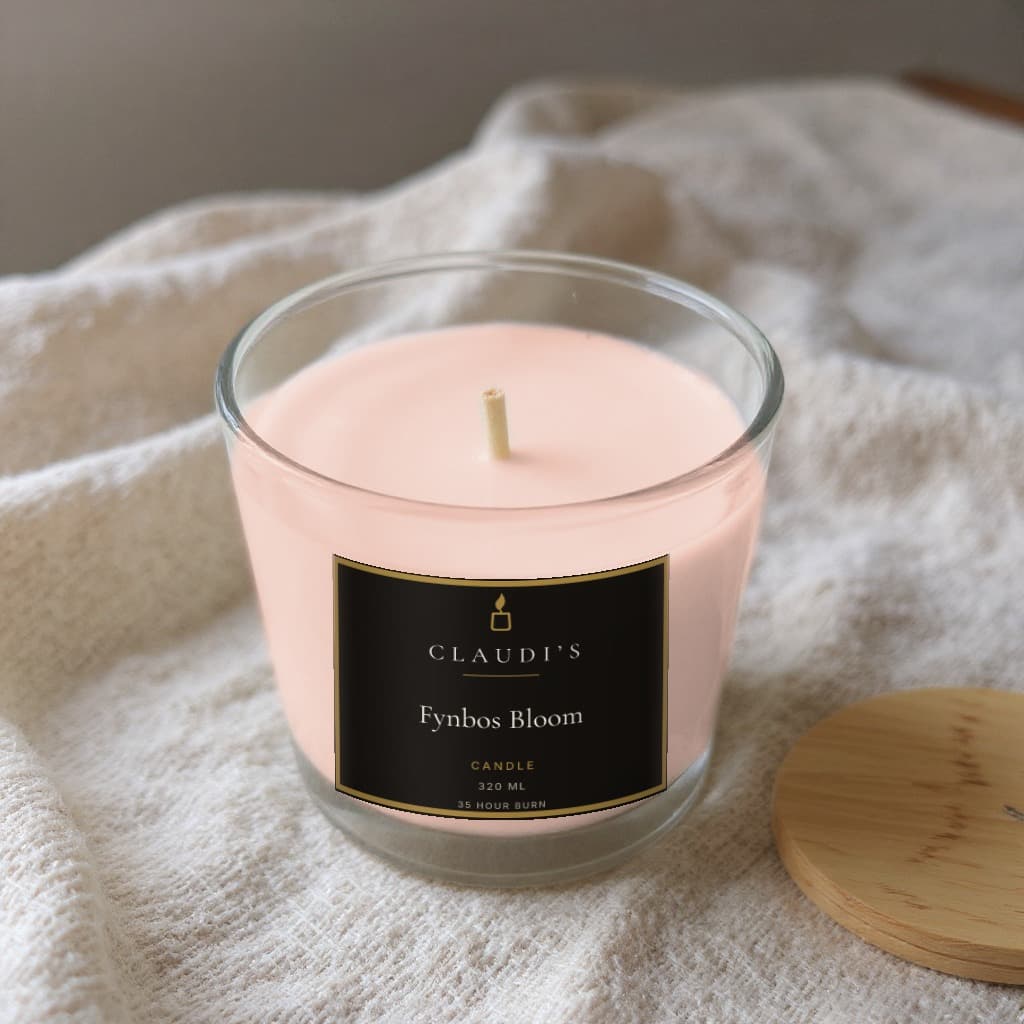
- A tumbler candle poured in the studio burns for 35–45 hours, allowing fragrance to develop consistently across multiple burn cycles—critical for natural wax blends that require more precise temperature control than petroleum-based alternatives.
What "Natural" Actually Demands in Contemporary South African Candle Making
The confusion starts with wax. A candle labelled natural might use soy, coconut, beeswax, or a blended base—each with distinct burn profiles, fragrance-holding capacity, and environmental footprint. Soy wax, for instance, can hold fragrance oils effectively but often requires additives to prevent frosting (the white crystalline bloom that forms on the surface), which undermines the natural claim. Beeswax burns hotter and slower, releases a faint honey note that interferes with fragrance clarity, and costs significantly more—but it's genuinely natural and air-purifying. Coconut wax burns cleanly but can be finicky in warm climates. In South Africa, where summer temperatures in the Western Cape regularly exceed 30°C, the choice of wax base directly affects whether a candle maintains scent throw or becomes inert.
Beyond wax, natural fragrance sourcing reveals the real work. A candle branded as natural should disclose whether it uses essential oils, fragrance oils derived from botanical extracts, or isolates (single aromatic molecules extracted from plants). Each has trade-offs: essential oils are genuinely natural but can degrade or oxidise in candlelight, fragrance oils offer stability but may include synthetic carriers, and isolates are pure but technically laboratory-derived. The decision to use one or a blend of all three signals how seriously a maker has thought about natural integrity versus performance. A studio making natural candles in South Africa must also consider how mineral salts in coastal air affect scent diffusion—a detail most mass-market brands never test.
Poured in the Studio: Why Batch Production Matters for Natural Wax
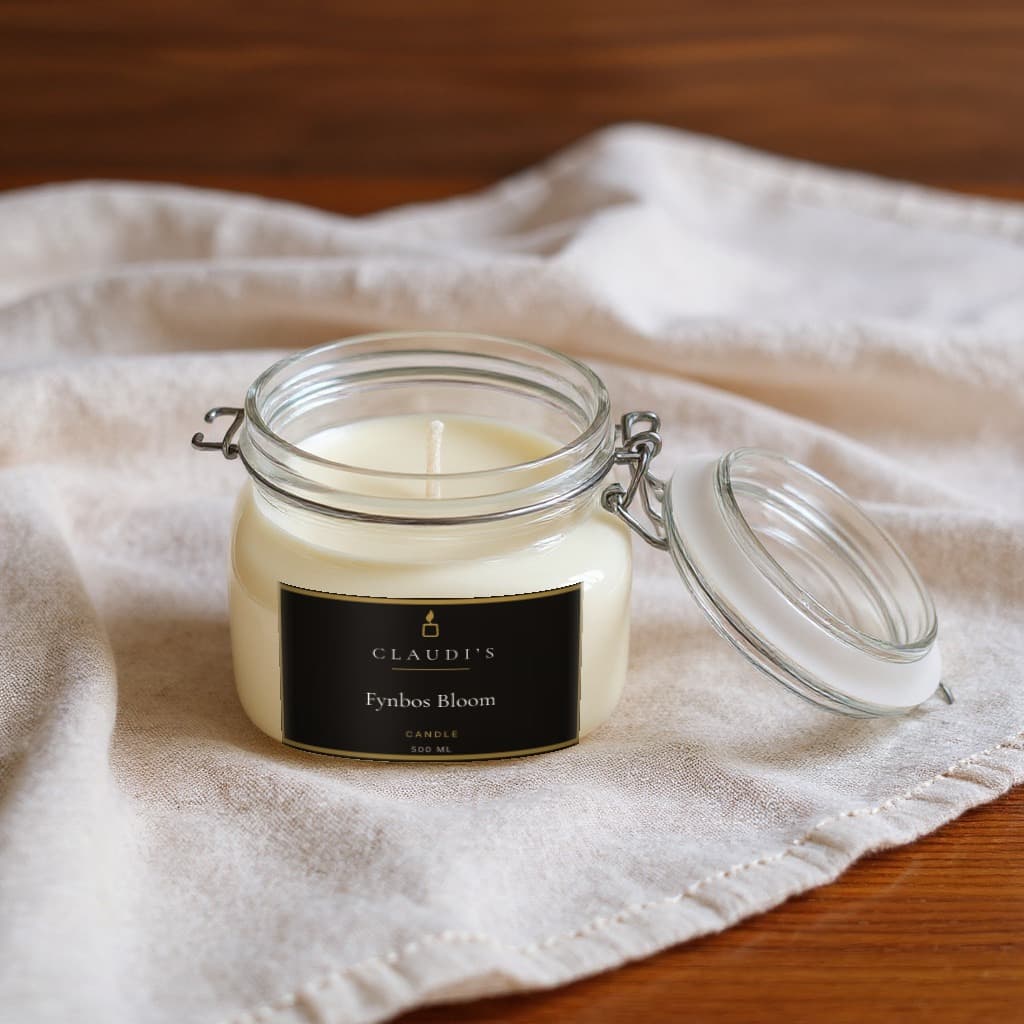
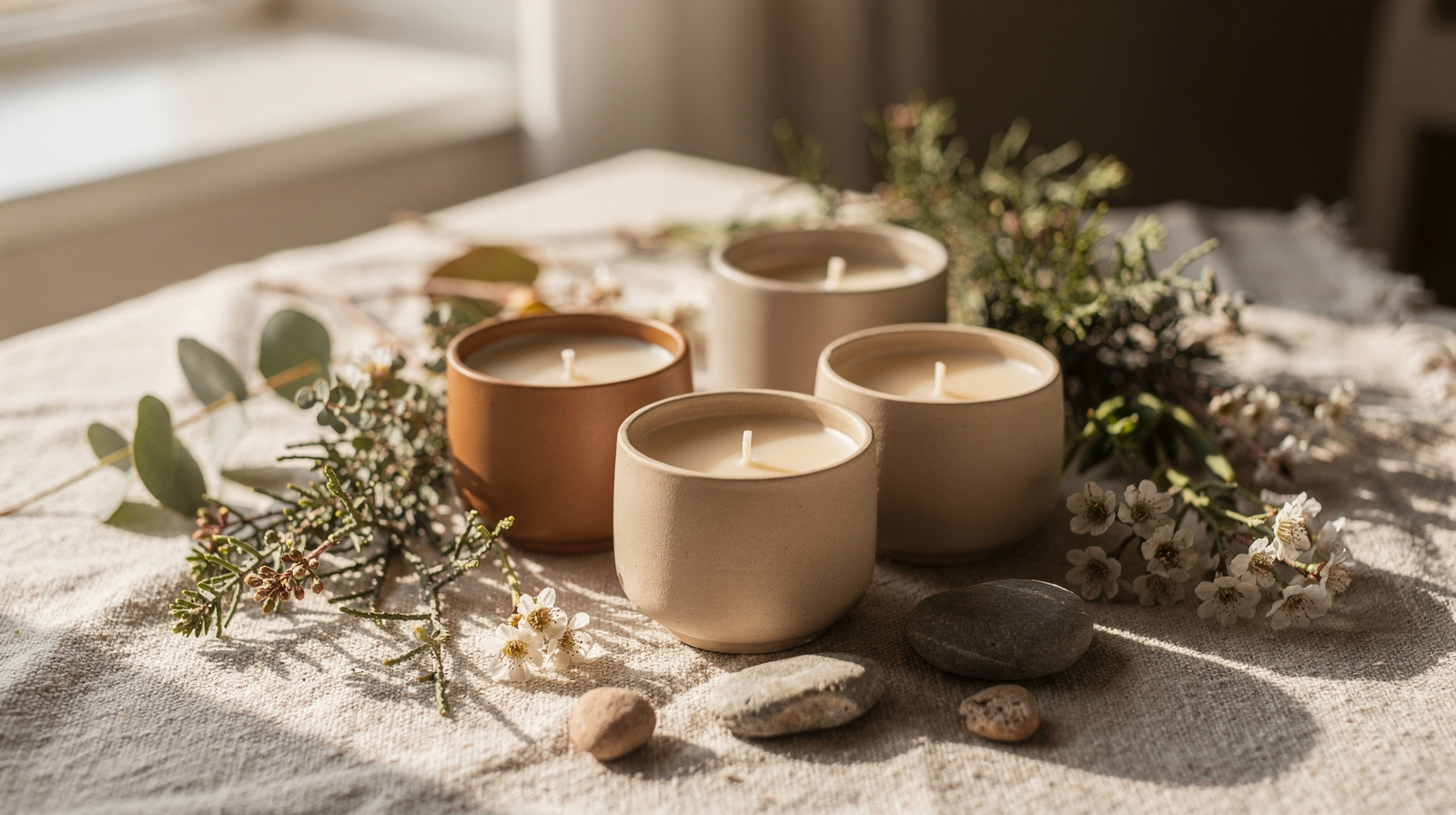
The Fynbos collection poured in the Mossel Bay studio exemplifies this approach. Each batch begins with a wax blend selected specifically for slow, even melting—essential when working with natural fragrance sources that require lower pouring temperatures to preserve aromatic compounds. This constraint demands that every tumbler candle is poured individually, cooled in-batch to monitor crystallisation, and tested for scent throw at multiple burn stages before it leaves the studio. A mass-produced natural candle, by contrast, might be poured once in a mold on an industrial line and shipped untested. The result is inconsistency: some burn hotter and faster, others barely release scent.
The vessel itself carries weight in natural candle craft. A bamboo jar with a lid preserves fragrance between burns—critical for natural wax blends that can degrade in air—and extends the perceived value of each candle because it remains useful after burning. A simple tumbler in soda-lime glass costs less but offers no secondary use and exposes the remaining wax to light and air oxidation. Neither choice is wrong, but the decision reflects a philosophy about natural integrity and material respect. South African makers who prioritise natural candles often choose vessels that align with that principle: recyclable, locally-sourceable, or designed for a second life.
How to Evaluate Natural Candles: A Practical Framework
When shopping for natural candles in South Africa, move past the label. Ask three specific questions: What is the wax base and why was it chosen? What is the source of the fragrance—essential oils, botanical isolates, or fragrance oils? And third: How was the candle tested before sale, and for how long does it burn? A 35–45 hour burn time on a tumbler candle signals that the maker has calibrated wax, wick, and fragrance together rather than assembled components off-the-shelf. Shorter burns suggest a mismatch between wax and wick, or fragrance loads too high for the vessel to safely contain.
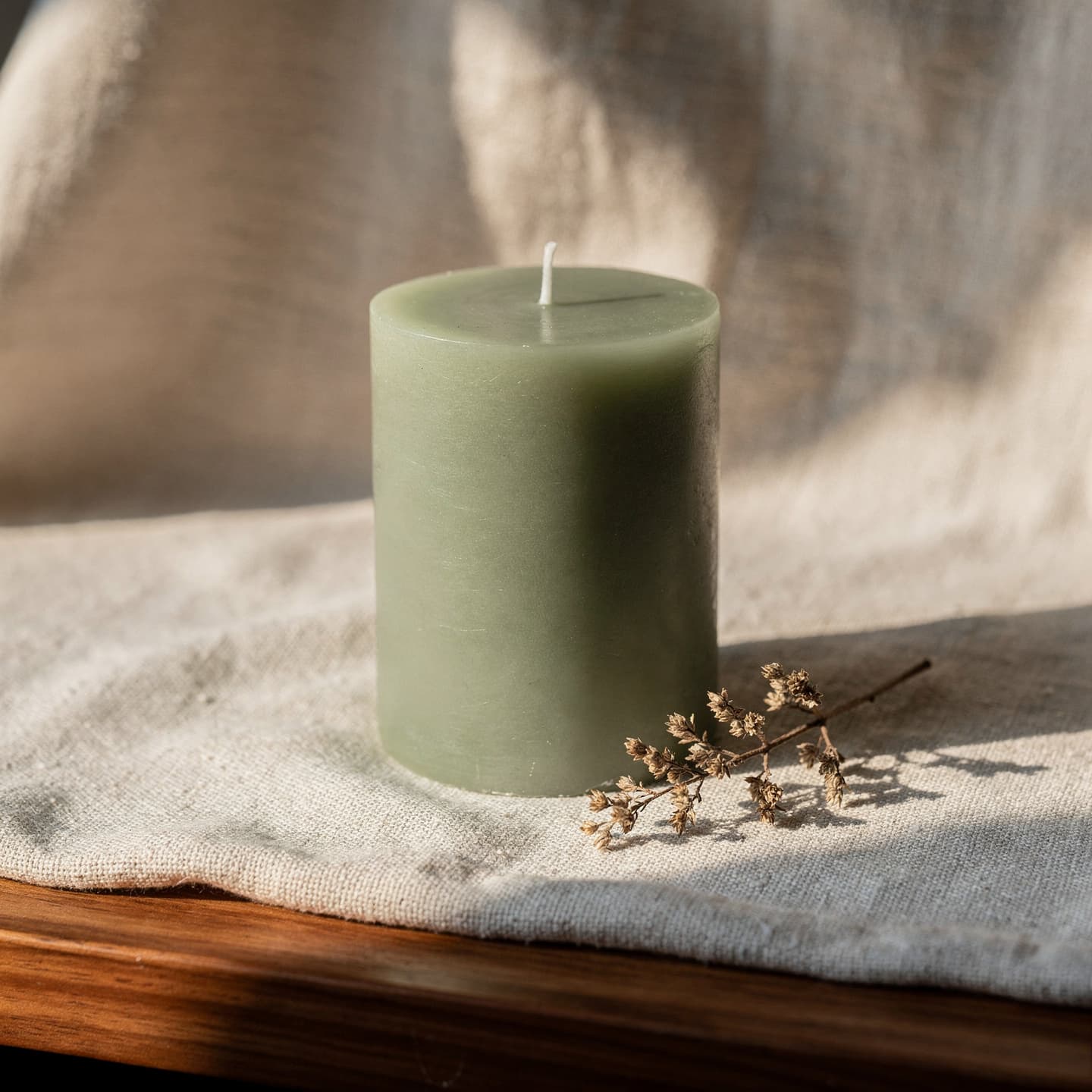
Consider your use case. If you're selecting a candle for a hospitality space—a boutique hotel, lodge, or spa across the Garden Route—consistency and longevity matter more than novelty. A bamboo jar candle that holds scent across 40–55 hours and resists fading is more valuable than a natural candle that peaks after the first burn and drops off. If you're gifting, a custom label on a natural candle base tells a personal story and justifies the premium price. If you're designing for a wedding or event, pillars poured in natural wax behave differently than mass-produced alternatives: they develop surface texture over time, which some see as authentic aging and others as imperfection. Knowing which aesthetic you're after shapes which natural candle category you should explore.
The scent quiz offers another practical shortcut: answering five questions about your environment, scent preferences, and use case returns a tailored recommendation—often pairing you with a natural candle type that matches both your space and your craftsmanship expectations.
Frequently Asked Questions
What makes a candle "natural" in South Africa, and how do I verify it? There's no legal definition of "natural candle" in South Africa, which is why transparency from the maker is critical. A genuine natural candle should have a product specification or statement listing wax type, fragrance source, and vessel material—available on request or on the product page. Brands reluctant to share these details are likely avoiding disclosure for a reason.
How long should a natural candle burn, and why does it matter? A quality natural candle should burn 35–55 hours depending on size and wax base. Shorter burns indicate wax-to-wick imbalance or excessive fragrance load, both common shortcuts in budget natural candles. Our tumbler candles are tested to 35–45 hours, ensuring the fragrance develops evenly across multiple burn sessions.
Are natural candles more expensive, and are they worth it? Yes, they typically cost 20–40% more than petroleum-based alternatives because sourcing traceable wax, natural fragrance, and testing batches requires labour-intensive processes. They are worth it if you value scent consistency, longer burn times, and the knowledge that no synthetic shortcuts were taken—especially in a climate like Mossel Bay's, where coastal air demands resilient fragrance performance.
Can I use natural candles in hospitality settings, or are they too delicate? Natural candles work excellently in hospitality if selected for consistency and burn performance. The Fynbos collection is specifically formulated for guest-facing spaces like lodges and spas, where scent should support experience without overwhelming. We also offer a hospitality trade programme for bulk orders and bespoke brief work.
The Path Forward
Natural candles in South Africa represent a deliberate choice: to prioritise craft clarity, traceable ingredients, and burn performance over marketing noise. The Mossel Bay studio approaches this by testing every batch, disclosing every material decision, and building candles around the specific demands of a coastal Southern African climate. Whether you're sourcing for a personal space, a hospitality venue, or a gift, the real measure of natural isn't a label—it's the maker's willingness to explain their work and stand behind it across consecutive burn cycles. Start with the