Designing Fragrance for Your Garden Route Wedding
How scent strategy transforms ceremony spaces and lingers in guest memory—with architectural candles that survive the Peninsula's coastal wind.
By Claudi·Poured in Mossel Bay, Western Cape
A wedding in the Garden Route asks something of fragrance that interior ceremonies never do. The space is restless—salt-laden air moves through the Mossel Bay valleys, temperature shifts between afternoon and dusk, and the scent you choose at three o'clock may not be the scent your guests remember at six. Yet this challenge is also the reason to design fragrance deliberately. A candle that survives the coastal air, that deepens rather than dissipates as light falls, becomes part of the ceremony itself. It signals care. It anchors a moment that will scatter across memory in seconds.
The question isn't whether to use scent at your Garden Route wedding. It's whether to treat it as decoration or as architecture.
Key Takeaways
- Coastal wind moves differently than indoor air: Garden Route venues need candles weighted, positioned, and formulated for maritime conditions—not standard parlour candles.
- Scent memory locks in the first three minutes: Guests form olfactory associations with your ceremony space before you reach the vows; thoughtful placement matters more than intensity.
- Pillar candles outlast and outperform votives in open-air settings: A 3-inch pillar survives wind gusts that would extinguish lighter vessels, and its burn profile suits Garden Route timing (ceremony at 4 p.m., reception light until 8 p.m.).
The Garden Route Asks Something Different of Scent
The Peninsula and the inland valleys around Mossel Bay carry distinct air patterns. At sea level, the late afternoon brings a stiffening south-easterly—what locals call the wind season—and it doesn't pause for ceremony timing. A candle that performs beautifully in a Cape Town townhouse will gutter and smoke in open-air Outeniqua settings. The fragrance disperses unevenly, pooling in some guest spaces and disappearing entirely in others.
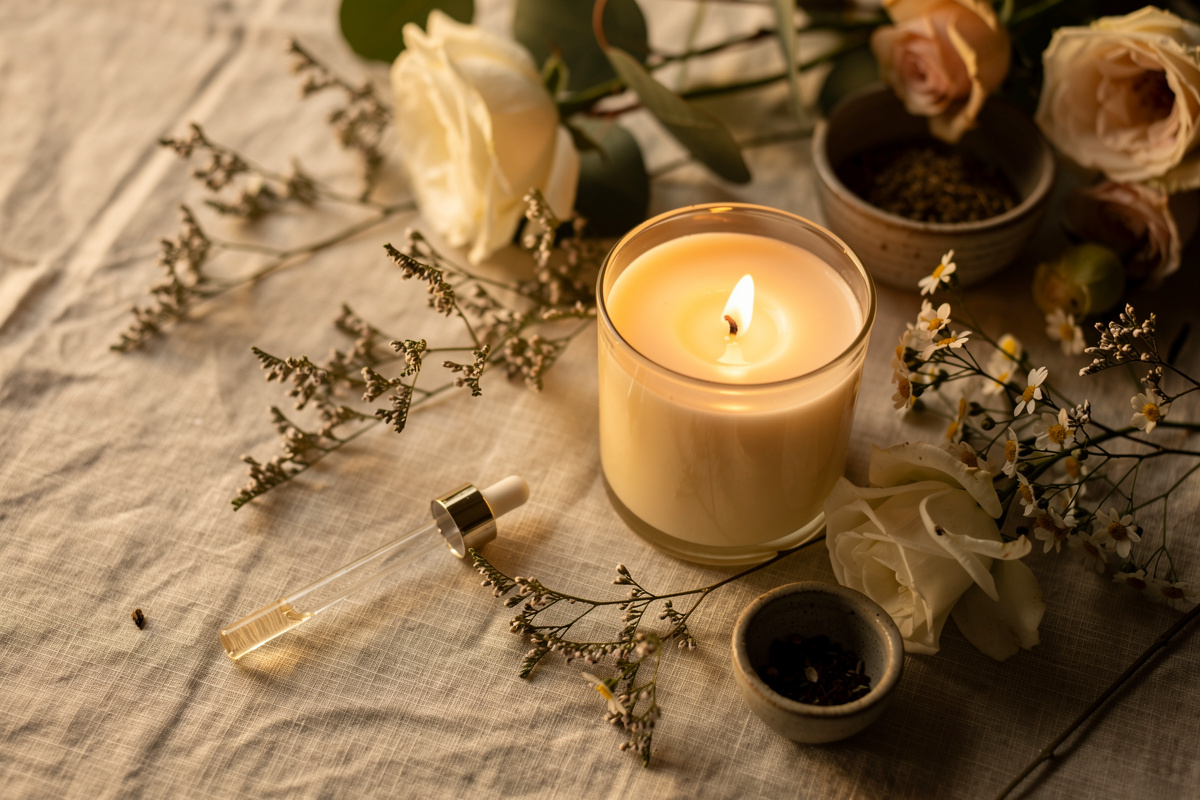
This is why scent strategy for a Garden Route wedding begins with format, not fragrance choice. A pillar candle—solid, architectural, weighted—survives where a tumbler or votive would struggle. It also burns longer than lighter vessels. A 3-inch pillar poured in the studio holds a burn time of 35–45 hours in still air; in coastal conditions with intermittent wind, that translates to visible flame and scent presence for the full four-hour window of ceremony and cocktail hour, without needing replacement.
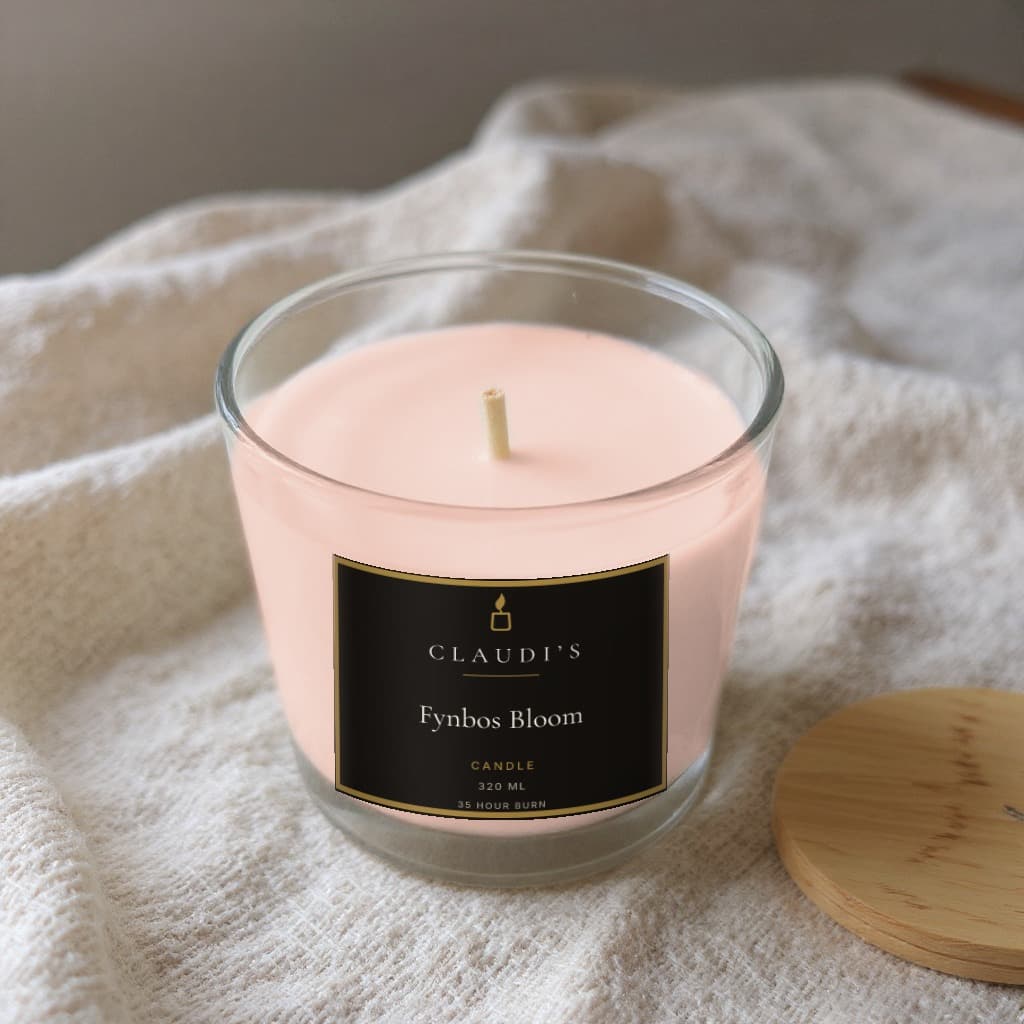
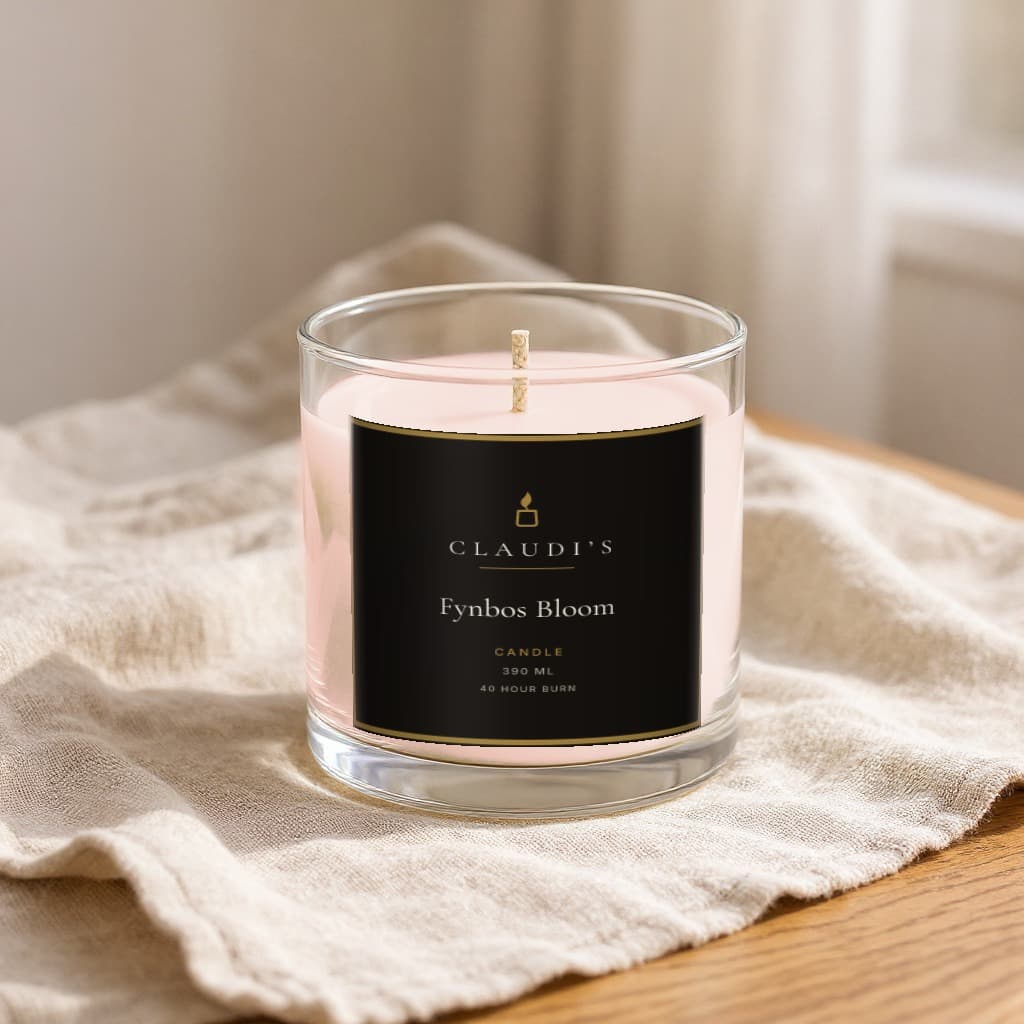
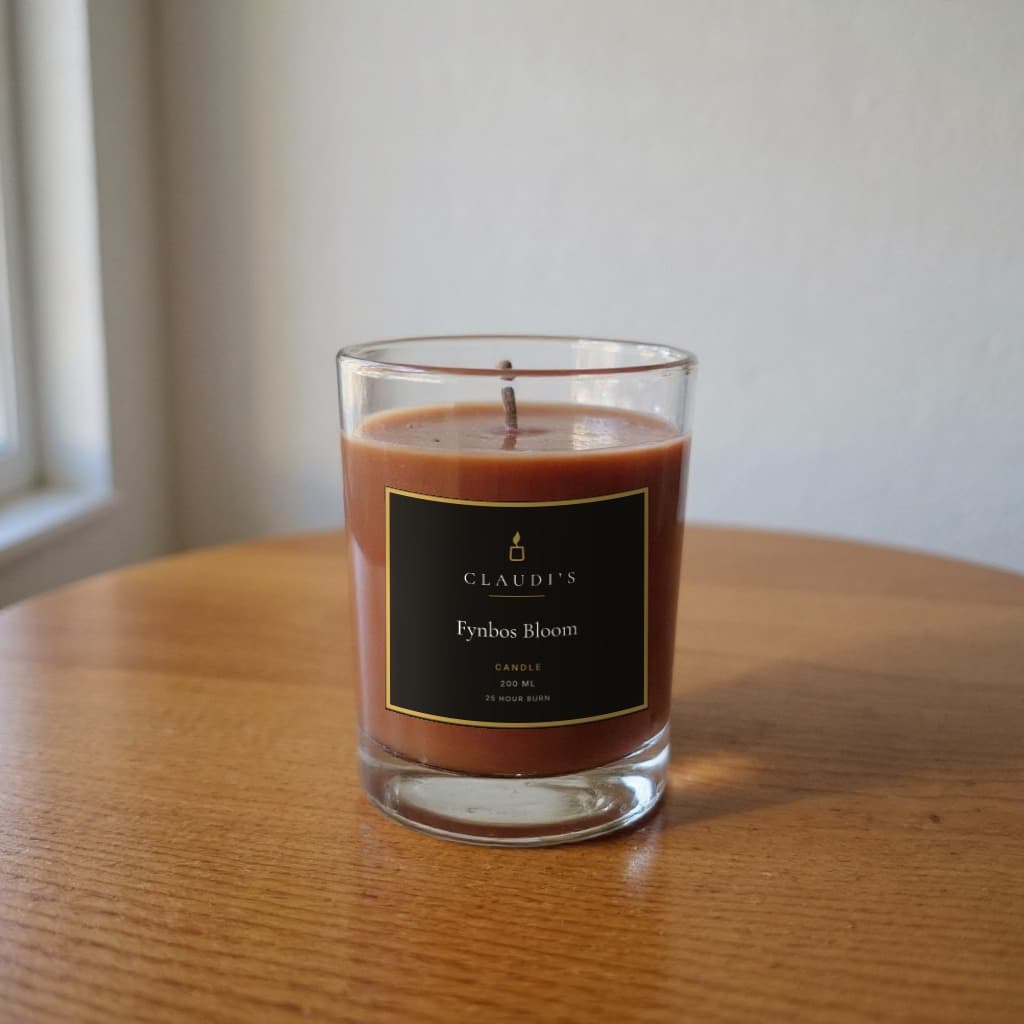
The second consideration is scent family alignment. The Garden Route itself—fynbos scrub, pine forests, the salt mouth of Mossel Bay—carries botanical and maritime notes already present in the air. A fragrance that echoes rather than competes with the landscape performs better. Coastal collection candles are formulated for this: fresh, maritime, slightly resinous. They sit in conversation with the air rather than shouting over it. Fynbos collection pieces lean into the scrubland presence—rosemary, Cape heather, dry stone—and feel like an extension of the venue itself.
Placing and Proportioning Candles for Ceremony Impact
Here's where the craft becomes visible. A wedding with 60 guests in a garden setting needs 8–12 pillar candles distributed across the ceremony space: two flanking the altar, two at the start of the aisle, and a cluster of 4–6 positioned 12 feet back, at chest height, where they frame the scene without creating sightlines into flame.
The math is tactical: each pillar generates a scent footprint of approximately 15–20 feet in still air; in a stiffening breeze, that shrinks to 10–12 feet. This means a 60-person ceremony needs density—not because you want overpowering fragrance, but because you want every guest to register scent consciously at least once during the rite. The goal is olfactory memory, not ambient perfume.
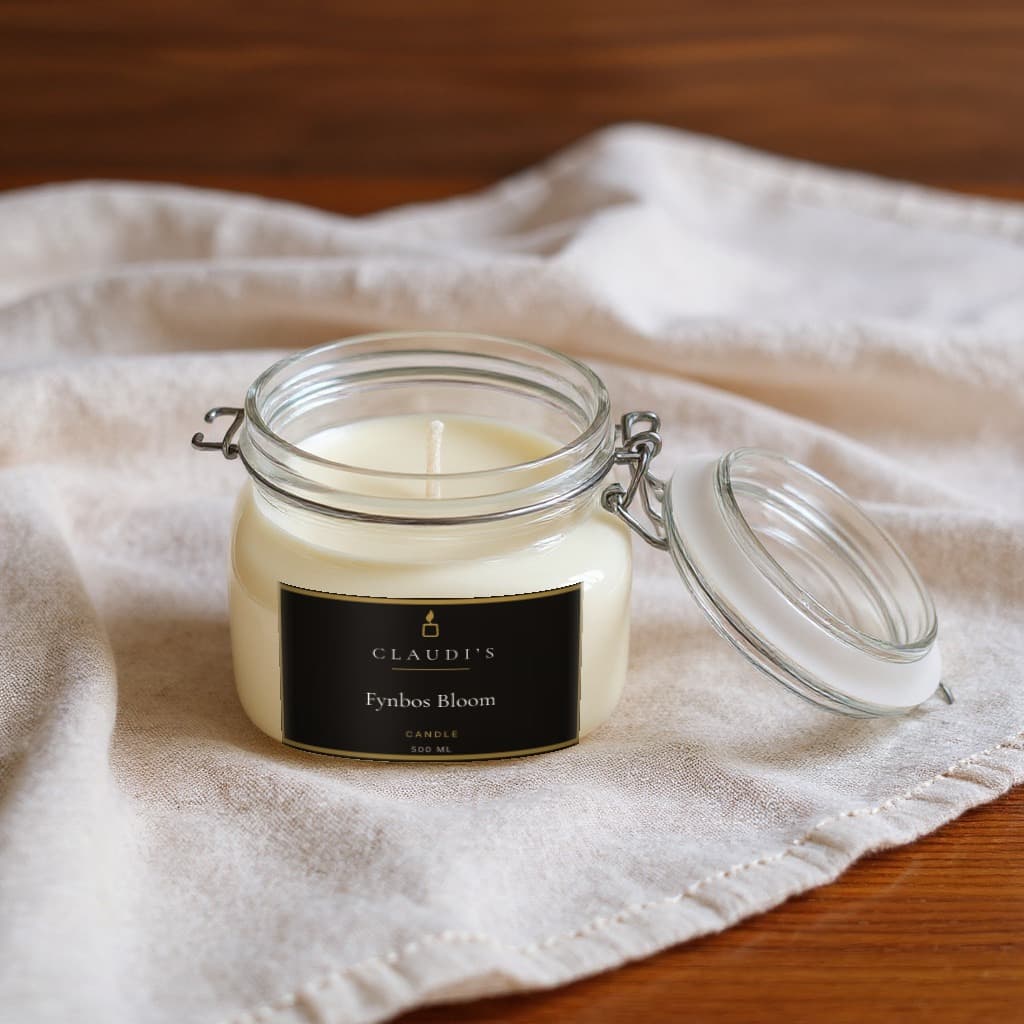
For reception spaces, the dynamic shifts. Guests are moving, eating, talking. A bamboo jar candle—lidded, designed for hospitality use, with a 40–55 hour burn—works better here because it can remain unattended on a table for three hours without risk of guttering, and the vessel itself becomes part of the tablescape. The lid preserves scent between burns if the evening extends, and the aesthetic is craft-forward without theater.
The Studio builds custom proportions for event requests. If your Garden Route wedding centres on a specific narrative—a couple who met in Mossel Bay, or married in a fynbos-surrounded homestead—the fragrance selection deepens. A Manor collection candle carries warmth and formality; it suits evening receptions where golden hour has passed and the space needs grounding. A Gather collection piece brings spiced, social notes ideal for a cocktail-hour gathering where conversation is the main event.
Timing and Placement: A Decision Framework
Start by mapping your venue layout. Identify the ceremony focal point (altar, arbour, exchange point). Note where guests will stand or sit. Consider the light timeline: if the ceremony begins at 4 p.m. and reception continues until 8 p.m., dusk shifts at 6:15 p.m. in late July. Candlelight becomes visible and atmospheric only after that point, but scent registers immediately, regardless of light.
This means the fragrance choice and placement serve your ceremony moment first, your reception ambiance second. A pillar candle lit at 3:45 p.m.—15 minutes before guests arrive—will have settled into a true scent release by 4 p.m. Rushing the light-time creates incomplete fragrance dispersal.
Use the custom label builder to personalise your pillars or jars with your names, date, or a short line from your vows. This transforms candles from décor into keepsake. Many couples gift these to guests afterward, and the fragrance becomes a memory trigger long after the ceremony ends.
For detailed guidance on scent selection, consult our scent quiz—it's built to help you identify whether your instinct runs toward the fresh (Coastal), botanical (Fynbos), formal (Manor), or social (Gather) spectrum. Then discuss your specific venue conditions with the studio. We can advise on quantities, placement angles, and timing based on the exact Garden Route location.
Frequently Asked Questions
How many candles do I need for a 60-person Garden Route wedding? For ceremony: 8–12 pillars. For reception tables (if using tumblers or jars): 1 candle per 4–5 guests, or a cluster of 3–4 jars at the centre of larger tables. The exact number depends on venue layout, wind exposure, and whether you're using candles as primary décor or accent. Contact the studio with your venue details for a custom proposal.
Can I order custom-scented candles for a specific wedding date? Yes. Bespoke fragrance blends require 6–8 weeks' lead time and a minimum order of 12 pieces (pillars or jars). We work from your brief—a place, a memory, a colour palette—and pour the batch in the studio. This also qualifies for our wedding + event candles programme, which includes custom labelling and packaging.
What if the wind is too strong on the day? Pillars remain lit in winds up to 25 knots if positioned correctly. For stronger conditions, we recommend moving candles slightly inland or using a three-sided windbreak (glass, acrylic, or fabric). The studio can advise on repositioning during your consultation; we've designed dozens of Garden Route ceremonies and understand the local air patterns.
Do you deliver to venues in the Garden Route and Mossel Bay area? Yes. Delivery and setup for events within 50 km of Mossel Bay is included with custom wedding orders over a certain quantity. For out-of-area destinations, we arrange logistics on a case-by-case basis. Visit our locations page for full details, or reach out directly through the weddings service page.
The Moment Fragrance Makes Itself Known
Your Garden Route wedding will move quickly. The ceremony will be over in thirty minutes. Guests will talk, laugh, shift position, lose awareness of the details you've choreographed. But if you've designed scent