Designing a Living Room with Fragrance: How Scent Anchors Interior Stillness
Scent shapes how a room feels. The right candle becomes invisible until someone steps inside—then the space speaks for itself.
By Claudi·Poured in Mossel Bay, Western Cape
A living room candle does not sit on a shelf waiting to be noticed. It moves through air. It settles into fabric. It changes the first three seconds after someone enters the door—before they see the furniture, before they register the light. This is why choosing a living room candle is not about aesthetics alone. It is about architecture for the invisible.
Most people treat candle selection the way they treat wall colour: a afterthought, a neutral choice, something that should not offend. The result is rooms that look considered but feel empty. They are missing the one element that transforms a space from neutral to inhabited—the sense that someone has thought carefully about what the air itself should say.
The living room is the loudest room in a home. It hosts conversation, silence, reading, television, the ambient hum of daily life. Its fragrance needs to work across all of this without demanding attention. It should be present enough to be real, subtle enough to be forgotten, and true enough to survive a second visit.
Key Takeaways
- A living room candle should anchor a space without competing with conversation or activity—choose scents that recede into the background after the first five minutes, like the fynbos-based compositions that settle rather than announce.
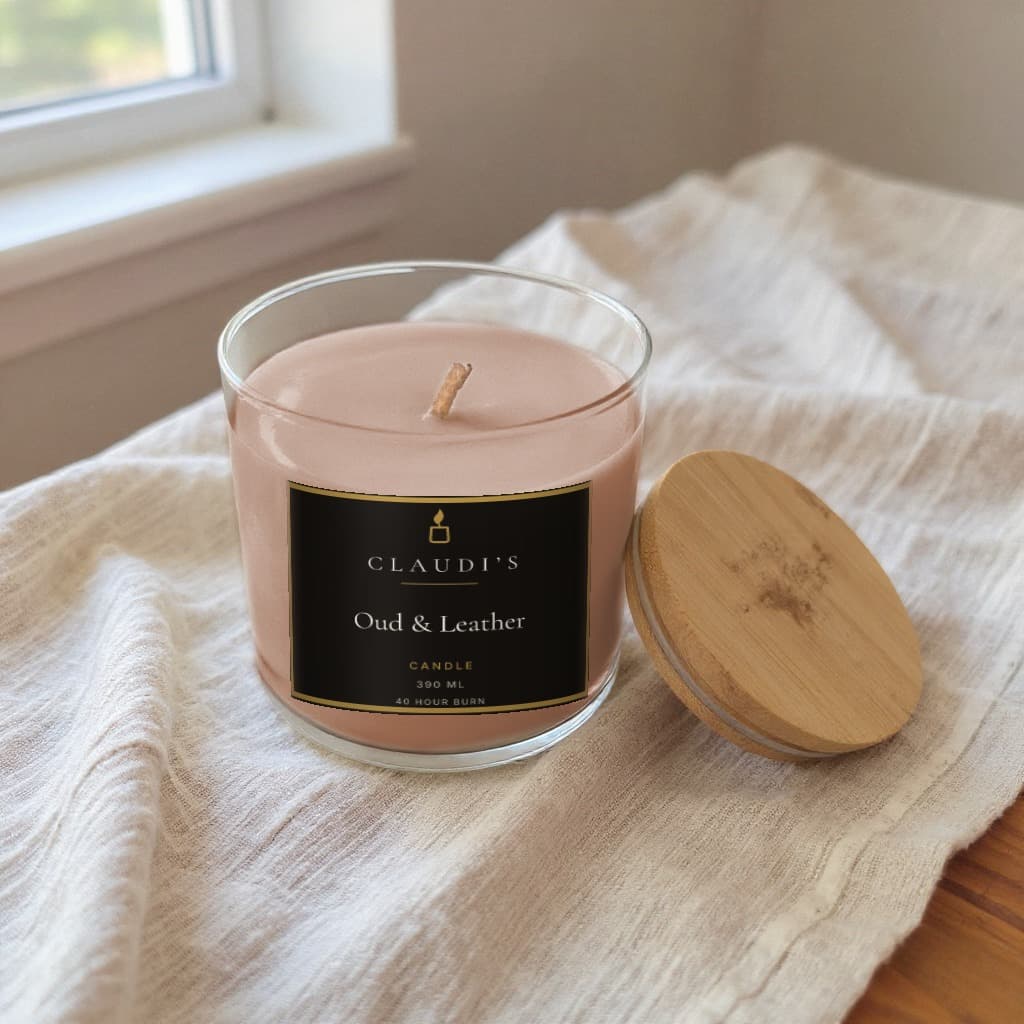
- The vessel matters as much as the scent: a candle poured in the Mossel Bay studio with a 55-hour burn time in a bamboo jar will become part of the room's permanent fixture, not a consumable prop.
- Fragrance strategy for living rooms requires matching scent family to room function—formal gathering spaces suit Manor warmth, while light-filled rooms overlooking coastal views benefit from Coastal freshness.
The Invisible Architecture of Living Room Fragrance
A living room candle operates at the threshold between notice and invisibility. Neuroscience tells us that olfactory adaptation—the brain's tendency to stop registering a constant scent after approximately 15 minutes—is not a failure of the candle. It is the whole point. A fragrance that remains prominent after 20 minutes is working against the room, not for it.
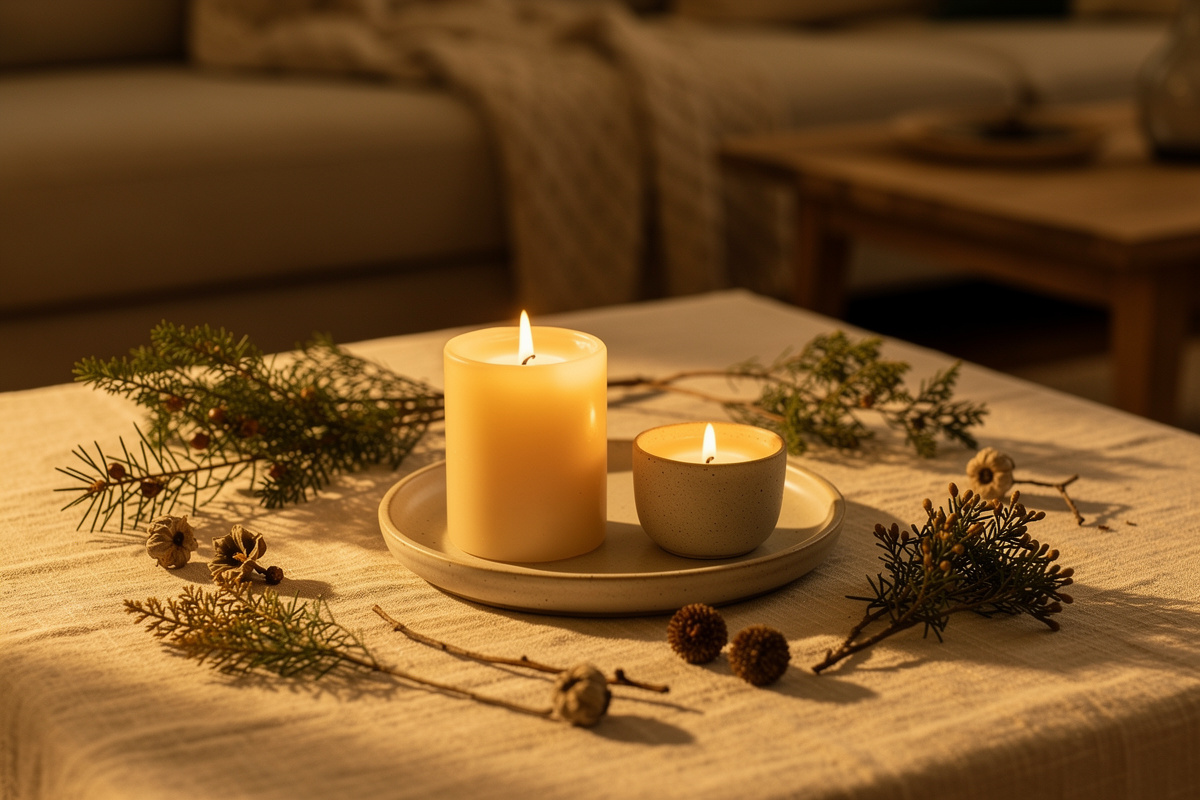
This is why living room candle ideas often miss the mark. They emphasize novelty, complexity, or impact—qualities that work brilliantly in a bedroom or a study, where a single person controls the sensory environment. A living room is shared. A candle here must be patient. It should establish a mood rather than demand recognition.
The Garden Route's particular humidity and light quality—Mossel Bay receives salt-laden winds off the Atlantic that shift how scent disperses indoors—means that lighter, more volatile fragrance compositions actually perform better in living spaces than heavy, creamy notes. A fynbos-based scent, with its natural resinous structure, holds its place in the air without becoming cloying. It acknowledges the season without overstating it.
Burn time also matters practically. A 35-hour candle in a tumbler will need replacing every two weeks if burned four hours daily. A bamboo jar with a 40–55 hour burn time becomes part of the room's permanent landscape—you refill it rather than replace it, which changes how you relate to the object itself.
Vessel as Permanent Object
The candle vessel in a living room is not temporary. It will sit on a side table for months. It will collect dust, be moved during cleaning, be observed during moments of stillness. This means the vessel deserves the same consideration as any object you keep intentionally in your home.
A tumbler candle works for living rooms because the vessel is reusable—after the candle burns, the glass becomes a holder for pens, flowers, or simply stays as an object. Its simplicity means it does not compete with existing décor. The 35–45 hour burn time makes it practical for regular use without constant replacement.
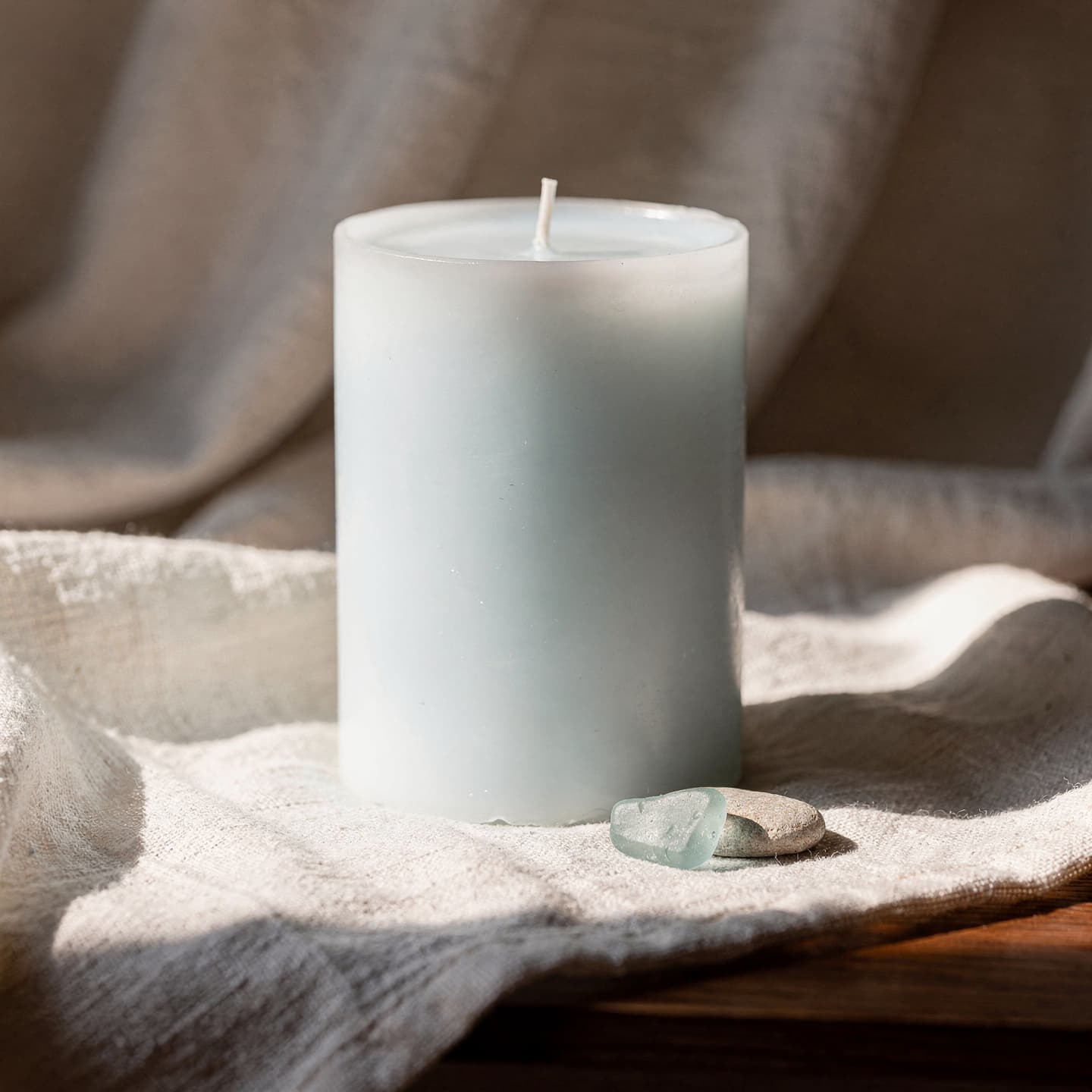
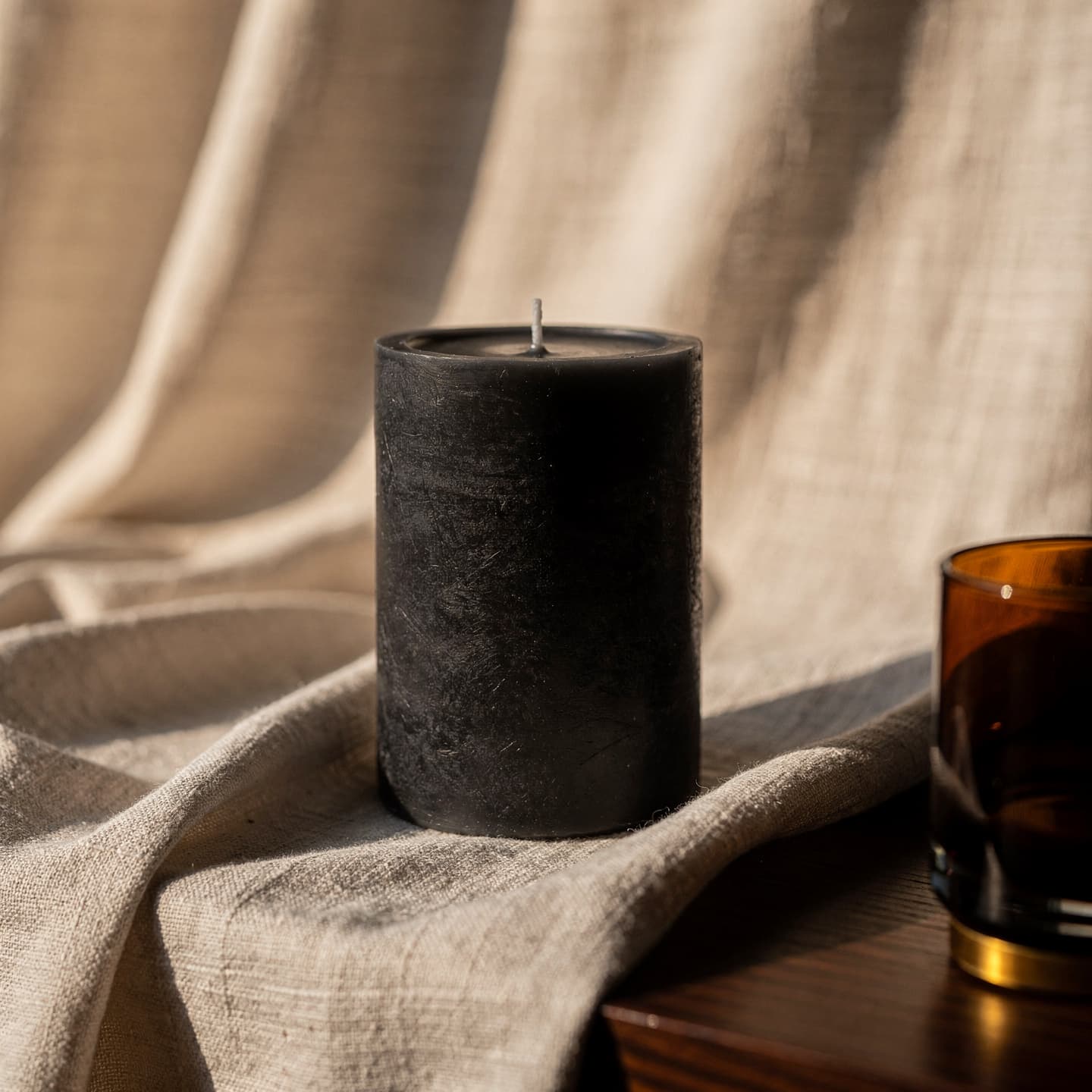
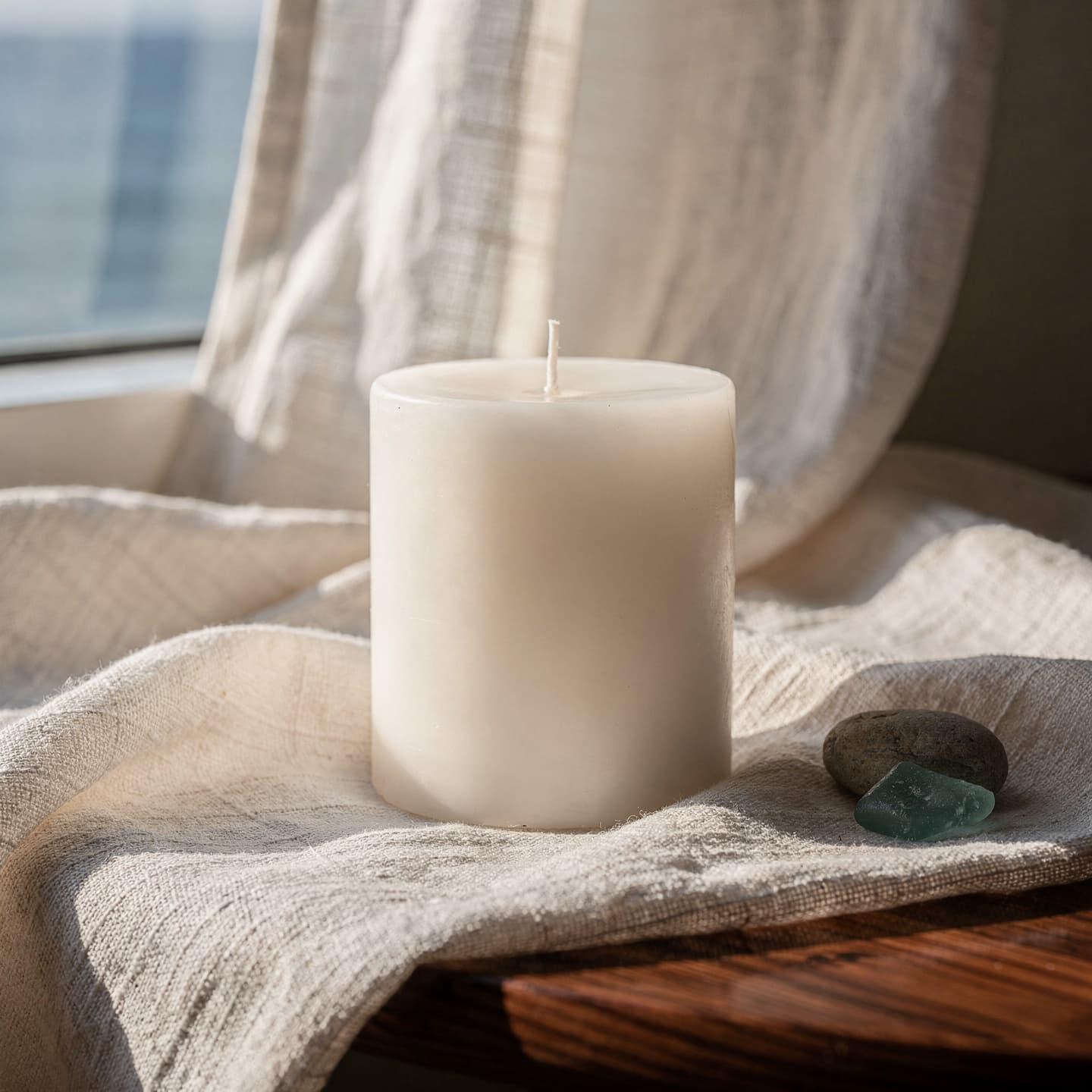
For rooms where the candle itself is meant to be noticed—a formal living space, a room with minimal décor—pillar candles create architectural presence. They are not hidden inside a vessel. They are the object. This works particularly well in rooms with high ceilings or where the candle will be positioned on a mantelpiece or dining table.
The bamboo jar sits between these approaches. It is beautiful enough to be left uncovered on a shelf, practical enough to be refilled, and the lid means scent stays concentrated between burns—crucial if your living room is large or has significant air movement from windows.
Matching Scent Family to Room Function
Living room candle ideas succeed or fail based on how well the scent family matches what happens in the room. This is not about personal preference alone—it is about functional fragrance design.
Rooms used primarily for gathering and conversation benefit from our Gather collection—scents with subtle spice and warmth that encourage presence without drowsiness. These work in living rooms with multiple people because the complexity of the fragrance composition gives different people different entry points. One person smells the cinnamon; another notices the deeper wood base.
Rooms with formal function—where the living room doubles as a space for business conversations, interviews, or careful listening—call for Manor collection scents. Warm, architectural, slightly austere. These fragrances do not try to please. They establish authority and calm simultaneously.
Light-filled living rooms that face coastal views or water—common in the Garden Route—pair exceptionally well with Coastal collection compositions. Fresh, maritime, slightly saline. These scents do not compete with the view; they amplify the sense of place already present in the room.
A practical next step: use our scent quiz to test your instincts. You may think you want a Manor fragrance and discover that Coastal actually matches how you want the room to feel.
Creating a Sustainable Fragrance Rhythm
Rather than burning a single candle continuously, rhythm keeps a living room fragrance from becoming wallpaper. Burn the same candle for three weeks. Pause for one week. Return to it. The brain re-learns the scent. It becomes present again.
This approach also extends burn life. A 45-hour candle burned four hours daily will last longer if you alternate between two scents. More practically, it gives you permission to own multiple tumbler candles—one from the Coastal collection, one from Manor—and rotate them by season or mood.
For living rooms used occasionally—guest rooms that double as sitting spaces, or formal living areas opened only for entertaining—custom labels transform a candle into a design object that sits permanently on display. You light it when the room is used; it performs its design function even unlit.
Frequently Asked Questions
What burn time should a living room candle have? A living room candle should burn for at least 35–45 hours—long enough that replacement does not become a chore, but short enough that the fragrance composition stays true. Our bamboo jar extends this to 40–55 hours because the lidded design preserves scent between burns and suits rooms where the candle sits unused between gatherings.
Can I burn multiple candles in one living room? Yes, but only if the room is large enough to disperse scent without overlap—roughly 30 square meters or more. A living room candle works best as a singular presence. If you want variety, rotate between two scents on a weekly rhythm rather than burning them simultaneously.
How do I know if a scent will feel right in my specific living room? Room size, light quality, air movement, and existing décor all shift how a fragrance reads. The scent quiz accounts for room function and light exposure, which are the two strongest predictors of fit. If your living room is south-facing and coastal-adjacent, Coastal collection scents will align with the existing sensory environment rather than compete with it.
Should the living room candle match my bedroom or kitchen candles? No. Each room should have a distinct scent family so that moving between spaces feels like a intentional transition rather than a continuation. A living room with Manor warmth, a bedroom with a lighter Fynbos composition, and a kitchen with Gather spice creates sensory variety without fragrance fatigue.
Designing Stillness
The living room is where a home's inhabitants spend unstructured time together. This is why fragrance here matters more than in any other