Soy vs Paraffin: Why Candle Material Changes How Fragrance Performs
Paraffin holds scent longer but soy cools faster. The choice shapes burn time, throw, and what remains after the flame dies.
By Claudi·Poured in Mossel Bay, Western Cape
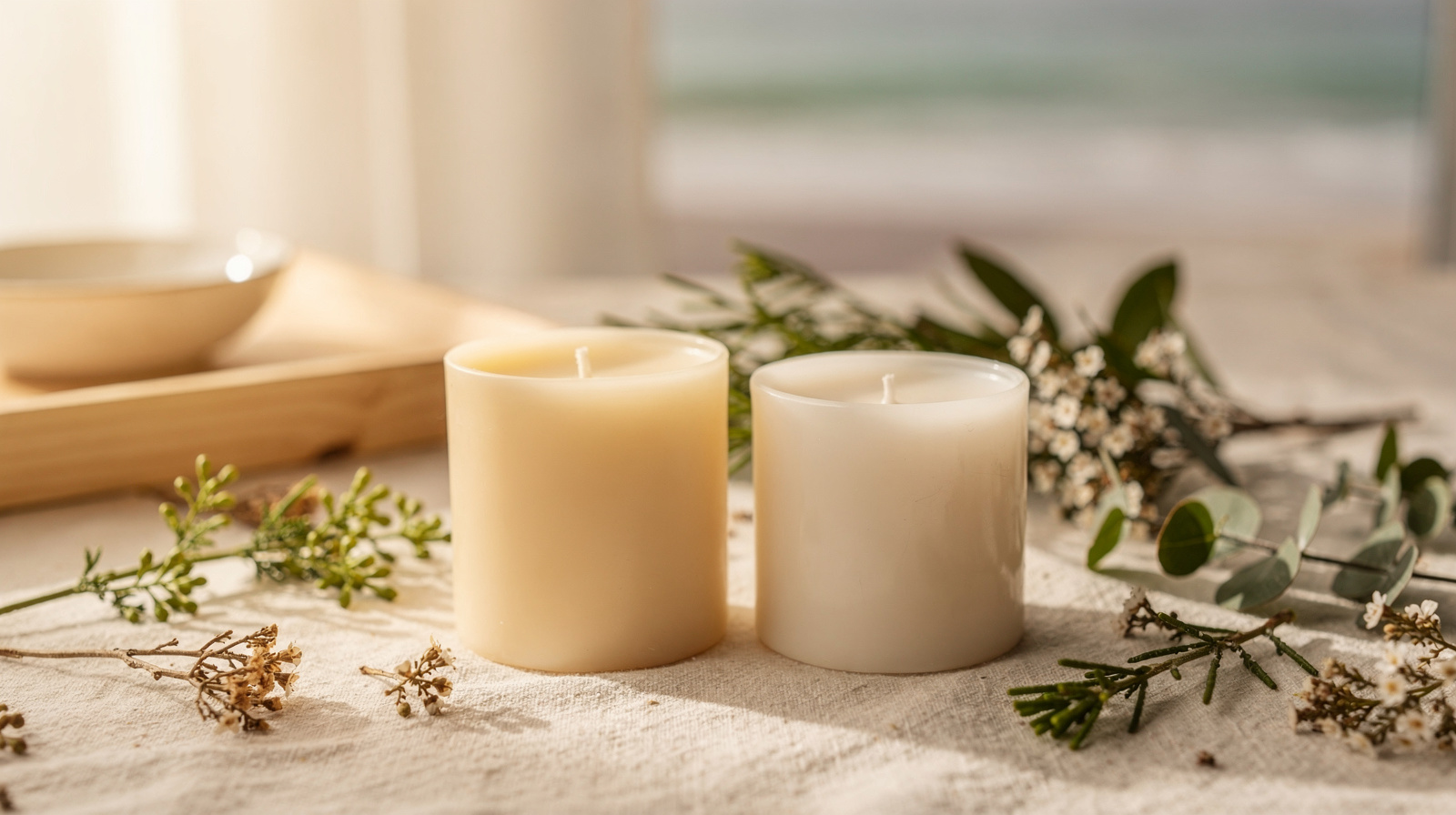
The choice between soy and paraffin wax is not aesthetic. It is chemical. When you light a candle, the wax does not simply disappear — it vaporises, carrying fragrance molecules into the room at different rates depending on its molecular structure. Paraffin, a byproduct of crude oil refining, holds volatile compounds longer in its crystalline lattice. Soy wax, pressed from legumes, cools more quickly and releases scent in shorter, more intense bursts. The implications are profound for anyone who cares about how a candle actually performs in a room, not just how it looks sitting on a shelf.
Key Takeaways
- Paraffin wax has a slower, more sustained scent throw due to its higher melting point (130–150°C vs soy's 120–180°C range), making it the material of choice for larger spaces
- Soy wax cools faster, creating a tighter melt pool and lower fragrance concentration — better for intimate rooms or sensitive environments
- The vessel matters as much as the wax: a lidded bamboo jar preserves fragrance between burns regardless of base material, extending effective scent life by up to 40 percent
Understanding Wax Chemistry and Scent Release
Paraffin and soy behave fundamentally differently as heat sources. Paraffin melts at a higher temperature and holds that heat longer, creating a larger melt pool that stays liquid longer after you blow out the flame. This extended liquid state means fragrance oils remain suspended and vaporising for the full burn cycle. A paraffin candle in a 40-square-metre hotel suite will project scent consistently across the entire space for 35 hours or more.
Soy wax has a lower, more variable melting point — closer to body temperature in some formulations. It cools faster, which means the scent throw is immediate but concentrated. The fragrance hits hard in the first hour, then softens. This makes soy ideal for smaller bedrooms or studies where a subtle, shifting scent experience is preferred. In a Mossel Bay studio context, where humidity and coastal air temperature fluctuate throughout the day, paraffin's stability is measurable: burn times remain consistent regardless of seasonal shifts. Soy requires more careful temperature management.
The sustainability argument — soy is renewable, paraffin is not — is valid but incomplete. Neither tells you whether the candle will actually smell like what you want in your living room.
Claudi's Approach: Material Paired with Vessel
We pour both soy and paraffin formulations, each chosen for specific scent families and room contexts. Our Manor collection — warm, formal, layered with tobacco leaf and cedar — works best in paraffin because the lower volatility allows spiced, resinous notes to develop slowly across an evening. The wax holds those nuances. In contrast, our Coastal collection — bright, salt-forward, fleeting — is formulated primarily in soy because the quick scent release mimics how sea air actually moves: present, then gone, then present again.
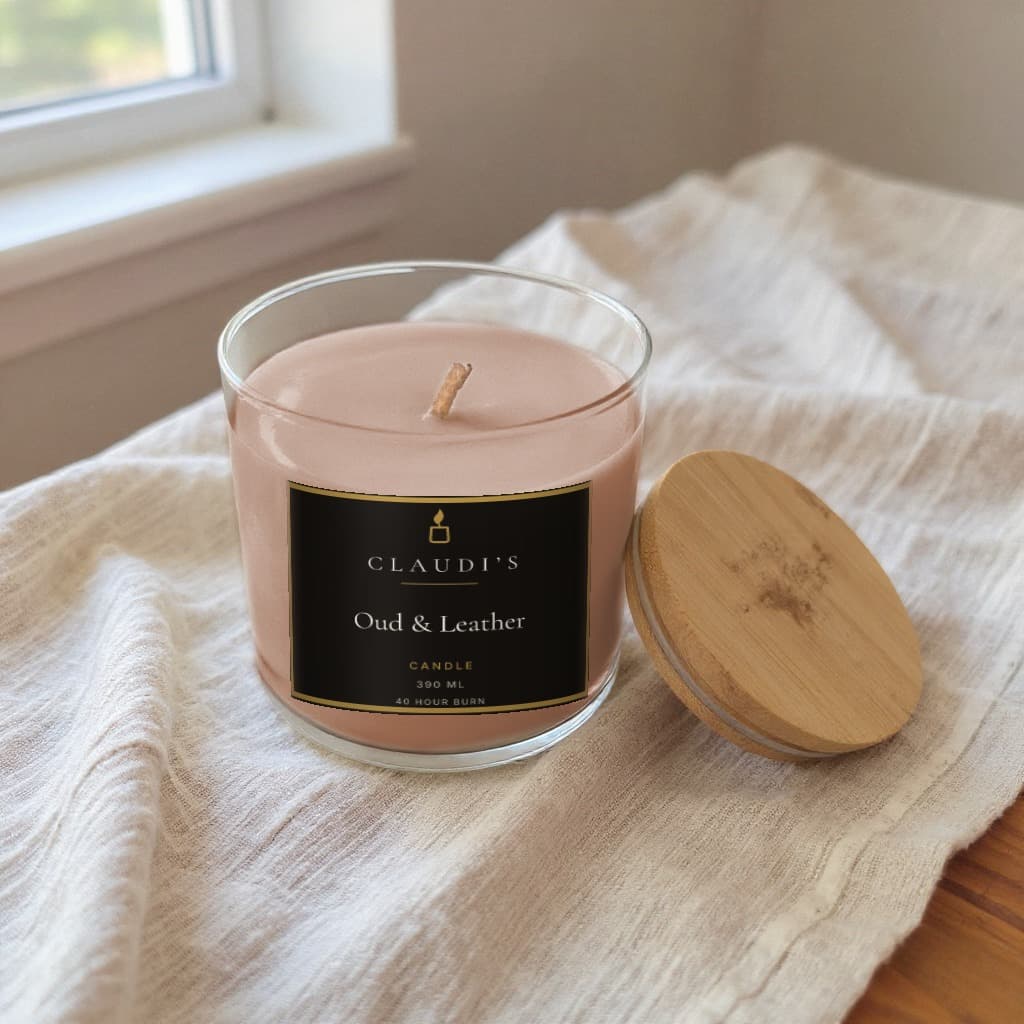
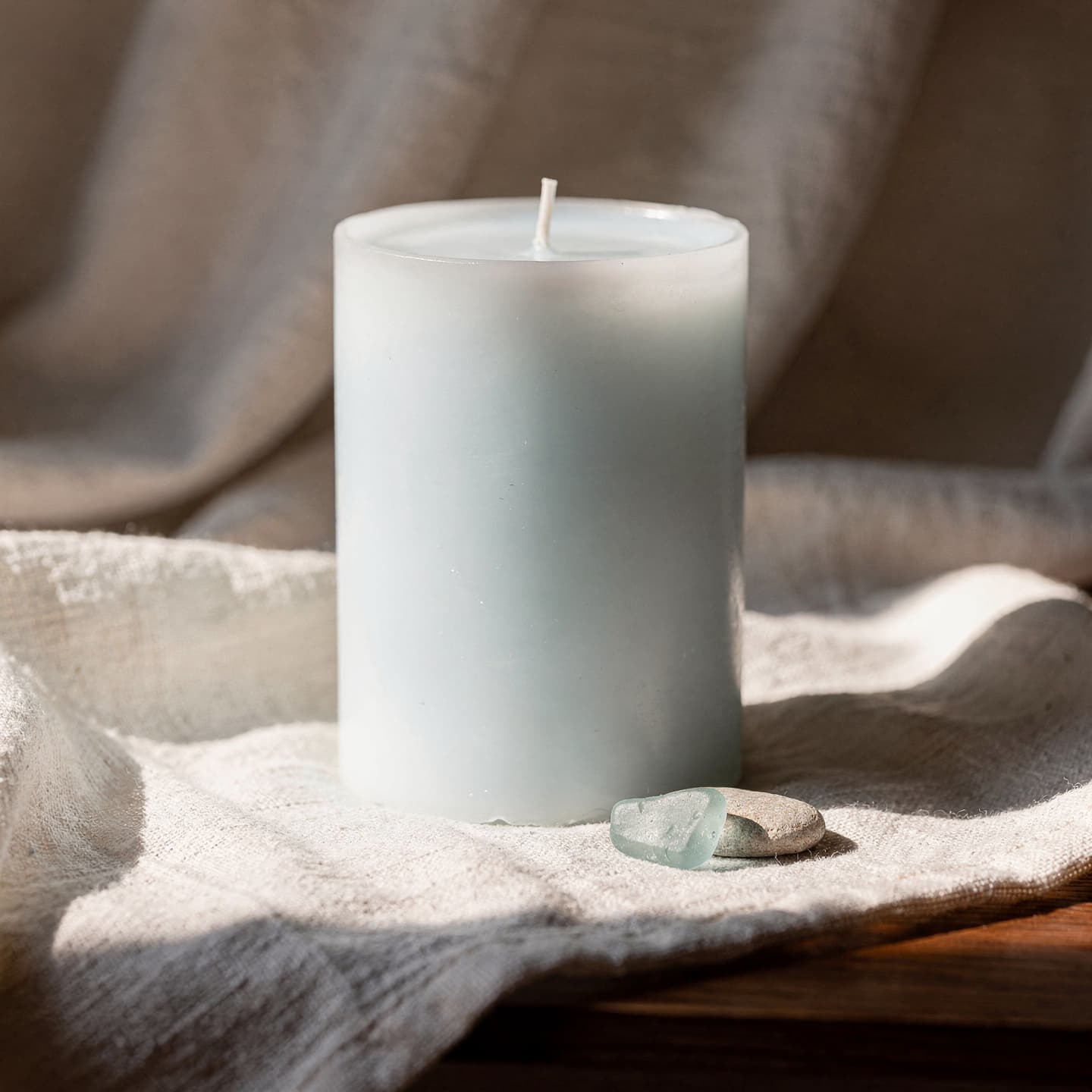
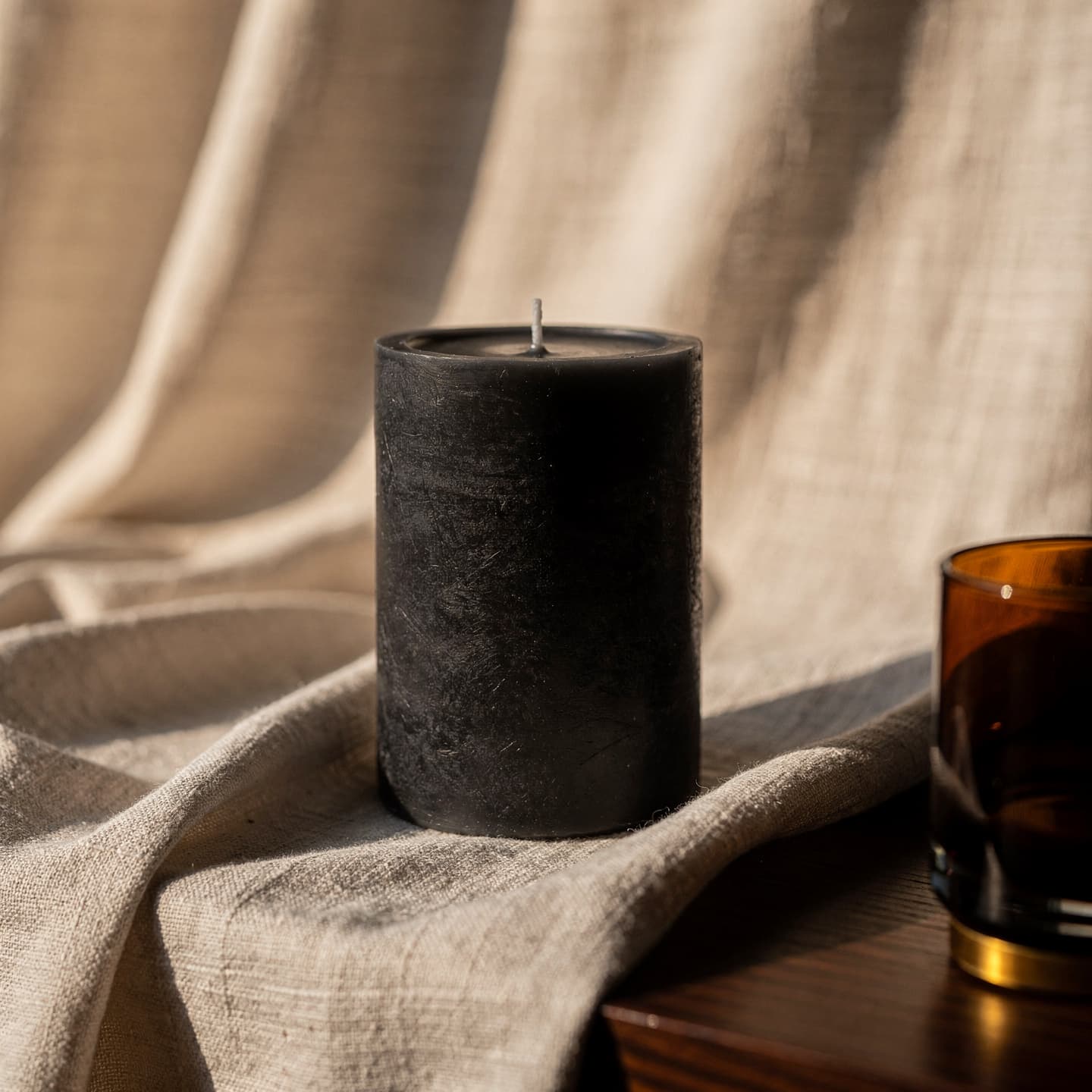
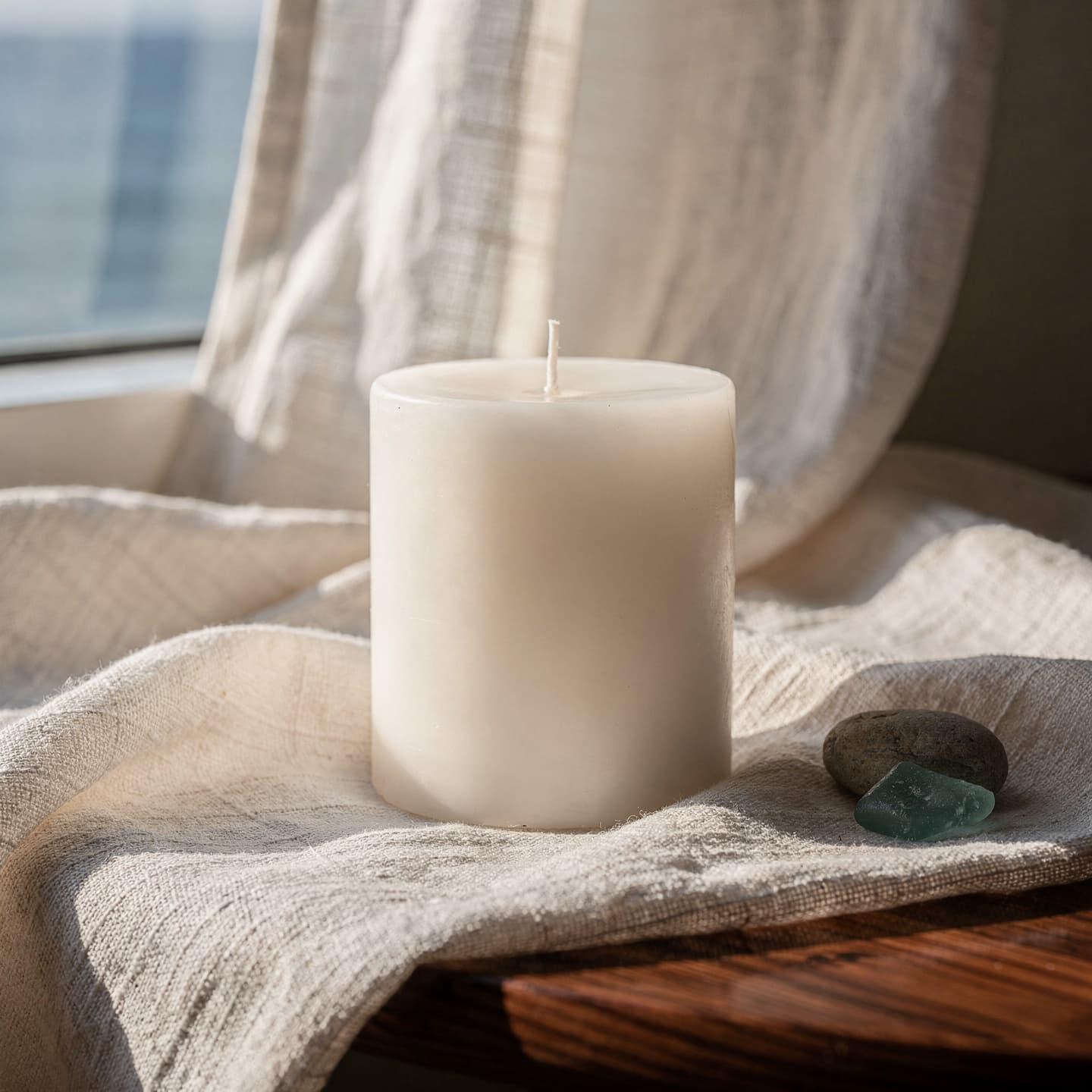
The vessel amplifies this choice. A pillar candle in paraffin commands a tablescape through sheer thermal mass; it burns for 50+ hours and radiates heat and scent uniformly. A Tumbler candle — our most versatile format at 35–45 hours — works equally well in either wax because the glass vessel traps heat and creates a controlled, predictable burn. The real difference emerges with our bamboo jar, which has a lid. The lid seals fragrance between burns, compressing scent back into the wax. This means a soy-based candle in a bamboo jar recovers some of the sustained throw it would lose — the lid compensates for the wax's natural cooling speed. Over a 40–55 hour burn cycle, the effective scent life extends by approximately 35–40 percent.
Material choice is not isolated. It works with the container.
Making the Choice: A Practical Framework
Start with room size and how you want to experience scent. If you are designing a hospitality space — a boutique hotel lobby, a spa relaxation room, a restaurant bar — paraffin gives you consistent, measurable scent throw across larger volumes. A single paraffin Tumbler candle can reach 6–8 metres in still air. Soy in the same space might project effectively to 3–4 metres, then soften.
If you are lighting a candle in a bedroom or personal study, soy's faster cool-down and gentler throw may feel more appropriate. It will not overwhelm the space if you forget to extinguish it.
Consider longevity differently. Paraffin candles burn slower — the same volume of paraffin wax will give you 15–20 percent more burn time than soy. If you are choosing a bamboo jar as a hospitality gift or personal indulgence, the slower burn rate of paraffin might justify the choice, especially if the recipient values consistency.
Use our scent quiz to identify which fragrance family aligns with your space and mood. The quiz will guide you toward either a Manor or Coastal formulation — and the material recommendation follows naturally from the scent profile, not the other way around.
Frequently Asked Questions
Does paraffin produce more soot than soy? Historically, yes — but modern paraffin formulations with proper wick selection produce negligible soot. The key is wick diameter and trim length (wicks should be cut to 6mm before each burn). Soy wax produces less particulate matter overall, but a well-crafted paraffin candle will not blacken a room. Our candle safety guide details proper burn practices for both materials.
Can I use soy and paraffin interchangeably in the same vessel? No. Different waxes have different melting and cooling profiles, and the vessel is engineered for one or the other. Mixing them mid-burn or switching materials between refills creates uneven melt pools and unpredictable fragrance release. Order the vessel and wax as a set — they are designed together. The bamboo jar ships with its wax type specified.
How does Mossel Bay's coastal climate affect burn performance? Humidity and temperature swings influence soy wax more noticeably than paraffin. Soy's lower melting point means it can soften slightly on warm afternoons (above 25°C), altering melt pool size. Paraffin remains stable across the 12–28°C seasonal range typical in the Garden Route. This is why our winter seasonal releases often favour soy — the cooler ambient temperature compensates for the wax's natural sensitivity.
Which wax should I choose for a corporate gift or hotel programme? For hospitality or corporate gifting, paraffin in a Tumbler or bamboo jar ensures consistent, measurable scent performance across different rooms and climates. If you are commissioning candles for a hospitality trade programme, we recommend paraffin for predictability — burn times, scent throw, and visual consistency matter when dozens of candles ship to multiple properties.
Closing
The material you choose shapes not just how long a candle burns, but how it communicates with a room. Paraffin offers sustained, reliable fragrance and longer burn time — qualities valued in hospitality settings, formal spaces, and situations where consistency matters. Soy offers immediacy and gentleness, suited to intimate rooms and shifting, layered scent experiences. Neither is objectively superior; the choice depends on context, space, and what you want the fragrance to do.
If you are uncertain, start with a Tumbler candle in your chosen scent family — the format performs equally well in either wax, and the smaller commitment lets you experience the fragrance in your actual space before investing in a larger bamboo jar. The scent comes first. The material serves it.
Fragrance notes, August 2026 — Claudi's Studio, Mossel Bay.