Why South African Candle Makers Are Redefining Craft Beyond Tourism
Hand-poured candles from the Garden Route compete on substance, not nostalgia. How Mossel Bay's studios shift the conversation.
By Claudi·Poured in Mossel Bay, Western Cape
The term "South African candle brand" once conjured images of gift-shop packaging and generic safari aesthetics. That story no longer holds. Across the Garden Route and beyond, a new generation of makers has moved past the souvenir category entirely, competing instead on the rigour of their craft: burn science, botanical sourcing, vessel design, and the deliberate use of place as a material, not a marketing angle. From the Mossel Bay studio, this shift feels less like a trend and more like a correction—a return to the principle that a candle's integrity matters more than its origin story.
Key Takeaways
- Contemporary South African candle makers distinguish themselves through measurable craft standards (burn time, scent throw, wax quality) rather than cultural narratives alone.
- The Garden Route's fynbos ecosystem provides access to rare botanical materials that international brands cannot source without months of lead time and import friction.
- A deliberate approach to vessel design—from tumbler reusability to bamboo jar preservation—creates a secondary value proposition that justifies premium pricing in a global market.
The Shift From Commodity to Craft
A South African candle brand today competes in a fundamentally different arena than it did a decade ago. International consumers no longer distinguish candle quality by geography; they evaluate it by measurable performance: burn hours, scent throw distance, and whether the vessel has a life after the wax burns down. This democratisation of quality standards has forced local makers to sharpen their technical practice rather than rely on exoticism.
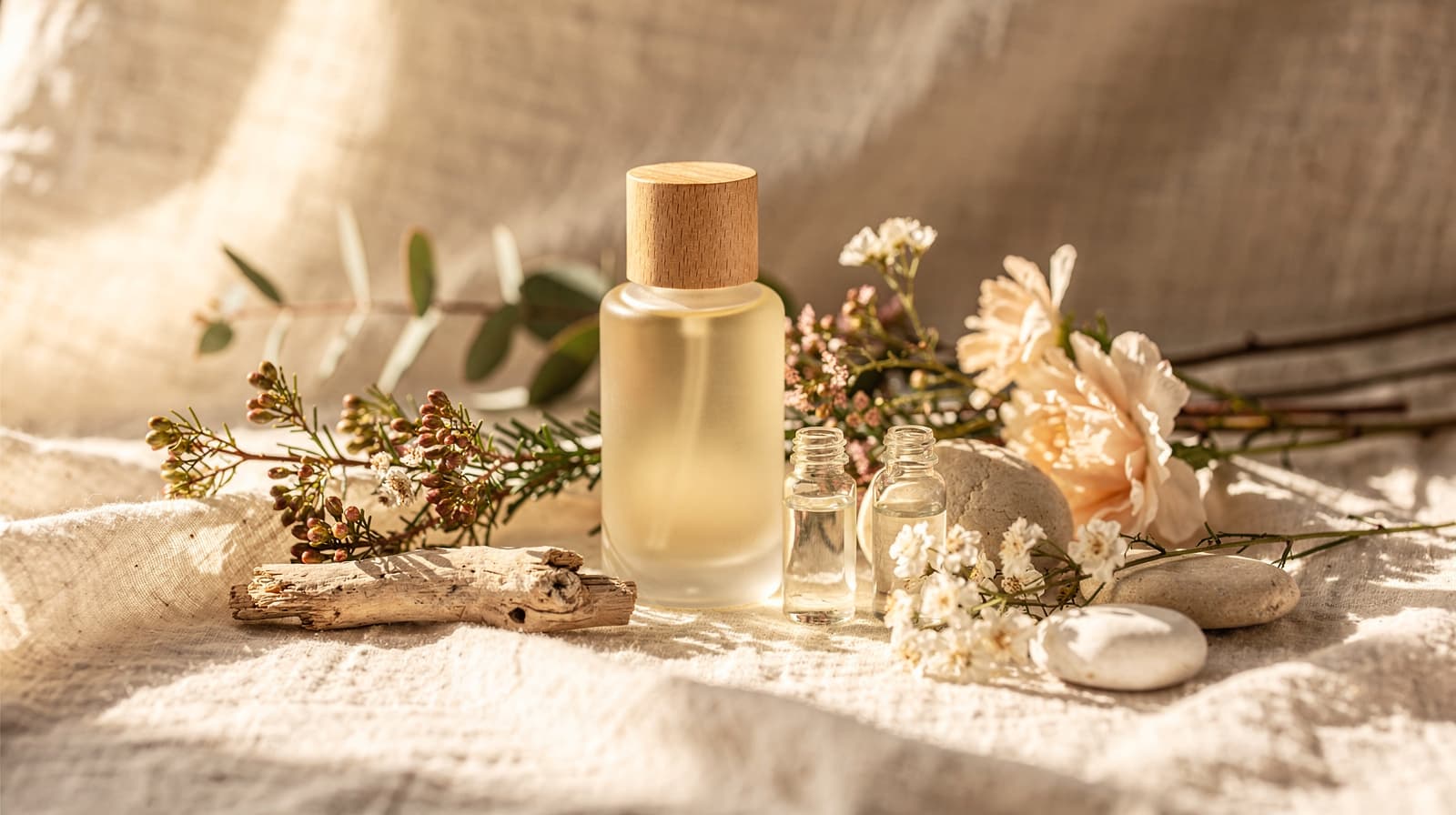
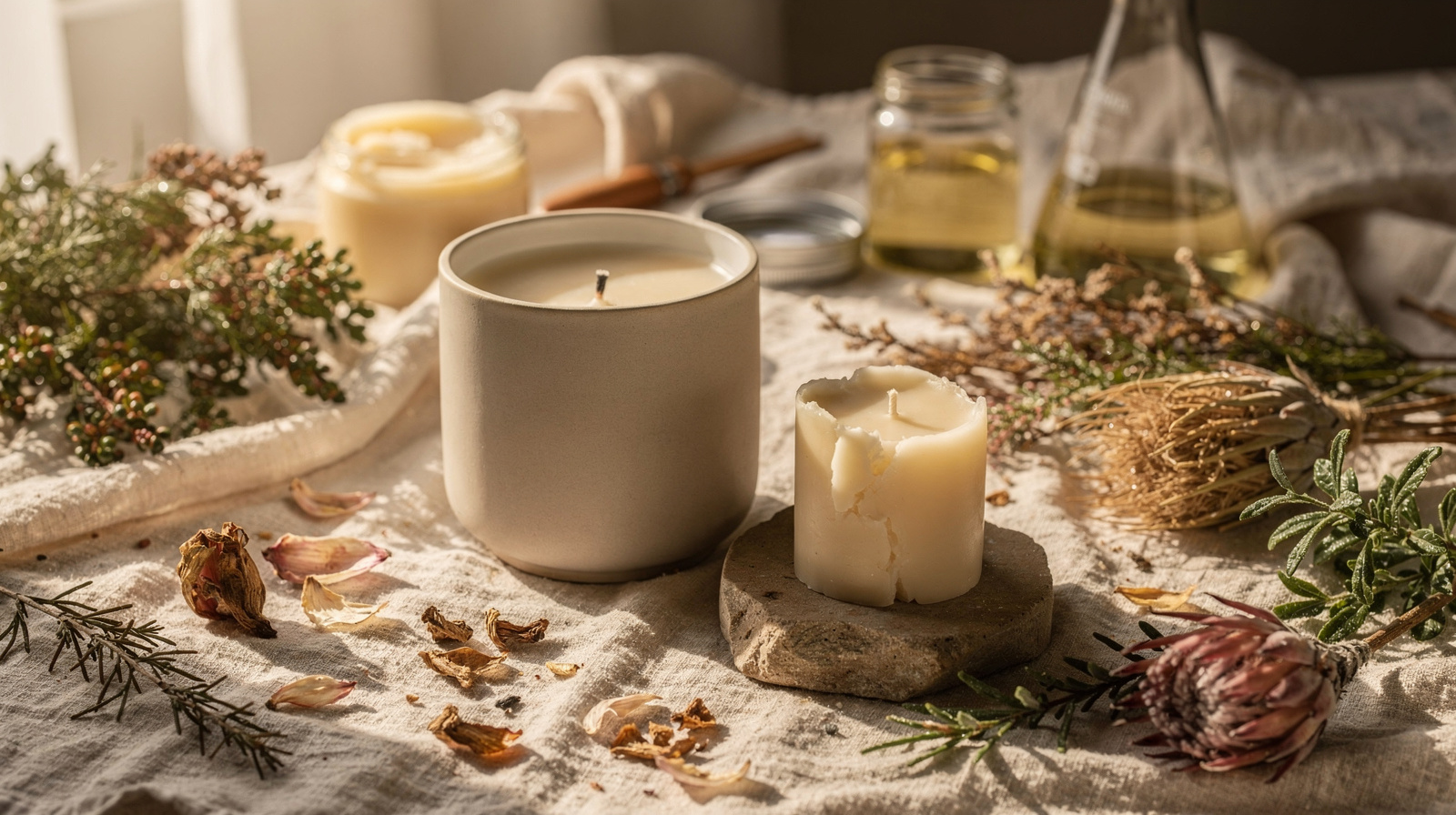
The fynbos ecosystem—endemic to a 230-kilometre stretch of the Western Cape coastline—offers a practical advantage that neither sentiment nor marketing can replicate. Fynbos plants like leucadendron, protea, and wild rosemary contain volatile compounds that release fragrance at specific temperatures. A maker working within 40 kilometres of these plants can source fresh botanical material within 48 hours; an international brand ordering the same materials through commodity suppliers faces 6–8 weeks of ocean freight. That difference compounds across dozens of small decisions: scent saturation, extraction method, blend ratios. The result is a candle that performs differently, not just smells different.
A South African candle brand with this proximity advantage must exploit it rigorously. Generic lavender or cedarwood sourced from global wholesalers erases the advantage entirely.
Vessel Design as Craft Language
Where a South African candle brand truly separates itself from international competitors is in the vessel itself. Mass-market candles treat the container as packaging—functional until the wax burns away. Here, the vessel becomes part of the product narrative.
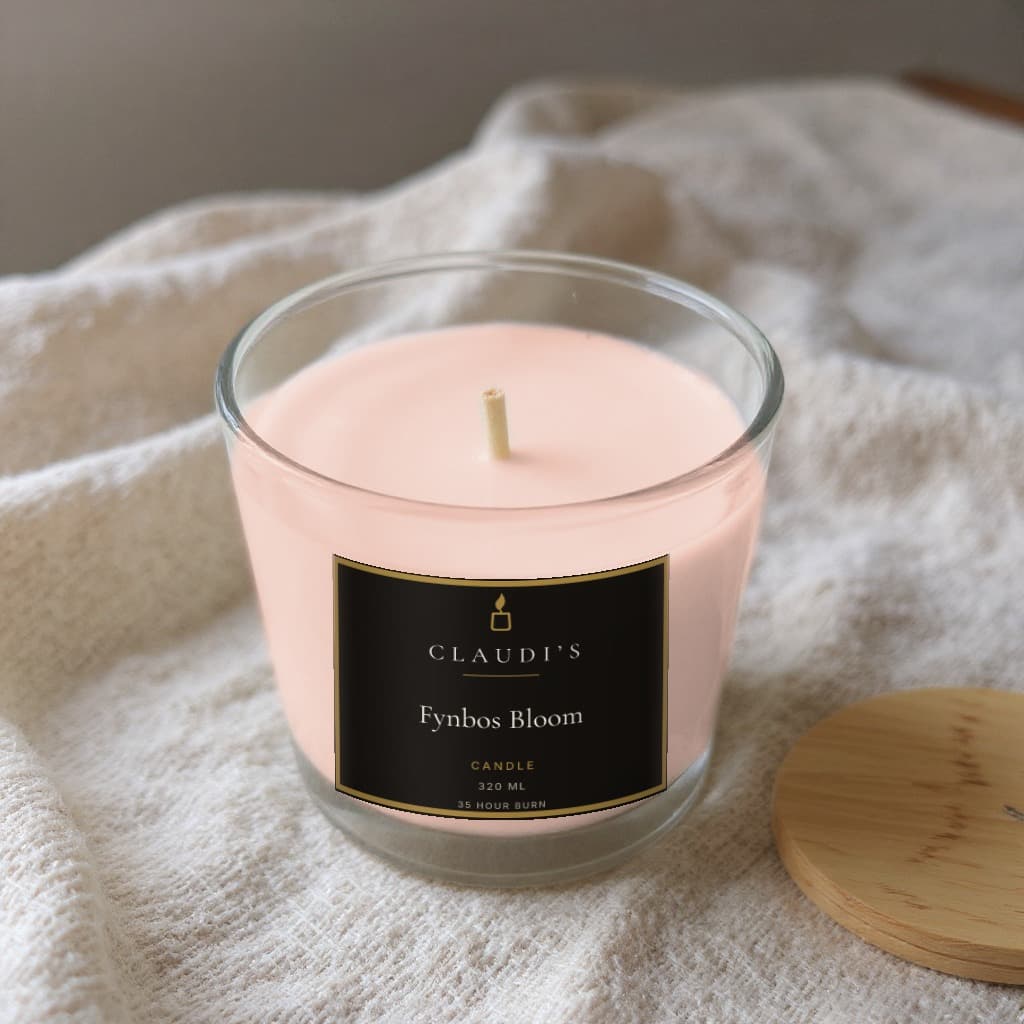
Our 35–45 hour tumbler candles are poured in the Mossel Bay studio and sold in vessels designed for reuse: the glass remains after the fragrance expires. A customer in Cape Town keeps it as a water glass or tea light holder. A boutique hotel in the Hermanus region uses it as part of a room amenity, then refills it for the next guest. That second life—intentional, economically measurable—is not incidental; it's the product design.
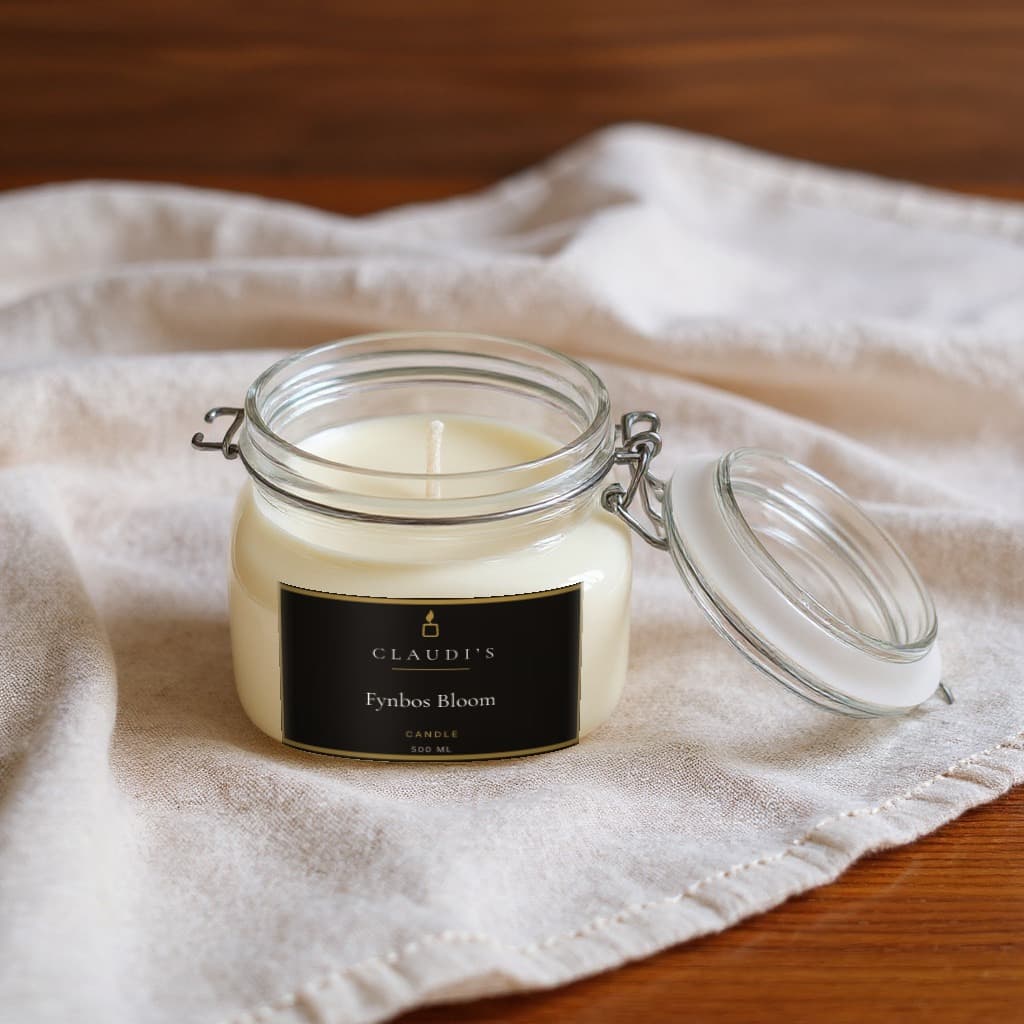
Our bamboo jar operates under the same principle but with an added function: the lid seals between burns, preserving scent throw across 40–55 hours of use. A consumer comparing a South African candle brand to a mass-market alternative will notice this detail within two uses. The lid does work. The scent remains consistent. That consistency is craft, rendered physical.
This design philosophy also reflects a practical constraint unique to local makers: shipping costs for heavy glass vessels make international exports economically irrational. South African candle brands therefore optimise for the domestic and regional market, where the vessel's reusability matters most to the end user. It's a constraint that became a strength.
How to Choose a South African Candle Brand Worth Your Investment
Evaluating a contemporary South African candle brand requires moving past aesthetic appeal. Ask specific questions:
What is the stated burn time, and under what conditions was it tested? A brand that claims "40–50 hours" without specifying wick length, wax type, or room temperature is guessing. Honest makers publish their testing methodology.
Where are the fragrance materials sourced? A brand that sources fynbos botanicals should name the specific plants and explain the extraction method. "Fynbos-inspired" is not the same as fynbos-derived. The difference is real and detectable.
What happens to the vessel after the candle burns? If the maker has designed the glass or jar for reuse, they'll tell you. If it's generic packaging, that's useful information too—it tells you where the maker's investment lies.
You can also use our scent quiz to match your sensory preferences to one of our five core families—Coastal, Fynbos, Manor, Gather, and Seasonal. This method cuts through the noise and connects you directly to the candle that will resonate with your space and your use case.
For those selecting candles for hospitality spaces, lodges, or retail settings, the hospitality trade programme offers volume pricing and custom scent options tailored to your brand identity. A South African candle brand with this flexibility can become part of your guest experience rather than a commodity purchase.
Frequently Asked Questions
What makes a South African candle brand different from a candle made anywhere else? The distinction isn't automatic. A candle made in South Africa using imported materials and generic vessels is not materially different from one made in Vietnam. What matters is deliberate craft: proximity to unique botanical sources (like fynbos), rigorous burn testing, and vessel design that extends the product's lifecycle. A South African candle brand worth supporting has made conscious choices about each of these elements.
How do I know if I'm paying for craft or just for the origin story? Compare burn time, scent throw, and vessel quality to international brands at a similar price point. If the South African option offers measurable advantages—a longer burn, a reusable vessel, or a scent profile you can't find elsewhere—the premium is justified. If the only difference is the label, you're paying for narrative, not craft.
Why does a South African candle brand from Mossel Bay cost more than a supermarket alternative? Hand-pouring in small batches is labour-intensive. Fynbos sourcing involves seasonal variation and quality control. Quality glass vessels cost more than plastic or poor-grade ceramic. A tumbler candle poured in the Mossel Bay studio reflects these real costs. The supermarket alternative uses cheaper materials and achieves margin through volume; the craft maker achieves margin through value.
Can I order custom candles for an event or retail partnership? Yes. Our custom label builder allows personalisation for gifts and corporate use. For larger partnerships—hotels, spas, retail boutiques—the hospitality and wholesale programmes offer lead times, minimum quantities, and scent customisation. We work with South African lodges and international retailers on bespoke projects year-round.
A South African candle brand no longer needs to apologise for its origin or compensate with sentimental marketing. The work speaks for itself: rigorously tested, botanically rooted, and designed to outlive the burn. From the Mossel Bay studio, this is what craft means in 2026. Start by exploring our Coastal and Fynbos collections—both are engineered for the specific conditions of the Garden Route and tested to perform reliably in homes and hospitality spaces across the continent. Your next candle is already here.
Studio notes, August 2026 — Claudi's Studio, Mossel Bay.