The Technical and Philosophical Foundations of South African Artisan Candle Making
How Claudi's approaches candle craft in Mossel Bay—precision burn chemistry, botanical sourcing, and the vessels that matter as much as the scent itself.
By Claudi·Poured in Mossel Bay, Western Cape
Artisan candles have become shorthand for "handmade" in consumer language, but the term obscures what actually separates craft from mass production. A candle poured in the Mossel Bay studio begins not with sentiment but with a specific gravity measurement, a humidity reading, and a botanical decision made weeks earlier. The difference between an artisan candle and a commercial one is measurable: burn rate, scent throw consistency across the final 10%, vessel integrity, and the choice to preserve the wax's natural properties rather than engineer them away. South African artisan candle makers work within constraints that industrial operations avoid—seasonal botanical availability, humidity variations from the Garden Route's maritime climate, and the philosophical commitment to make something that improves with use rather than degrades into ash.
Key Takeaways
- Artisan candles from South Africa prioritize burn chemistry and vessel longevity over production speed, resulting in 40–55 hour burns in premium vessels designed for reuse.
- Botanical sourcing from the Fynbos biome and local Garden Route suppliers creates regional scent authenticity that cannot be replicated with synthetic fragrance alone.
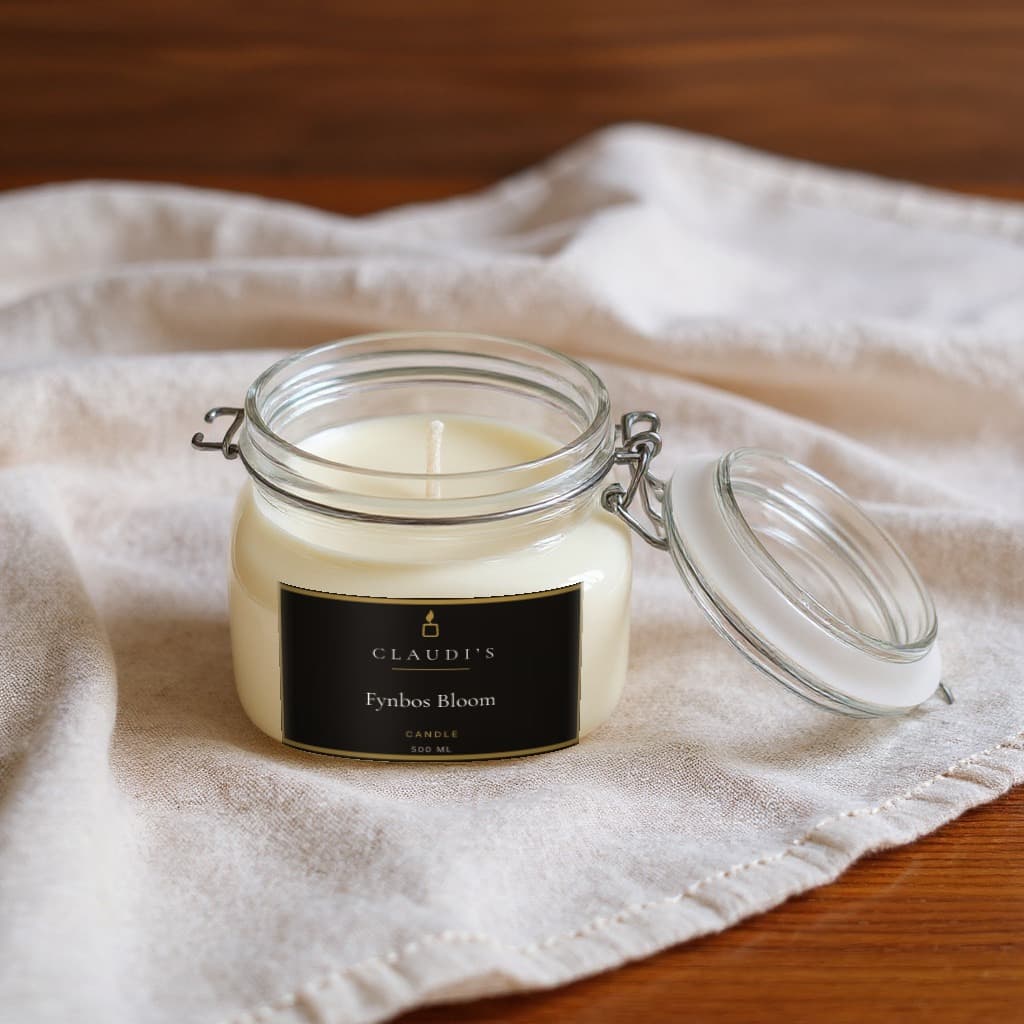
- The vessel itself is crafted as a functional object, not a disposable container—Claudi's bamboo jars are lidded to preserve scent between burns and outlast their contents by years.
What Separates Artisan from Industrial Candle Production
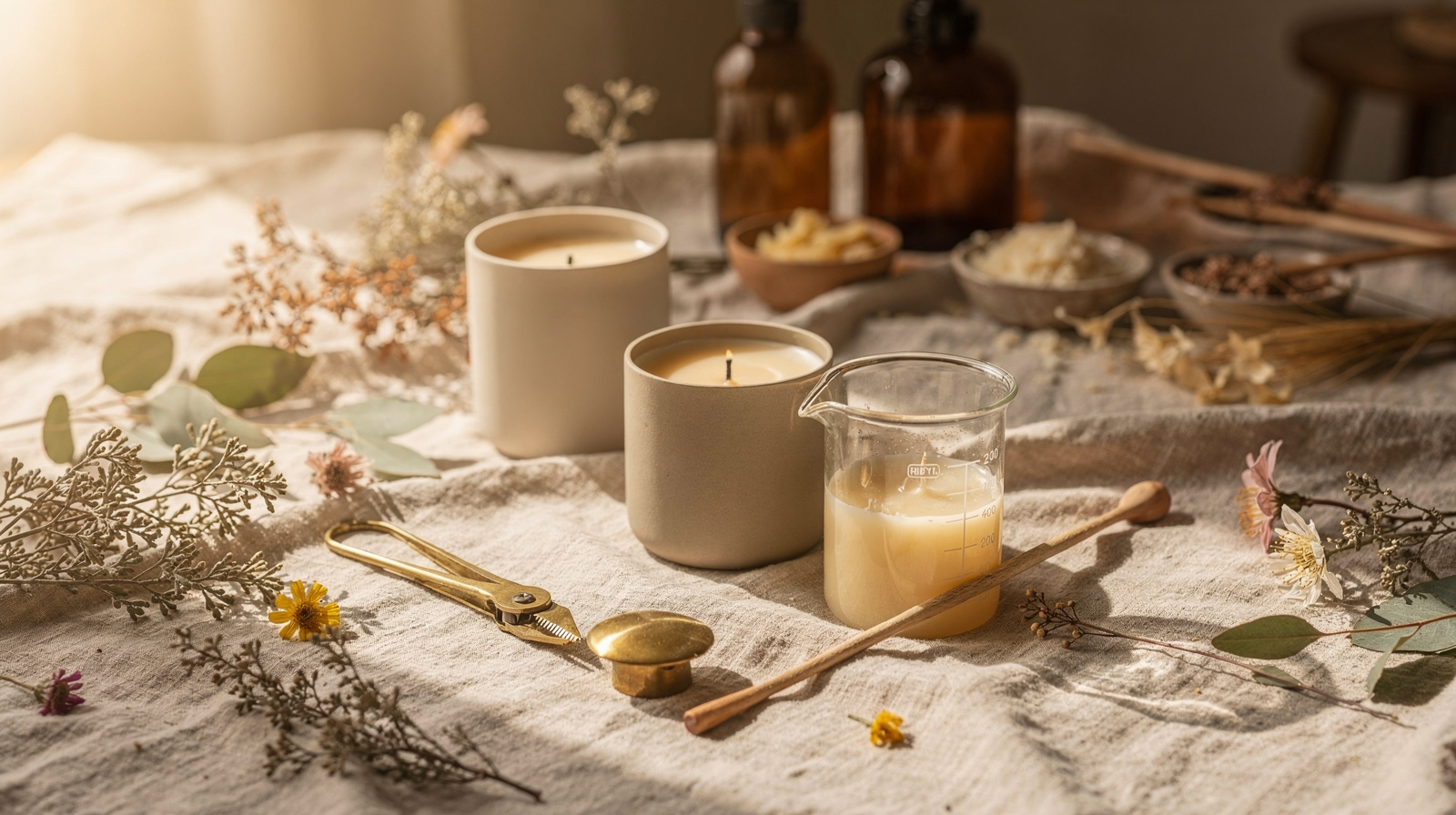
The technical foundation of artisan candle making rests on understanding wax behaviour at the molecular level. Mass-produced candles prioritize speed to pour and quick curing—48 hours versus 14 days—which requires additives that stiffen the wax and suppress its natural scent ceiling. Artisan candles, particularly those made in South Africa's variable coastal climate, work with wax viscosity rather than against it. A candle poured in the studio uses a 72-hour cure cycle to allow wax memory to stabilize naturally, which means the wick consumes fuel at a consistent rate from the first light to the final burn. This precision prevents tunnelling—the hollow core that makes cheaper candles unusable after half their life.
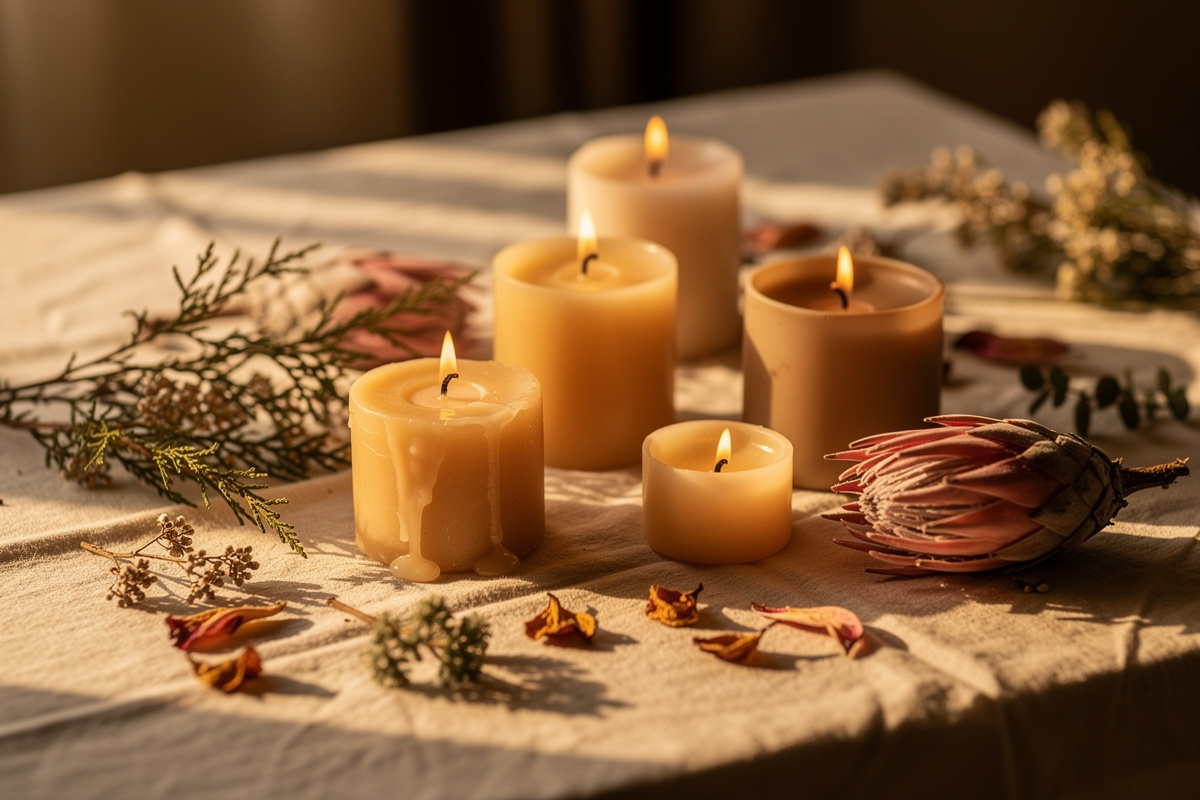
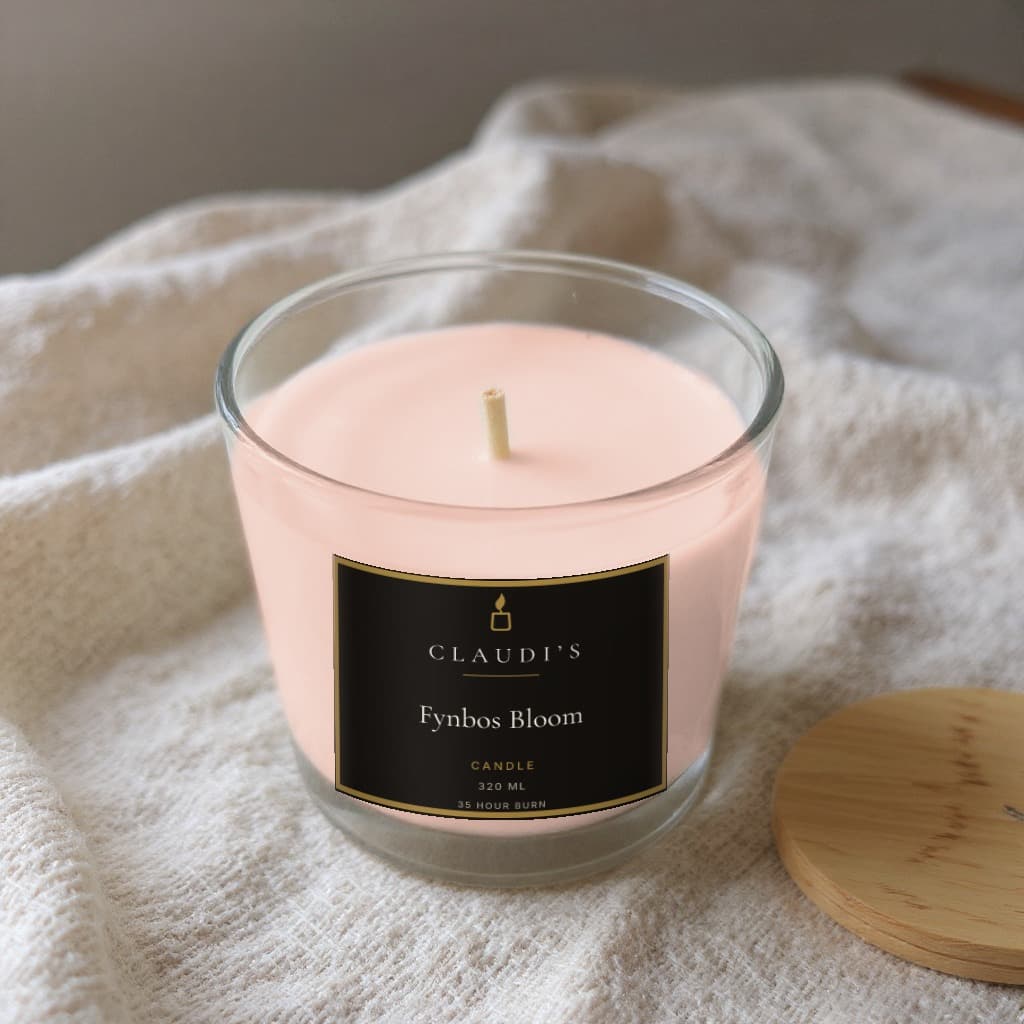
The philosophical difference runs deeper. Industrial candle production treats the vessel as packaging; artisan makers treat it as part of the product's identity. A tumbler candle from Claudi's holds 35–45 hours of burn time in a glass vessel designed to be kept, refilled through the studio's hospitality programme, or repurposed in a home. South African artisan candle makers face a specific regional advantage: access to the Fynbos biome's concentrated botanical compounds—protea, erica, immortelle, and coastal salt flora—that create scent profiles impossible to achieve with synthetics alone. When these are paired with slow-cure wax and precision wick selection, the result is a candle that develops as it burns, rather than peaking and fading.
Botanical Sourcing and the Fynbos Advantage
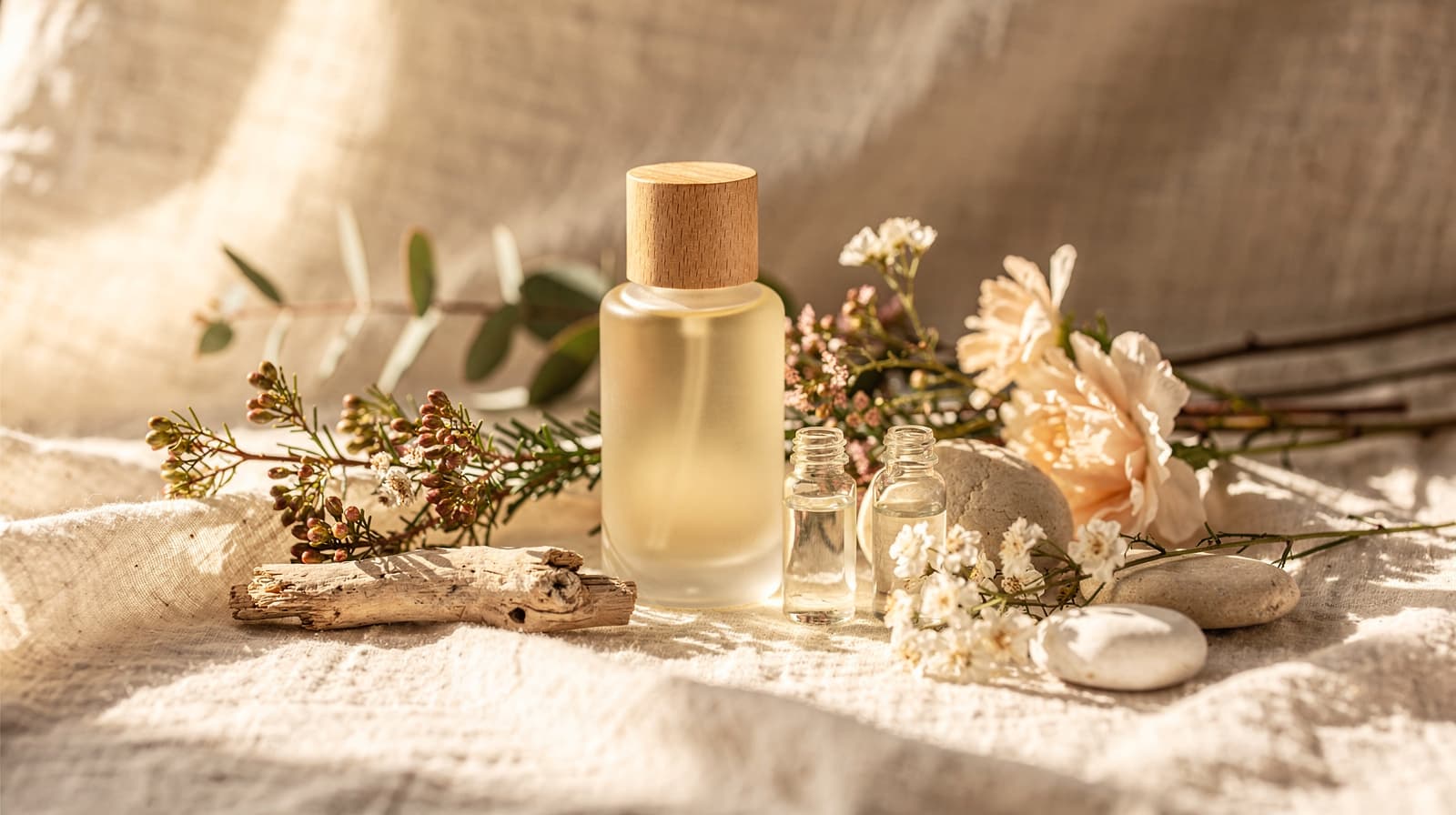
The decision to source botanical materials within the Western Cape creates both constraint and opportunity. Claudi's works with suppliers within a 150-kilometre radius of Mossel Bay, which means seasonal availability drives product development rather than a fixed catalogue. Spring—August through October in South Africa—brings fresh botanical availability: coastal helichrysum, new-growth erica, and the annual emergence of protea inflorescences. This is not marketing nostalgia; it is a real trade consideration that shapes what scents are available in the seasonal collection and when.
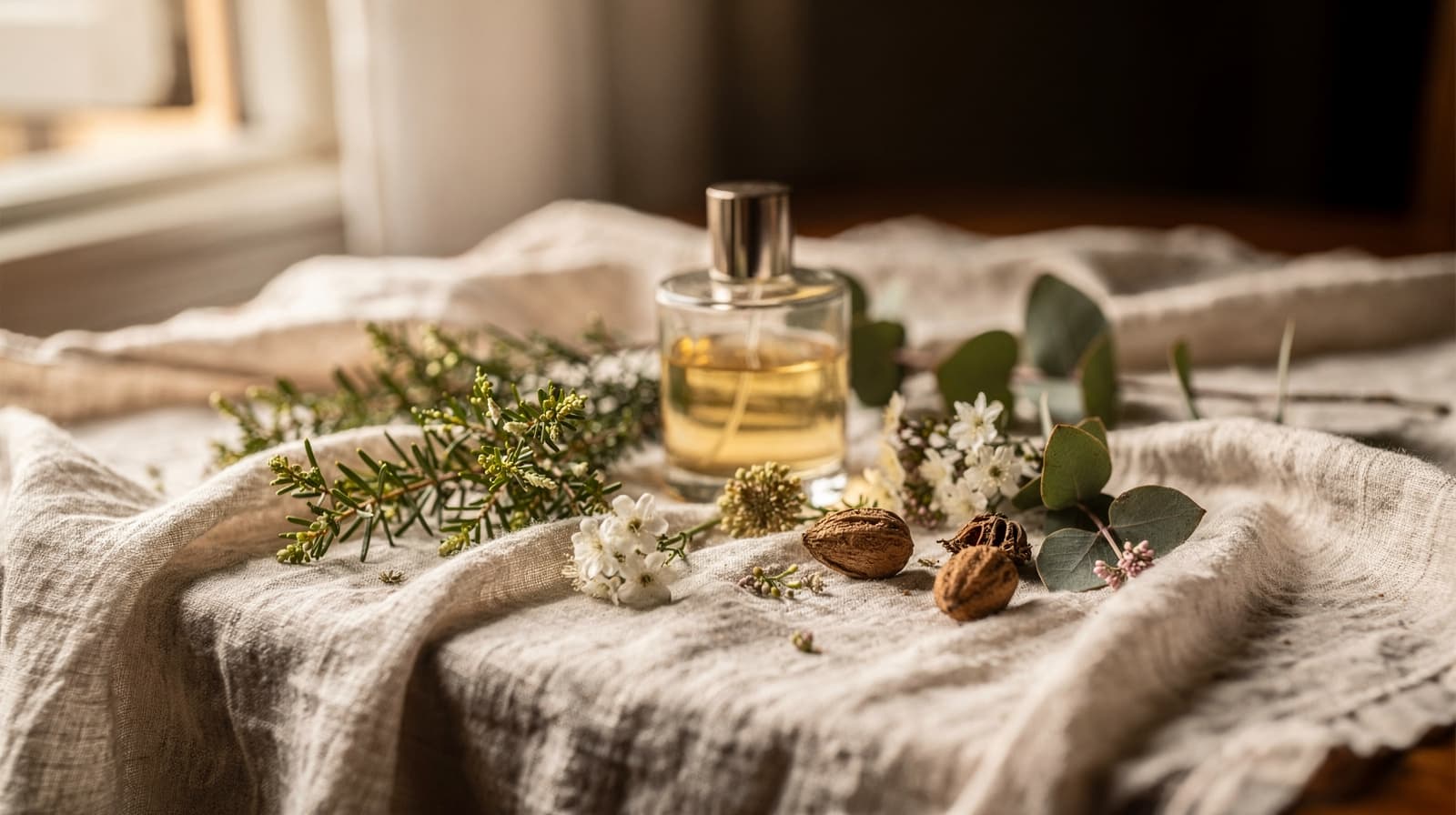
The alternative—synthetic fragrance oils that mimic these botanicals—allows consistency but sacrifices complexity. A synthetic "fynbos" note reads as flat because it has no microcomponents; real fynbos flowers contain dozens of volatile compounds that create depth. Claudi's Fynbos collection relies on botanical infusions and absolute extractions that must be handled at precise temperatures and stored in lightproof vessels between pours. This is labour-intensive. It is also non-negotiable for a studio committed to place-based fragrance. An artisan candle made in South Africa should smell like South Africa—not like a chemical approximation of it.
The premium bamboo jar serves a specific function in this approach: the lid preserves the scent profile between burns by preventing volatile compounds from dispersing into the air during storage. Over a 40–55 hour burn life, this becomes measurable. A candle without a lid loses approximately 8–12% of its aromatic potency between uses; a sealed jar maintains it. This detail matters in hospitality settings, where a hotel or lodge might relight a candle across several evenings and expect consistency.
How to Evaluate Artisan Candles: A Practical Framework
The term "artisan" is unregulated; anyone can apply it. When evaluating an artisan candle—whether from Claudi's or another South African maker—look for specific documentation: cure time (minimum 10 days), wick material (cotton or paper-core, never PVC), vessel durability (can it withstand a freezer without cracking?), and burn time per ounce of wax. A candle poured in the Mossel Bay studio carries all four markers.
For those choosing between collections, consider scent fit first: are you drawn to maritime, botanical, or warm spiced profiles? Use the scent quiz to identify your preference without assumption. Then evaluate the vessel. Do you want the candle to live on your shelf afterward (tumbler or bamboo jar)? Are you gifting it, which makes a custom label a meaningful addition? Is this for hospitality—a hotel or lodge looking to build a signature scent? If so, the studio's hospitality trade programme offers volume pricing and branded options designed for commercial longevity.
Burn time is advertised but should be verified with your specific environment: humidity, room size, and wick trim affect actual performance. Claudi's lists conservative burn hours (35–45 for tumblers, 40–55 for bamboo jars) to ensure customers experience the stated range.
Frequently Asked Questions
What makes a candle "artisan" if it's made in batches rather than individually poured? Batch production is standard for artisan makers; it allows consistency while maintaining craft integrity. The distinction is how the batch is handled: temperature control during pouring, cure time before release, quality checks on every vessel. A candle poured individually in high volume often shortcuts these steps. Claudi's works in small batches specifically to maintain wick-to-wax ratios and cure protocols.
How long do South African artisan candles actually last compared to mass-produced alternatives? A Claudi's tumbler burns 35–45 hours; a premium bamboo jar reaches 40–55 hours. Mass-produced candles typically advertise 30–40 hours but experience tunnelling after the first quarter, reducing effective burn time by 30–40%. The vessel itself—kept and reused through the studio's hospitality programme—outlasts its contents by years, making artisan candles more economical over time.
Why does Mossel Bay matter for candle making, and can't artisan candles be made anywhere in South Africa? Mossel Bay's maritime climate creates specific challenges: salt air affects wax chemistry, humidity fluctuations demand precise cure protocols, and the Cape's wind patterns influence how scent disperses. The proximity to the Garden Route provides access to Fynbos botanicals within hours of harvest. These regional factors shape the studio's approach; an identical recipe poured in a different location would perform differently. This is why the studio remains rooted in place rather than scaling to multiple locations.
If I want a custom candle for my hotel or event, what's the lead time and minimum order? Claudi's custom programmes—whether through corporate gifting or wedding + event services—begin with a consultation to define scent, vessel, and labelling. Lead times vary from 6–10 weeks depending on botanical availability and batch size. The studio prioritizes quality over speed, particularly for seasonal scents where availability is finite.
Closing
Artisan candles made in South Africa represent a deliberate choice: to slow production, respect material properties, and create objects worth keeping. The Mossel Bay studio approaches each candle