Beyond the Supermarket Shelf: Sourcing Authentic Fragrance in Cape Town
Why Cape Town home fragrance choices matter more than convenience—and where craft-driven scent finds its true home in the city.
By Claudi·Poured in Mossel Bay, Western Cape
Walk into any Cape Town home, and you'll encounter a paradox. The city sits surrounded by some of the world's most distinctive botanical landscapes—the Fynbos, the Atlantic coast, the mountain scrub—yet most households burn mass-produced fragrances that could be anywhere. Generic florals. Synthetic vanilla. Scents designed by algorithm, not by someone who has actually stood in Mossel Bay and watched kelp smoke drift across limestone cliffs. The disconnect between place and fragrance has become the city's unspoken norm. But it doesn't have to be.
Cape Town home fragrance culture is shifting. Not dramatically—this is a quiet movement, driven by people who recognize that a candle burning in your living room for 40 hours is an active choice, not a passive purchase. These are readers of Cereal magazine. People who notice how light moves through their spaces. People who understand that scent shapes memory and mood in ways that Pinterest-curated décor never will.
The question isn't whether you should care about where your fragrance comes from. It's whether you're ready to stop accepting the default.
Key Takeaways
- Cape Town's climate and geography demand fragrance choices aligned with the seasons—not imported scent profiles designed for hemispheres that don't understand Fynbos or Atlantic salt.
- Craft-made candles in intentional vessels—especially those designed to be kept and repurposed—offer far better value over 40–55 burn hours than supermarket alternatives replaced monthly.
- Scent families rooted in regional botanicals create coherence across a home in ways that random fragrance purchases never will.
Why Generic Fragrance Fails in Cape Town
The average Cape Town home fragrance purchase happens at a checkout counter, driven by a label, a price point, or muscle memory. What's rarely considered: the candle's burn profile, the actual composition of the fragrance oil, or whether the scent makes any sense in a space defined by summer heat, Atlantic wind, and the particular quality of light that hits Table Mountain at 5 p.m. in August.
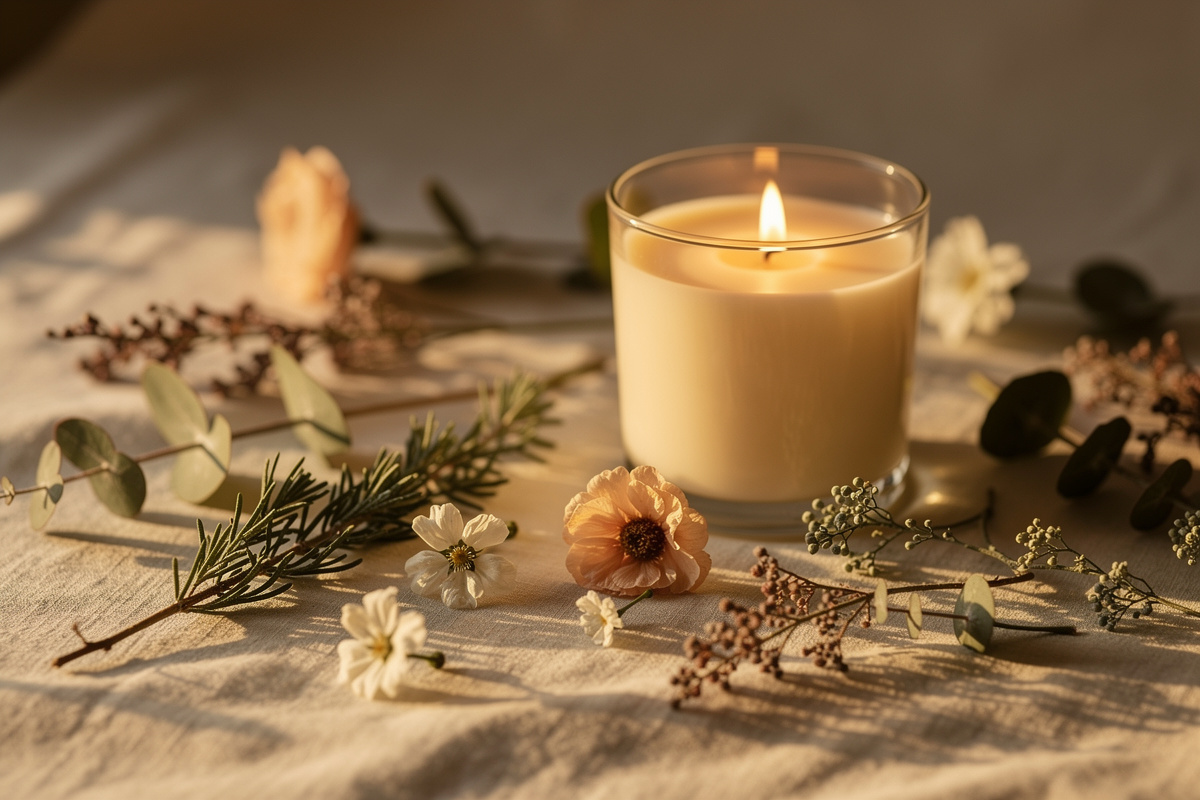
This matters because scent perception is deeply contextual. Neuroscience confirms that fragrance memory is routed through the olfactory bulb—directly connected to the limbic system—in ways that bypass conscious evaluation. A synthetic "fresh linen" scent doesn't just smell artificial in a room filled with actual sea breezes and fynbos scrub. It actively creates cognitive dissonance. Your brain registers the mismatch between what you're smelling and what your environment actually contains.
A Cape Town home fragrance strategy begins with this recognition: the city's sensory landscape is already rich. A fragrance doesn't need to compete with the view or the wind. It needs to complement what's already there. That means understanding scent families—Coastal fragrances that echo the Atlantic without mimicking sunscreen, or Fynbos compositions that root themselves in actual botanical families found in the Table Mountain National Park and beyond.
When a candle burns for 40–55 hours in a thoughtfully chosen vessel, it becomes infrastructure for your home. Not decoration. Not impulse. An investment in the space you inhabit.
Craft, Materials, and the Case for Intentional Vessels
There's a practical difference between a candle and a candle experience, and it lives in the vessel.
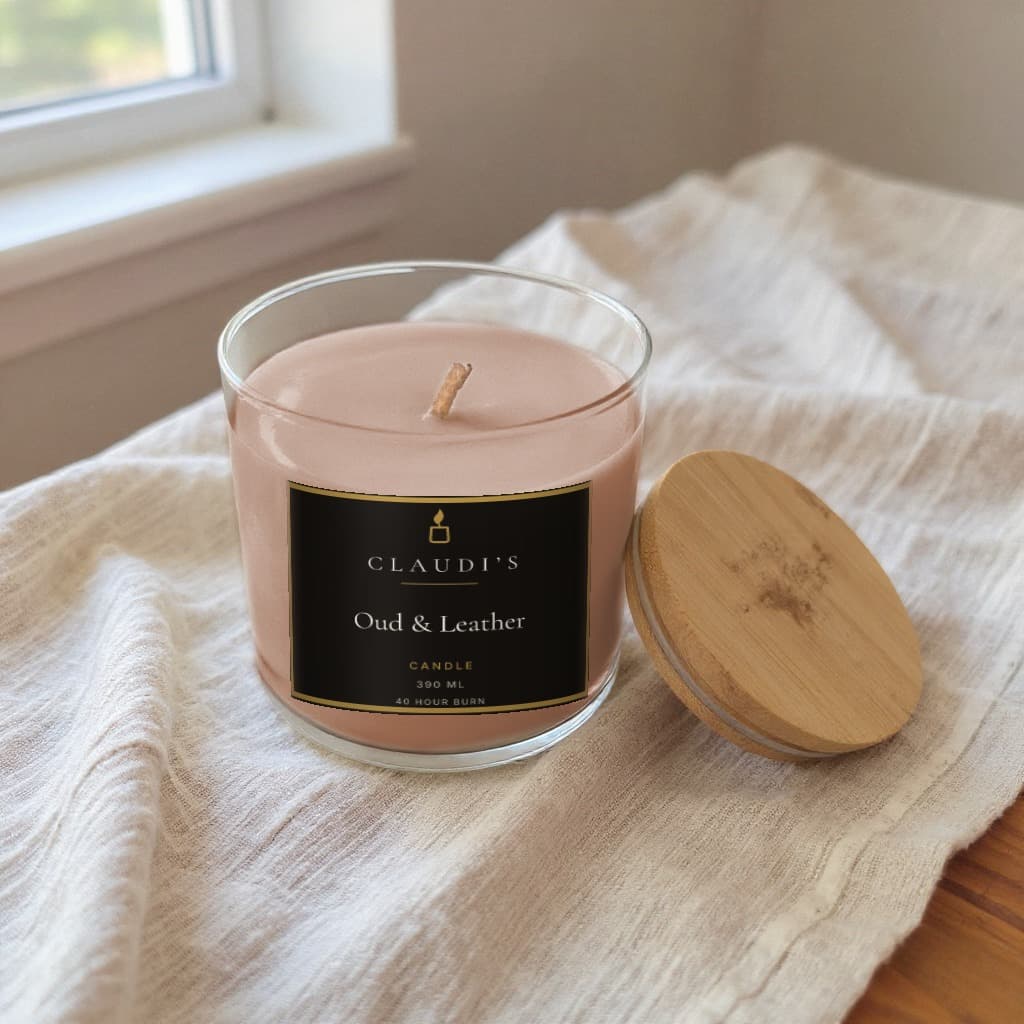
Mass-produced Cape Town home fragrance typically arrives in utilitarian glass or plastic—something you throw away when the candle burns down. It's designed for disposal. A craft-made candle in a bamboo jar or tumbler follows a different logic. The vessel is kept. Repurposed. Becomes a pencil holder, a small planter, a keepsake. Over a 40–55 hour burn, you're not just consuming fragrance; you're acquiring an object with afterlife.
Our bamboo jars are lidded—critical detail. Between burns, the lid preserves the fragrance oil's volatility, meaning the scent remains potent across multiple lighting sessions. A standard open vessel loses olfactory complexity over time. The closed environment maintains what's called the "top note"—the initial aromatic impact—for longer.
Consider also the burn itself. A candle poured by hand in the Mossel Bay studio, using paraffin or soy wax chosen for how it holds fragrance rather than for marketing language, will perform differently than industrial alternatives. The fragrance doesn't dissipate into air as fast. It doesn't leave soot on your ceiling. It doesn't require you to trim the wick obsessively or worry about tunneling—that dead zone around the edge where wax never melts, wasting material and fragrance.
For Cape Town homes, where summer temperatures climb, this becomes especially relevant. A poorly made candle softens, moves inside its container, or releases fragrance unevenly. A properly poured candle maintains integrity across seasonal temperature swings.
Building a Coherent Fragrance Strategy for Your Space
Most people think about home fragrance room-by-room. Living room candle. Bedroom candle. Bathroom candle. Rarely do they consider whether these scents speak to each other, or whether they cohere as a single olfactory narrative across the home.
This is where scent families become practical. Rather than collecting random fragrances, choose one or two families and explore their variations. The Coastal collection uses maritime botanicals—sea lavender, salt spray, driftwood tonalities—that work across multiple spaces without repetition. Light one in the kitchen at 7 a.m. and another in the bedroom at 9 p.m., and they feel like different expressions of the same sensibility, not chaotic accumulation.
Start by asking: What does this space already smell like? A north-facing study with afternoon sun smells different from a covered porch facing the Atlantic. A bedroom where you sleep with the window open is a different olfactory environment than a kitchen where cooking happens. Fragrance should enhance these existing conditions, not override them.
Use the scent quiz to identify which family aligns with your aesthetic and your home's geography. Are you drawn to the botanical clarity of Fynbos, or the bracing freshness of coastal air? That answer shapes everything downstream—which candle you buy, which vessel you keep, how the fragrance evolves as it burns.
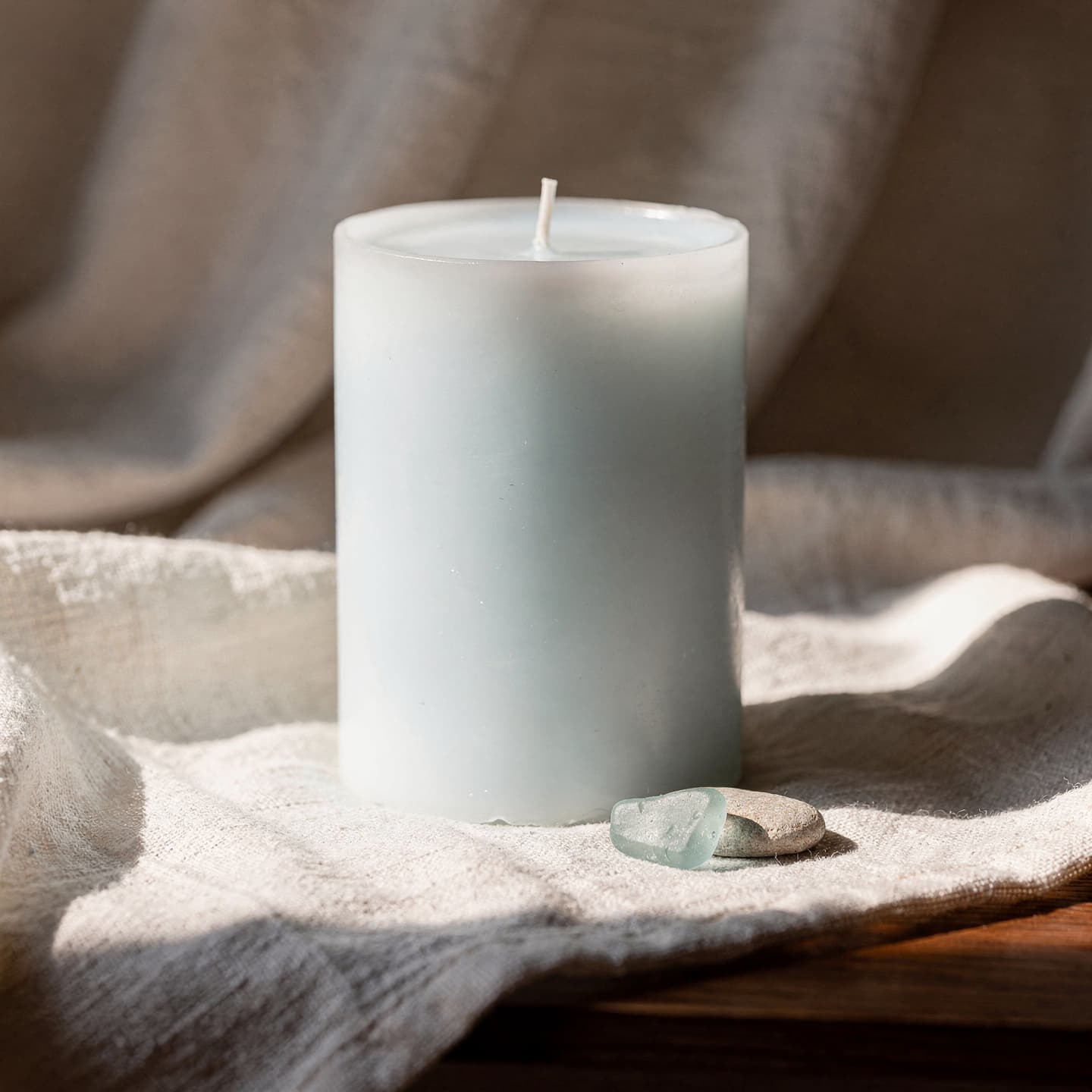
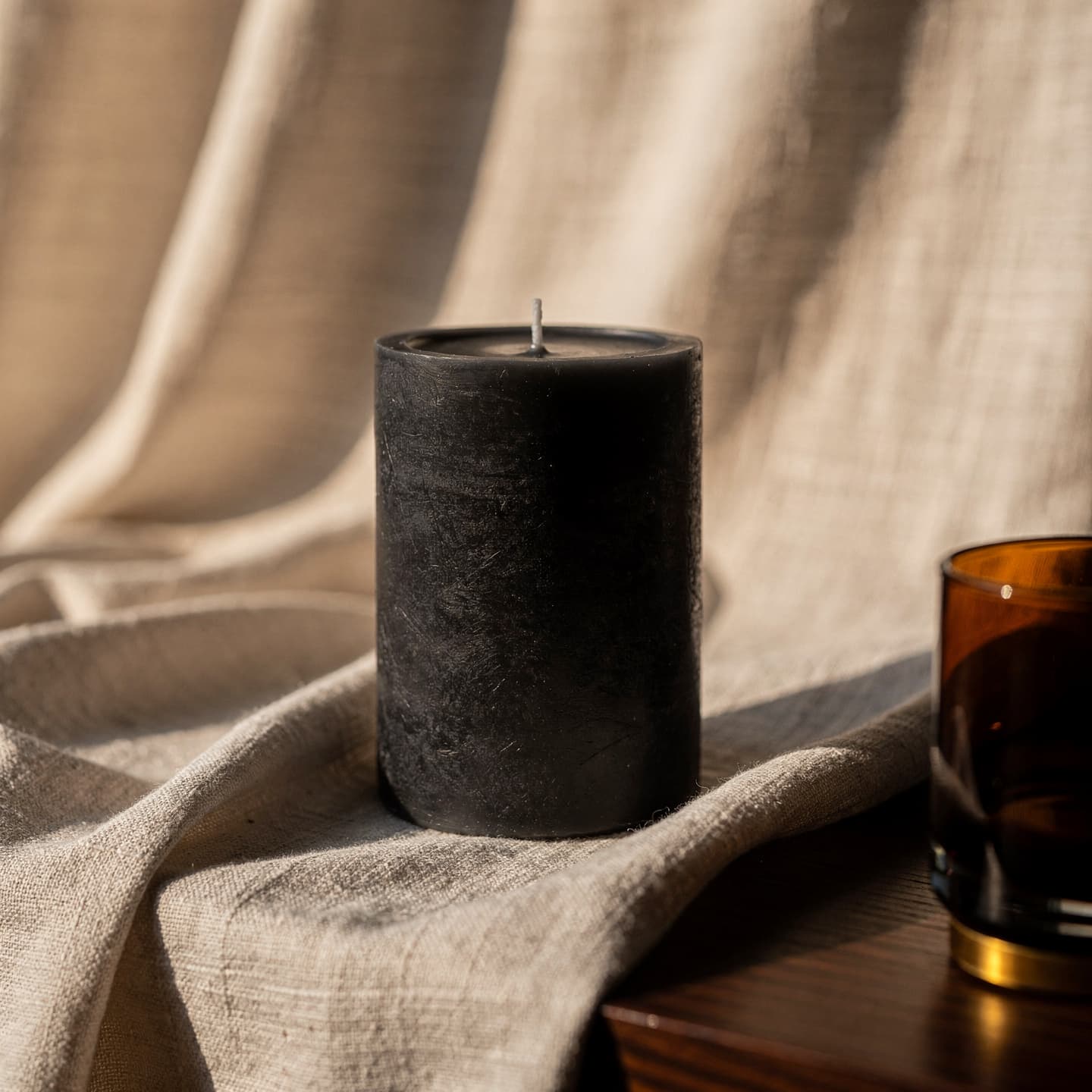
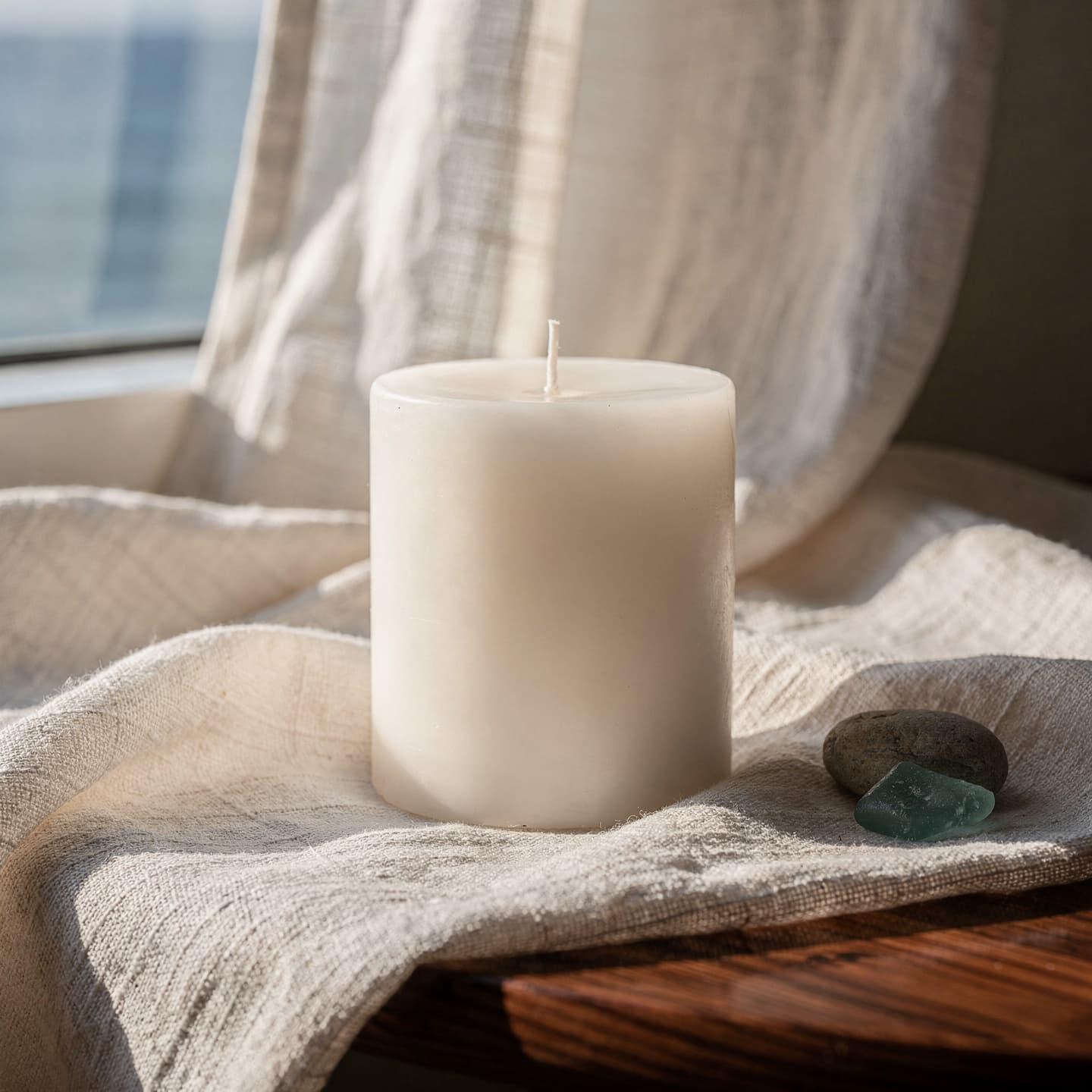
A 40–hour tumbler in the living room, a 50-hour bamboo jar in the bedroom, and a pillar on the dining table create rhythm without chaos. They're bought intentionally, kept consciously, and replaced only when the fragrance is genuinely exhausted—not when a sale ends or packaging fades.
Frequently Asked Questions
What's the actual difference between a Cape Town-made fragrance and something imported from Europe or the US? Geography shapes botany. The Fynbos is found nowhere else on Earth—its volatile compounds, its resinous depth, its particular herbaceous clarity—can't be replicated by fragrance chemists who've never stood in it. A fragrance poured in Mossel Bay can work with actual Fynbos extracts and local inspiration in ways that imported alternatives can't access. This isn't marketing. It's material fact.
How long should a quality Cape Town home fragrance actually burn? A proper tumbler burns 35–45 hours at standard flame height. A lidded bamboo jar extends this to 40–55 hours because the lid prevents surface oxidation between burns. A pillar, depending on diameter and height, can burn much longer. For a household, a tumbler in regular rotation—burned 3–4 hours per session, a few times per week—lasts roughly 2–3 months and costs less per burn-hour than supermarket alternatives replaced monthly.
Are Claudi's candles available in Cape Town, or do I need to order online? The studio is based in Mossel Bay, a 45-minute drive from Cape Town along the Garden Route. Orders ship nationwide, but visitors are welcome at the studio location to experience the full range and discuss scent choices in person. Many Capetonians prefer this—fragrance is personal, and seeing the vessels and smelling the lit candles changes the decision entirely.
Can I customize a candle as a gift for someone specific? Yes. The custom label builder allows you to personalize any candle—useful for gifting to someone whose space or taste you understand well, or for creating a