Why Soy Wax Matters: A Guide to Better Candles and Cleaner Burn
Soy candles burn slower, release fragrance more evenly, and leave no residue. Here's what that means for your home.
By Claudi·Poured in Mossel Bay, Western Cape
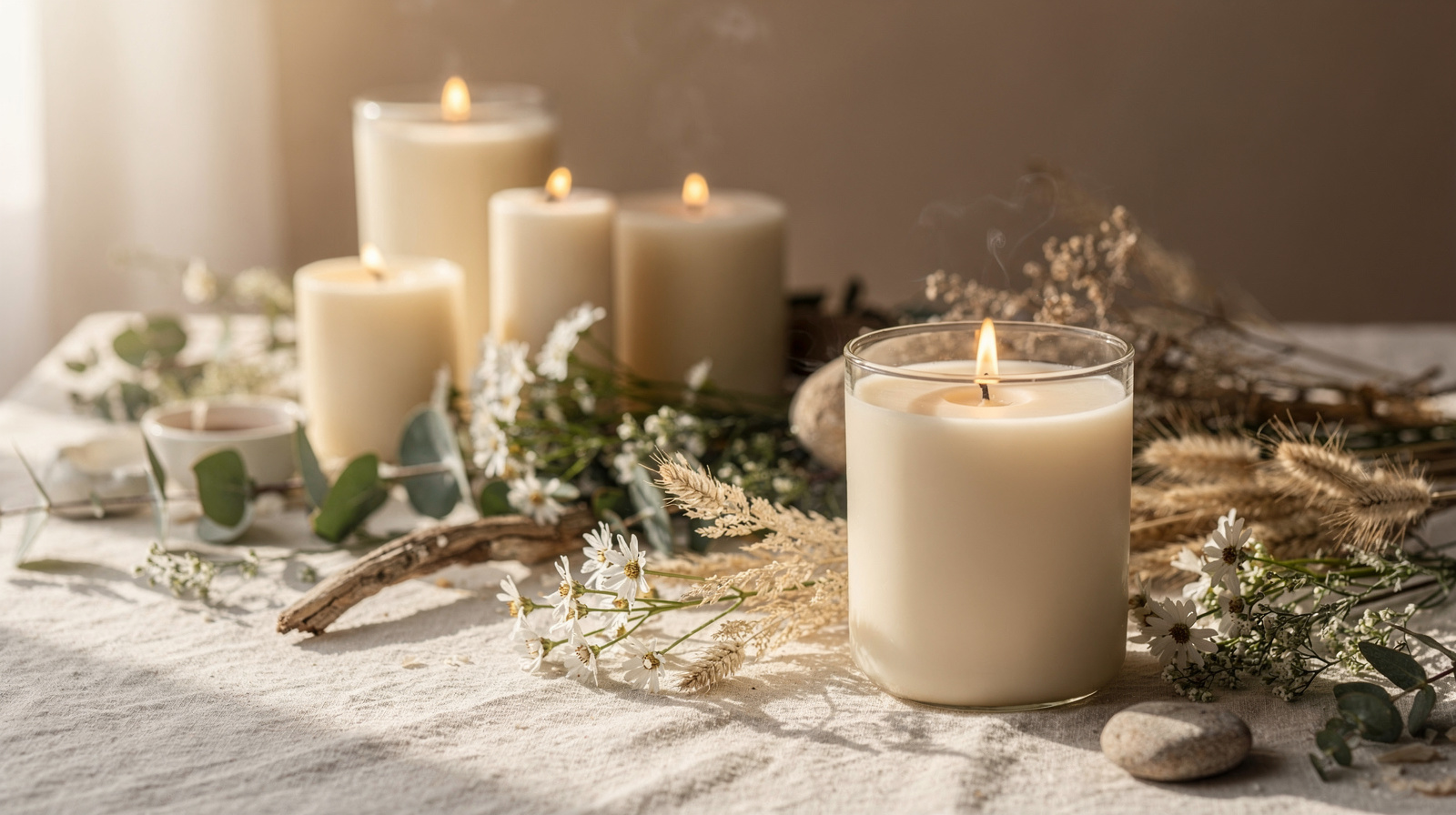
A candle sitting on a shelf looks the same whether it's made from paraffin, palm, or soy. Light it, and the difference becomes unmistakable. Soy wax releases fragrance at a lower temperature, which means the scent reaches your nose gradually rather than all at once. The melt pool forms evenly, corner to corner, so the wick doesn't drown or tunnel. When the candle burns down, it leaves no black residue on the vessel walls. These aren't luxury features—they're the result of chemistry. Soy wax, derived from soybean oil, simply behaves differently from petroleum-based paraffin. Understanding why reveals not just what makes a better candle, but what to look for when you're choosing one.
Key Takeaways
- Soy wax releases fragrance at 170–180°C, whereas paraffin requires 190°C or higher—meaning the scent develops more naturally and doesn't overwhelm the room
- A quality soy candle burns 30–40% slower than paraffin, extending the life of a 35-hour tumbler to genuine usable hours without accelerated burn-through
- Soy wax holds colour and fragrance load more uniformly, reducing the soot and tunnel burning that wastes wax and shortens lifespan
The Chemistry of a Cleaner Burn
Soy wax is a hydrogenated vegetable oil with a crystalline structure. That structure matters. When paraffin wax melts, it releases heat more aggressively; when soy wax melts, it does so at a lower, more controlled temperature. The practical effect is profound: a soy candle's fragrance disperses gradually through the room rather than in a sudden, intense burst that fades quickly. A paraffin candle often smells strongest in the first ten minutes, then the scent plateaus or recedes as the wax continues to burn at a higher temperature and the olfactory system adapts.
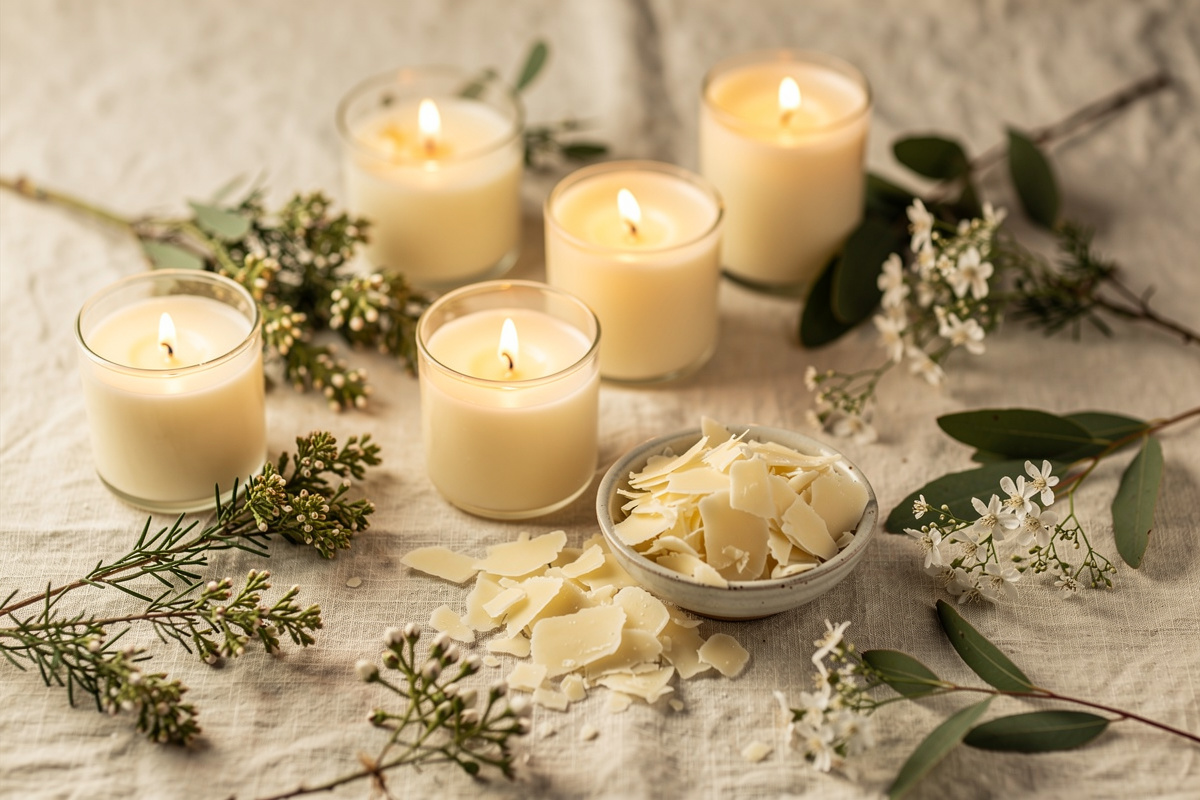
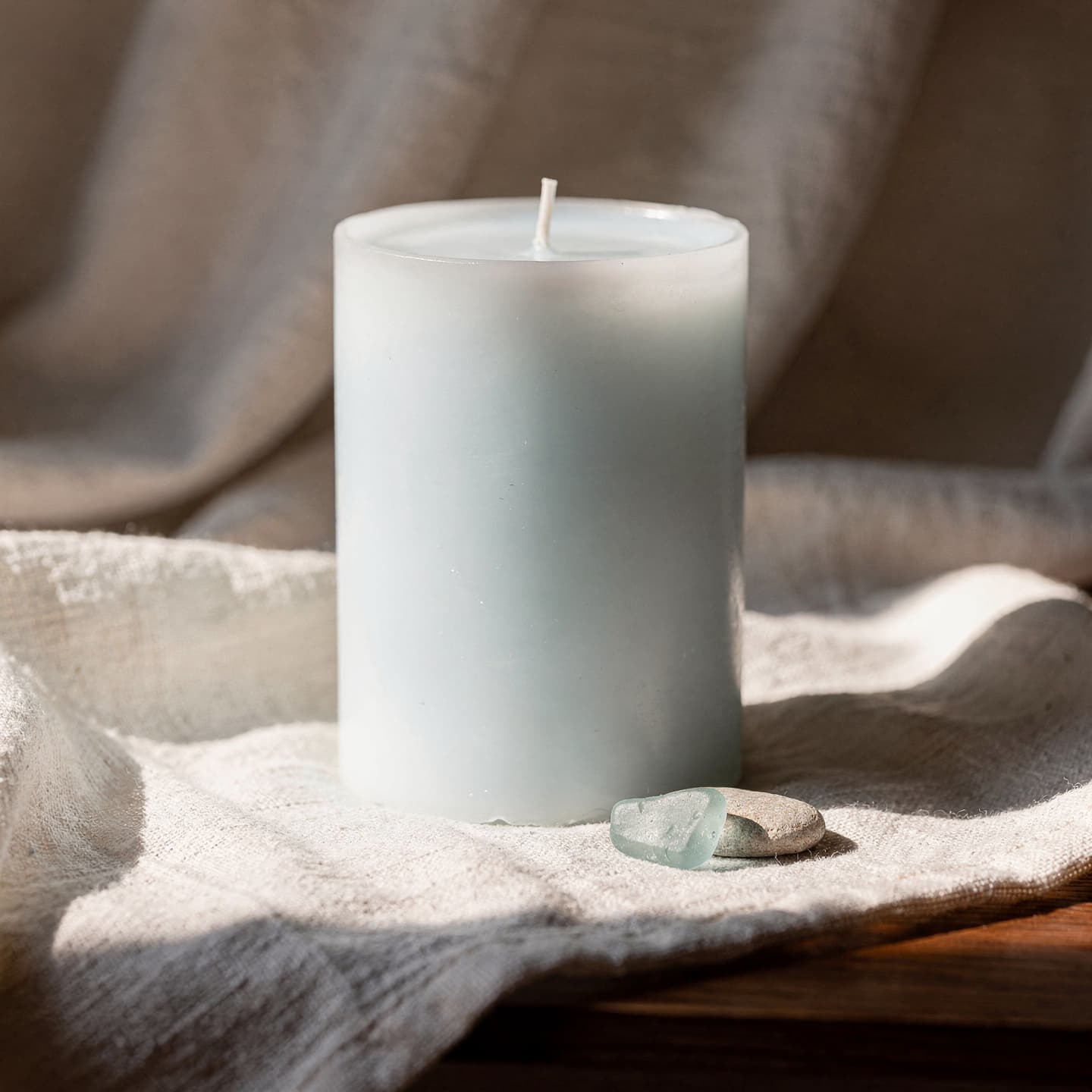
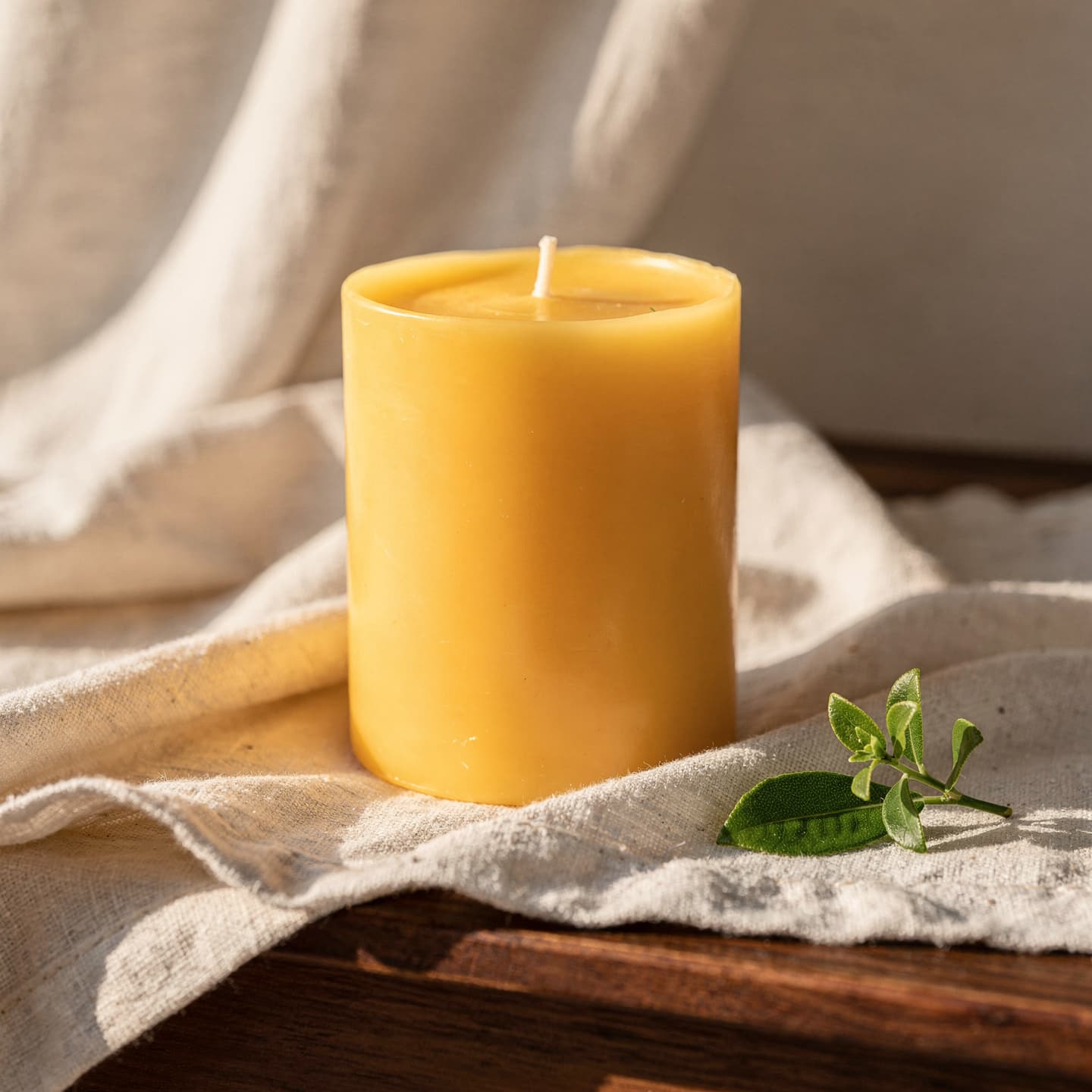
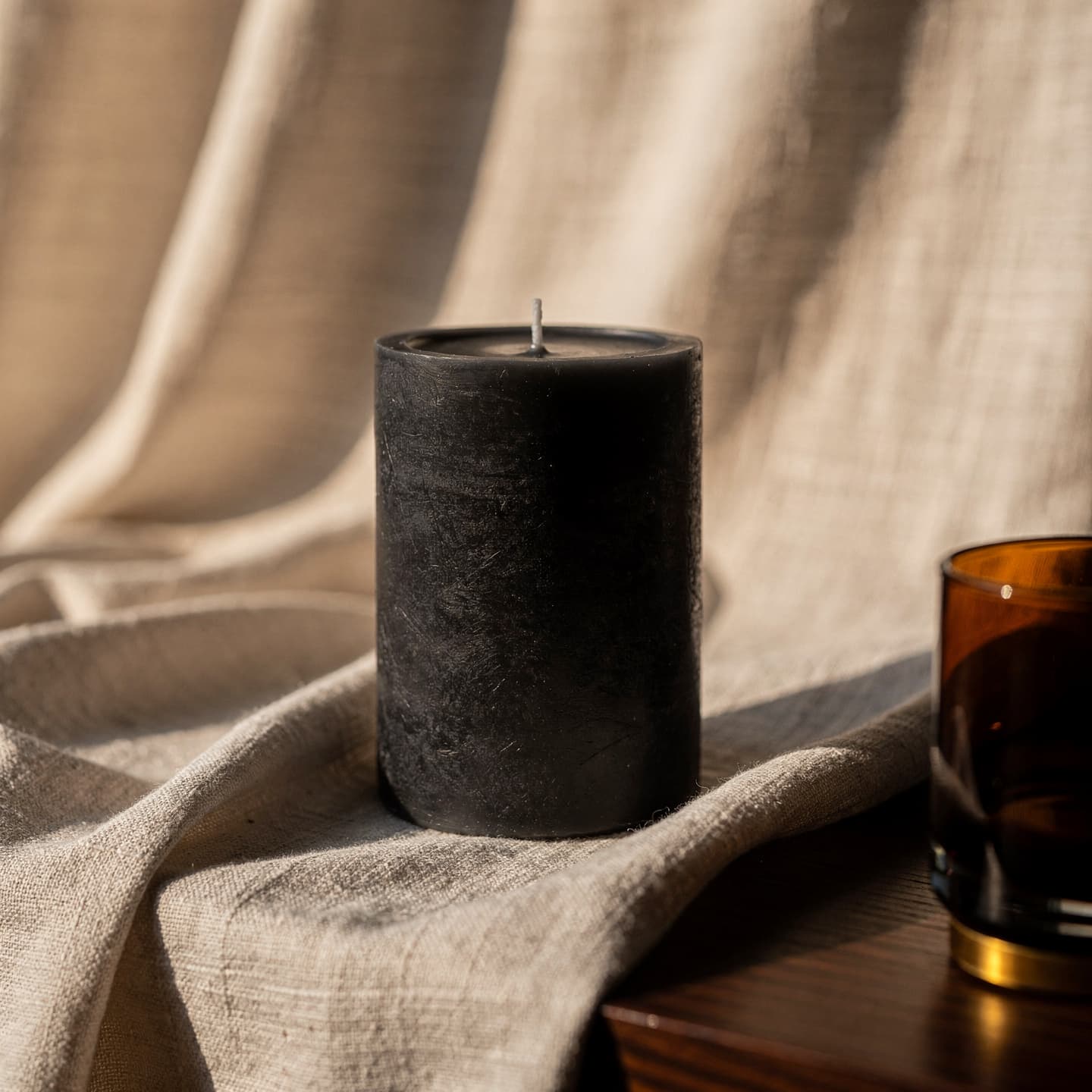
This thermal difference also affects how the wick burns. Paraffin wax, being harder and more brittle, can cause the wick to burn too hot, creating a flame that's difficult to control. Soy wax allows a steadier, slower burn, which means the flame sits lower and the melt pool spreads evenly. That even melt pool is what prevents tunnelling—the phenomenon where the wick burns straight down through the centre and unburned wax builds up around the edges. A tunnelled candle wastes 30–50% of its wax and will never reclaim those walls no matter how long you burn it. Soy wax eliminates that waste.
What Soy Wax Means for Fragrance and Longevity
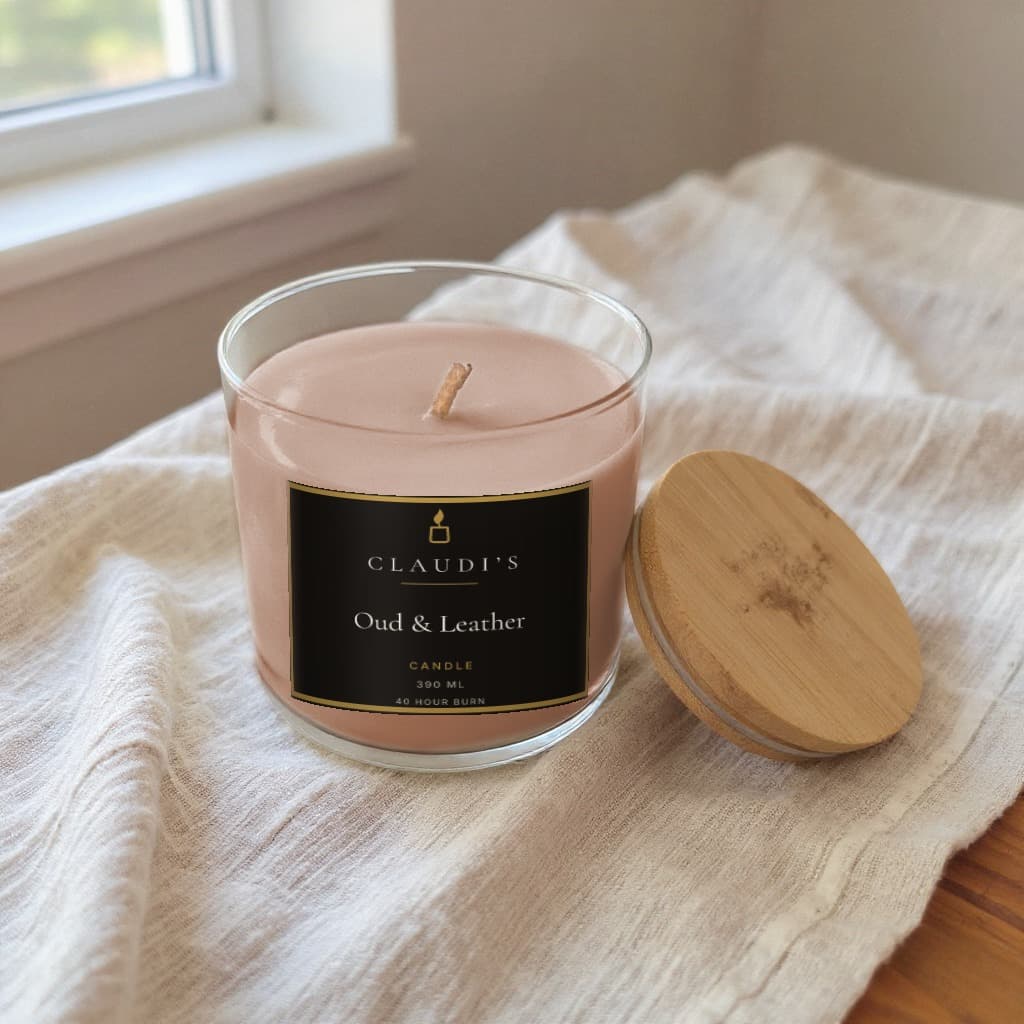
At the Mossel Bay studio, every tumbler and bamboo jar is poured with soy wax because the material honours the fragrance design. A scent that smells sharp and one-dimensional in a paraffin candle often reveals depth and nuance in soy. The coastal collection—designed around salt spray, driftwood, and the Garden Route littoral—develops its complexity over the first burn when poured in soy. The fynbos collection, with its resinous proteas and fynbos herbs, unfolds rather than announces itself.
Soy wax also holds fragrance load—the amount of essential oil or fragrance concentrate added to the wax—more uniformly throughout the pour. Paraffin wax can cause fragrance to separate or pool unevenly, particularly with high fragrance loads. This matters for consistency: every time you light a soy candle from the same batch, the scent profile is nearly identical. You know what you're getting.
The burn time calculation is straightforward. A 35–45 hour tumbler candle poured in quality soy wax will give you closer to the full burn time listed. A paraffin equivalent rated at 35 hours might deliver 20–25 usable hours due to tunnelling, incomplete melt pools, and the wax's tendency to exhaust faster. You're paying the same price for less actual burn time. Over a year, choosing soy means buying fewer candles to maintain the same level of ambient scent in your home.
How to Recognize Quality Soy Candles
Not all soy candles are created equal. Some are blended—part soy, part paraffin—to reduce cost. A pure soy candle should be listed as "100% soy wax" on the product page. Look also for wick material. Soy wax pairs best with braided cotton or wooden wicks, never zinc-core or lead-core wicks (which are now banned in most markets, but worth checking). The wooden wick, common in pillar candles and sculptural pieces, provides a visual anchor and burns at a rate that soy wax prefers.
The vessel matters too. Soy wax doesn't require thick glass; it generates less heat than paraffin. A thin-walled glass tumbler is sufficient, which is why the studio's tumblers are elegant and lightweight without sacrificing durability. If you're choosing a candle for gifting or for a space that will be lit regularly, the custom label builder lets you personalise the vessel and verify the wax material before you order.
Scent preference and wax quality are separate decisions, but they work together. A mediocre fragrance in soy wax will still smell more developed than the same fragrance in paraffin. Conversely, an exceptional fragrance in paraffin is undermined by the wax's limitations. The best choice is excellent fragrance in soy wax. Use the scent quiz to narrow down which collection—Coastal, Fynbos, Manor, or Gather—aligns with your taste, then confirm the product uses soy.
Frequently Asked Questions
Does soy wax cost more than paraffin? Yes, typically 20–30% more at retail. But the longer burn time and superior scent development mean the cost per hour of use is actually lower. A 40-hour soy candle burning genuinely 40 hours is cheaper per hour than a 35-hour paraffin candle that delivers only 20 usable hours.
Are soy candles better for people with scent sensitivities? They can be. Soy wax releases fragrance more gradually, so the scent doesn't spike suddenly in the room. This is gentler for people who find strong fragrance overwhelming. If you have sensitivities, try lighting the candle for 20 minutes in a well-ventilated space before committing to longer burns, and consider Coastal collection scents, which tend toward fresher, less cloying profiles.
Can I use soy candles in a hotel or events space? Absolutely. Many hospitality venues, lodges, and event spaces choose soy candles specifically because they don't produce as much soot and leave vessels cleaner between burns. If you're sourcing candles for a commercial space, the hospitality programme offers bulk pricing and custom fragrance options designed for venues across the Garden Route and Western Cape.
What if my soy candle starts tunnelling? A properly made soy candle shouldn't tunnel if the wick is the right size and you allow a full melt pool on the first burn (roughly 2 hours). If tunnelling does occur, the candle can often be salvaged by removing the wick and melting down the unburned wax around the edges—a process that isn't as practical with paraffin. Most soy candles are recoverable; most paraffin candles are not.
Choosing soy wax is choosing a candle that behaves predictably, releases fragrance thoughtfully, and respects the hours you'll spend with it lit. From the studio in Mossel Bay, every candle is poured in soy because the material aligns with the craft: precision, longevity, and fragrance that develops rather than dominates. Whether you're drawn to the salt-tinged notes of the Coastal collection or the botanical depth of Fynbos, soy wax ensures that what you smell is what was designed. Light one and notice the difference within the first few minutes.
*Fragrance notes, September 2026 — Claudi's Studio, Mossel