How to Build a Slower Rhythm at Home: A Fragrance Approach to South African Living
Slow living isn't minimalism—it's attention. How scent shapes your daily pace in the Garden Route and beyond.
By Claudi·Poured in Mossel Bay, Western Cape
The kettle takes eight minutes to boil. You notice it now. A year ago, you didn't—you'd fill it, turn away, scroll. Slow living isn't about doing less; it's about being present for what you're already doing. And in South Africa's garden towns and coastal stretches, where the pace naturally softens, fragrance becomes an anchor: a way to mark time, to signal to your nervous system that this moment matters. The Mossel Bay studio works with this rhythm—not against it.
Key Takeaways
- Slow living depends on sensory anchors, not rules; fragrance creates deliberate pause points in daily routines without requiring discipline.
- South African spring (August–September) brings botanical abundance; fynbos scents amplify the seasonal transition and train attention to local plant material.
- A single candle vessel kept after burn-down becomes a functional object, reducing consumption cycles and embedding craft into everyday space.
What Slow Living Means in the South African Context
Slow living has become shorthand for a lifestyle aesthetic—reclaimed wood, linen, neutral tones—but the practice itself is about reclaiming attention from productivity metrics. In South Africa, particularly in regions like the Garden Route and coastal towns, the pace is already gentler than urban centres elsewhere. But gentler doesn't mean automatic. You still reach for your phone during breakfast. You still finish a task and immediately move to the next without transition.
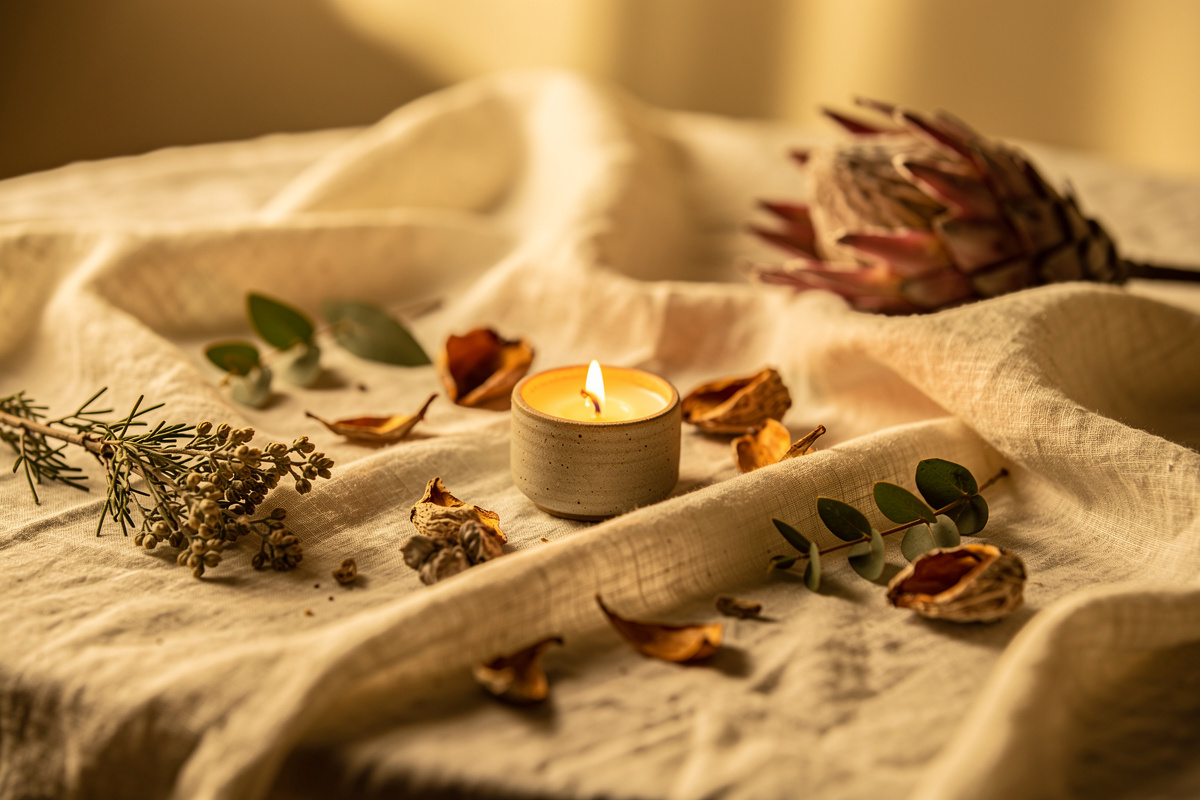
Fragrance enters here as a practical tool. A scent linked to a specific time—morning coffee, evening wind-down, the hour before guests arrive—creates a neurological bookmark. Olfactory memory operates differently than visual or auditory input; scent bypasses conscious processing and lands in the limbic system, the brain's emotional centre. This means a particular fragrance doesn't require you to remember to slow down. It signals the shift directly. In the Mossel Bay studio, this principle shapes every scent family: Coastal for morning clarity, Fynbos for grounding, Gather for social transition. Each one anchors a different rhythm within your day.
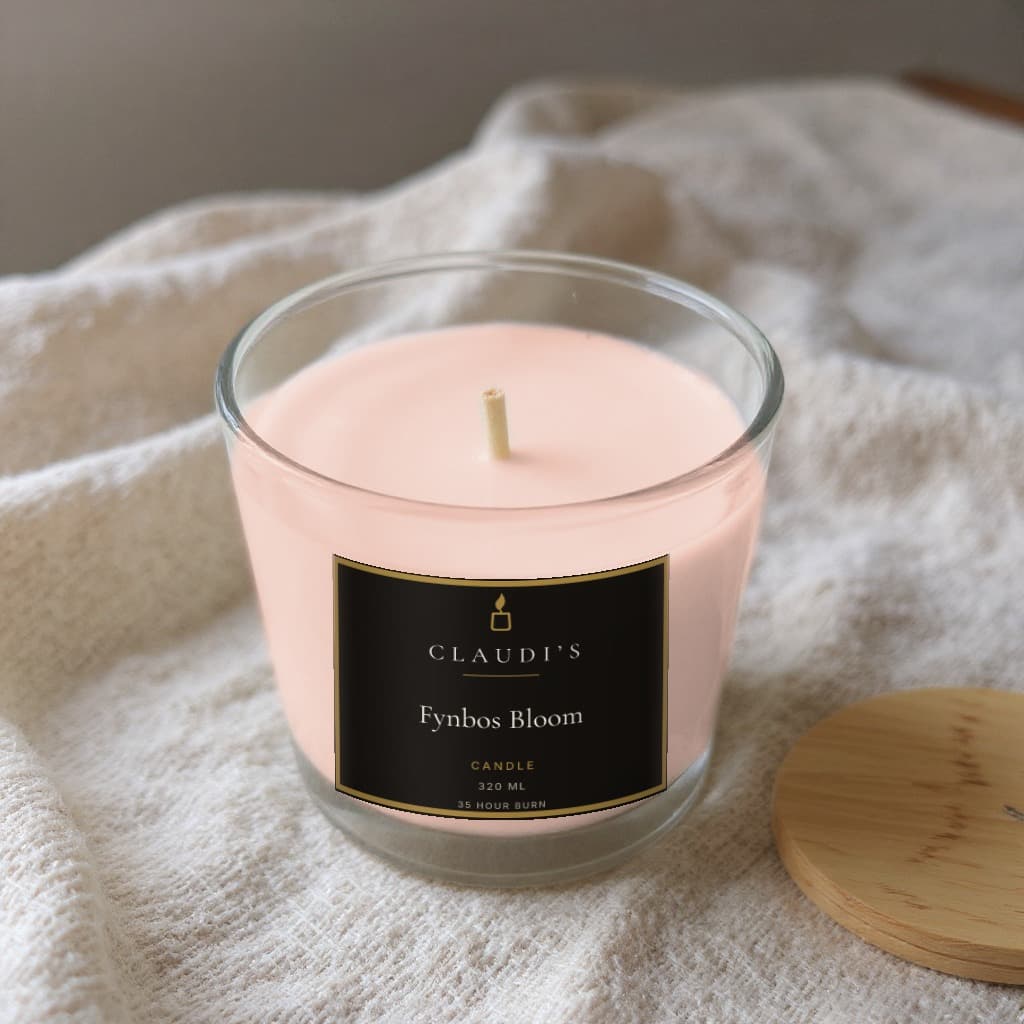
Spring in South Africa amplifies this. The proteas bloom, the heaths push up through sandy soil, and the air carries new moisture. These months (August through September) offer a natural reset point—a moment when the landscape itself slows and reorganises. A fynbos scent poured in the studio captures this botanical shift and makes it tangible inside your home, whether you're in Cape Town, a Garden Route village, or the Karoo.
The Vessel as Permanence: Reframing Consumption
Most candles end in a bin. The tumbler or jar burns, the wax empties, and the object disappears. Slow living invites a different logic: what remains?
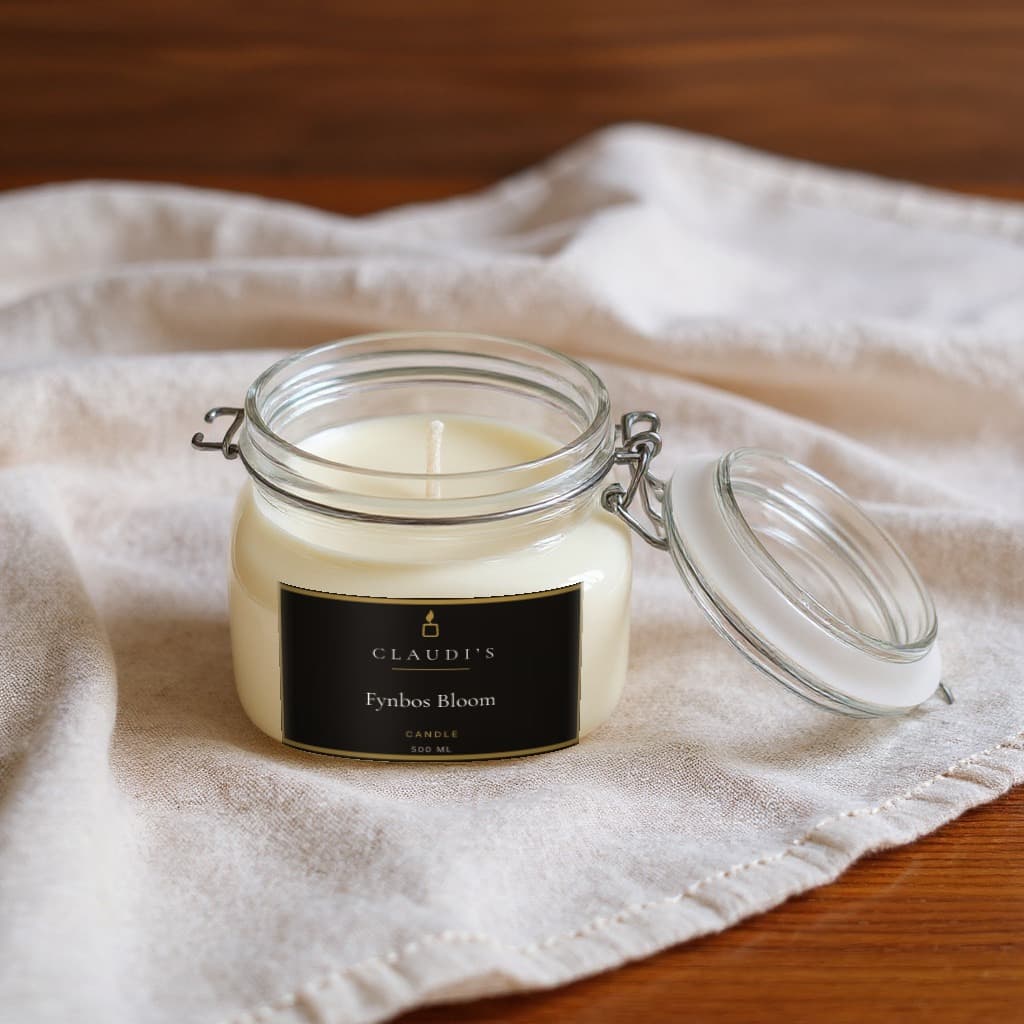
The tumbler candles from the studio—35 to 45 hours of burn time depending on wick and wax density—leave behind a vessel. Glazed ceramic, weighted, functional. Customers keep them for pens, for tea storage, for plant propagation, for the simple fact that a well-made object has weight and purpose beyond its original use. This isn't marketing language; it's arithmetic. A tumbler held and refilled five times across a year eliminates four disposable vessels. Over ten years, one customer's choice removes dozens of single-use containers from the cycle.
This mirrors slow living philosophy directly: durability over novelty, function over accumulation. The Premium Bamboo jar, lidded and designed for hospitality spaces, runs 40 to 55 hours and holds its scent between burns because the lid preserves volatile top notes. A guest receives it as a gift, burns it slowly over two months, and then owns an object that fits their home. No landfill. No replacement purchase cycle. The relationship with the brand doesn't end at consumption; it continues in the vessel's afterlife.
Building Your Fragrance Routine: A Practical Framework
Slow living requires intentional choice, not rigid routine. Start by identifying the moments in your day that feel rushed or unmarked: the transition from sleep to work, the hour between children's bedtime and your own evening, the fifteen minutes before guests arrive.
Assign a scent family to one transition. Not all five. One. Coastal for morning, say—something fresh and clarifying that takes the edge off the alarm. Use it for two weeks without switching. Your olfactory system will anchor that scent to that moment; your body will begin to slow before the candle is even lit, in anticipation.
After two weeks, notice what shifts. Do you linger over coffee? Do you scroll less? Do you actually hear the kettle? These are the micro-observations that make slow living real—not the aesthetic, but the felt change in pace.
Once one transition feels established, add a second. Perhaps Gather for the hour before dinner, when the household converges. The spiced, social warmth of that collection signals a shift in energy without forcing it.
Use the scent quiz to identify which collection aligns with your current season and temperament. It's a discovery tool, not a sales mechanism; it's designed to orient you toward fragrance that serves your actual rhythm, not an idealised version of it.
Frequently Asked Questions
How do I know which scent family matches slow living? There's no single "slow" scent. What matters is consistency and place. Fynbos grounds you in South African botanical landscape; Coastal links to breath and open space. Choose one aligned with the feeling you want to anchor—grounded, clear, warm, social—then commit to it for at least two weeks before rotating.
Can I use a scent for slow living if I work full-time in an office? Yes. Slow living isn't about schedule; it's about attention. A tumbler candle on your desk or in your car creates a transition moment between work and home. Light it during your commute or during a lunch break. The scent then carries that deliberate pause into your evening.
What's the difference between a tumbler and the bamboo jar for daily use? The tumbler (35–45 hours) suits frequent burning and ritual rotation; you'll cycle through scents across weeks. The bamboo jar (40–55 hours with a lid) is designed for slower, intentional burns—fewer scents, longer commitment. If slow living means fewer choices, the bamboo jar supports that philosophy structurally.
How does Mossel Bay's location shape the scents? The studio sits on the Garden Route, where fynbos and coastal air blend. Raw materials—heaths, resins, local botanicals—inform the Fynbos and Coastal collections directly. Scents aren't abstract; they're place-specific, which means burning them tethers you to a landscape and season, a core principle of slow living in South Africa.
Closing: The Ritual Becomes Invisible
Slow living, once established, stops feeling like work. The candle becomes part of morning or evening the way tea does—unremarkable, essential, unnoticed until it's absent. That's the point. The studio's Fynbos collection or Coastal range serves this arc: novelty at first, then ritual, then invisible architecture of your day. Start with one scent, one transition, one vessel kept and refilled. The rhythm builds from there. Light a candle not to slow down, but because slowing down is already happening, and fragrance simply makes it official.
Studio notes, September 2026 — Claudi's Studio, Mossel Bay.