How to Choose Festive Candles That Suit the South African Season
Festive candles work best when they match your climate and occasion. Here's how to navigate scent, burn time, and vessel for celebrations in Mossel Bay and beyond.
By Claudi·Poured in Mossel Bay, Western Cape
The word "festive" means something different depending on where you are. In South Africa, where September brings spring warmth and gatherings shift outdoors, a festive candle isn't necessarily the heavy spice and woodsmoke of a Northern Hemisphere winter. It's something fresher—a candle that holds its own against open air, that works in a humid garden in Mossel Bay or a Cape Town terrace. The challenge isn't just picking a scent; it's choosing a candle built for how you'll actually burn it, in your climate, for your gathering.
Key Takeaways
- South African festive celebrations favour fresh, maritime, and botanical scents over traditional winter spices, especially during spring entertaining season (September–November).
- A candle's burn time and vessel design matter as much as fragrance when used outdoors or in high-traffic entertaining spaces—a 35–45 hour tumbler handles multiple lighting sessions better than a thin taper.
- Bamboo jars with lids preserve scent intensity between burns, making them ideal for week-long celebrations or multi-day events where you're lighting and relighting the same candle.
Festive Candles in a Warm Climate: What Actually Works
Most festive candle guides assume winter entertaining—think pine, clove, amber, closed rooms. But South Africa's festive season often coincides with spring and early summer. Temperatures in Mossel Bay and the Garden Route climb into the mid-20s Celsius by October, garden entertaining peaks, and the air carries salt and fynbos on the breeze. A heavy, enclosed fragrance reads as suffocating outdoors; it fights the environment rather than working with it.
Coastal scents—marine, citrus, green notes—actually perform better in warm, open-air settings. They're festive without being oppressive. A candle that smells of sea spray and lemon doesn't compete with the ocean wind; it harmonises with it. Similarly, fynbos-based fragrances—resinous, herbaceous, tied to the Cape's native landscape—carry genuine cultural resonance for South African celebrations. They're celebratory without being generic.
The practical advantage: these scents remain perceptible in larger spaces. A study in Chemical Senses (2019) found that citrus and herbal fragrances maintain olfactory presence at a distance better than heavy florals or woods, especially in ventilated spaces. If your festive gathering spans a garden or terrace, a fresh, botanical scent reaches more people without overwhelming those nearest the flame.
Building a Festive Candle Wardrobe: Vessel and Burn Strategy
Not every candle needs to last 50 hours. For festive entertaining, versatility and relightability matter more than marathon burn times.
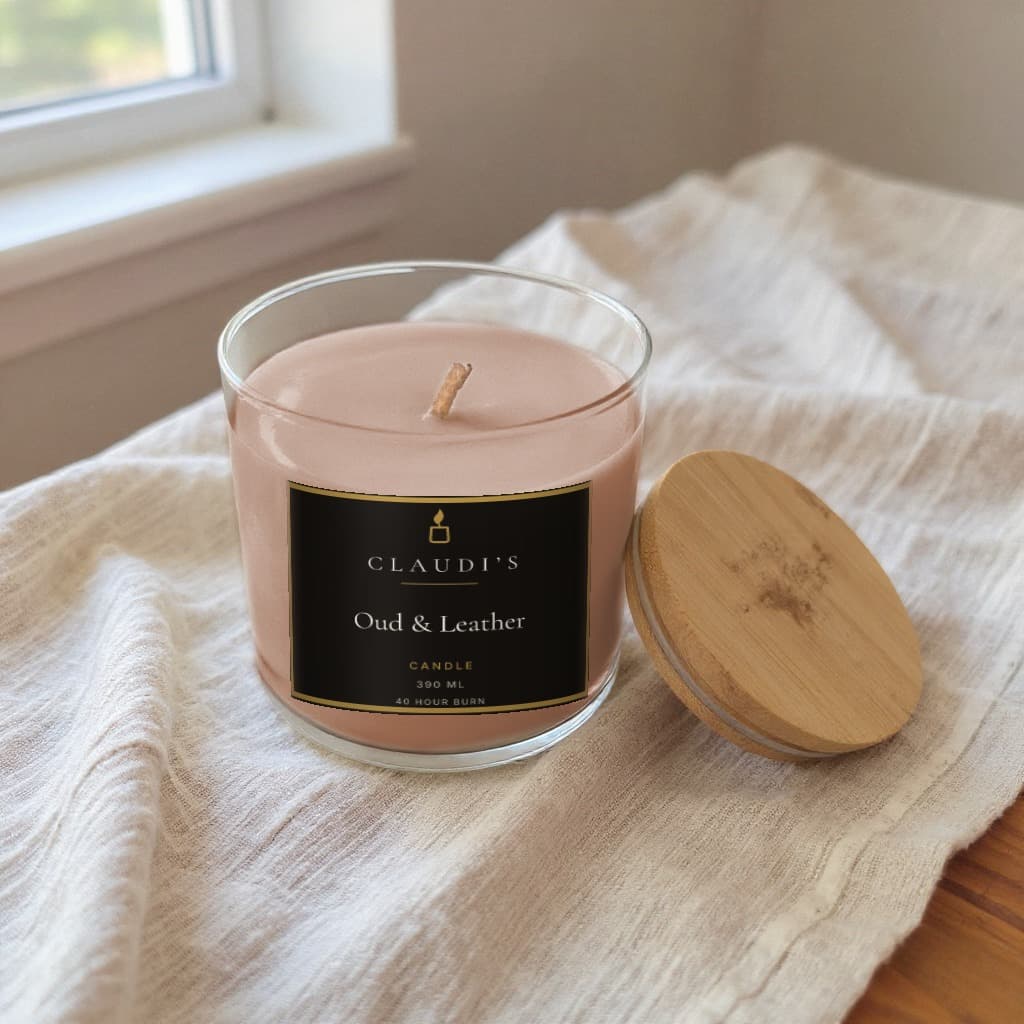
Our bamboo jar is engineered for exactly this scenario. The lid seals the fragrance between uses—critical for week-long celebrations where you light the candle at 6 p.m., let it cool, cap it, then relight it three days later. Without a lid, the scent weakens; the lid preserves intensity across multiple burn sessions. Over a 40–55 hour lifespan, you're getting 6–8 proper lighting sessions, each one as potent as the first. For a host planning a series of dinners or garden parties, that's the difference between a candle that fades by Thursday and one that reads fresh all week.
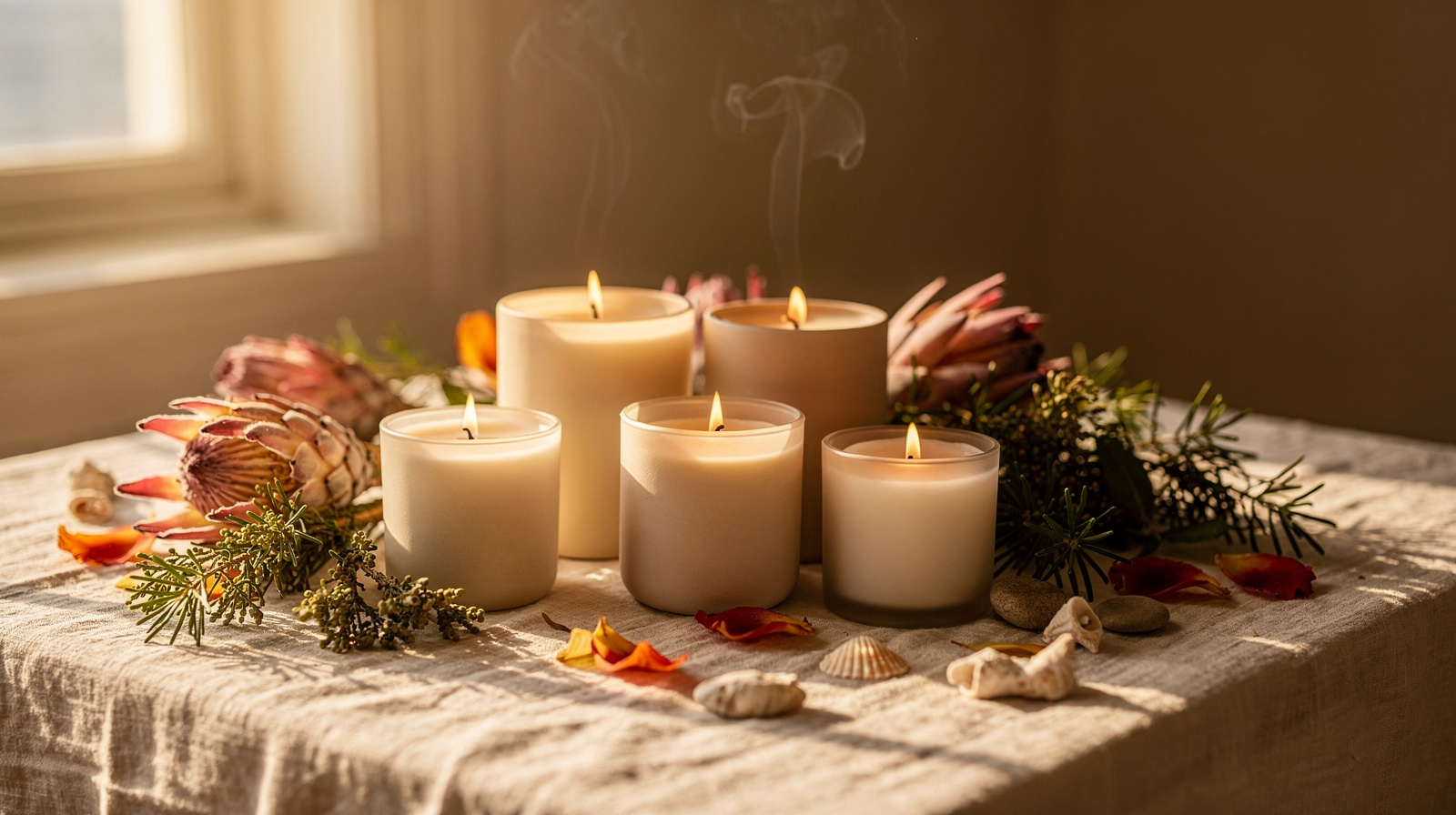
Tumbler candles, by contrast, are the workhorse. A 35–45 hour burn means you light it once, let it burn cleanly for 4–6 hours, and repeat. No ceremony. No lid management. They're ideal if your festive event is concentrated—one or two evenings—or if you prefer simplicity over ritual. The vessel stays behind as a reusable object; many people keep them as drinking glasses or votive holders after the wax burns down.
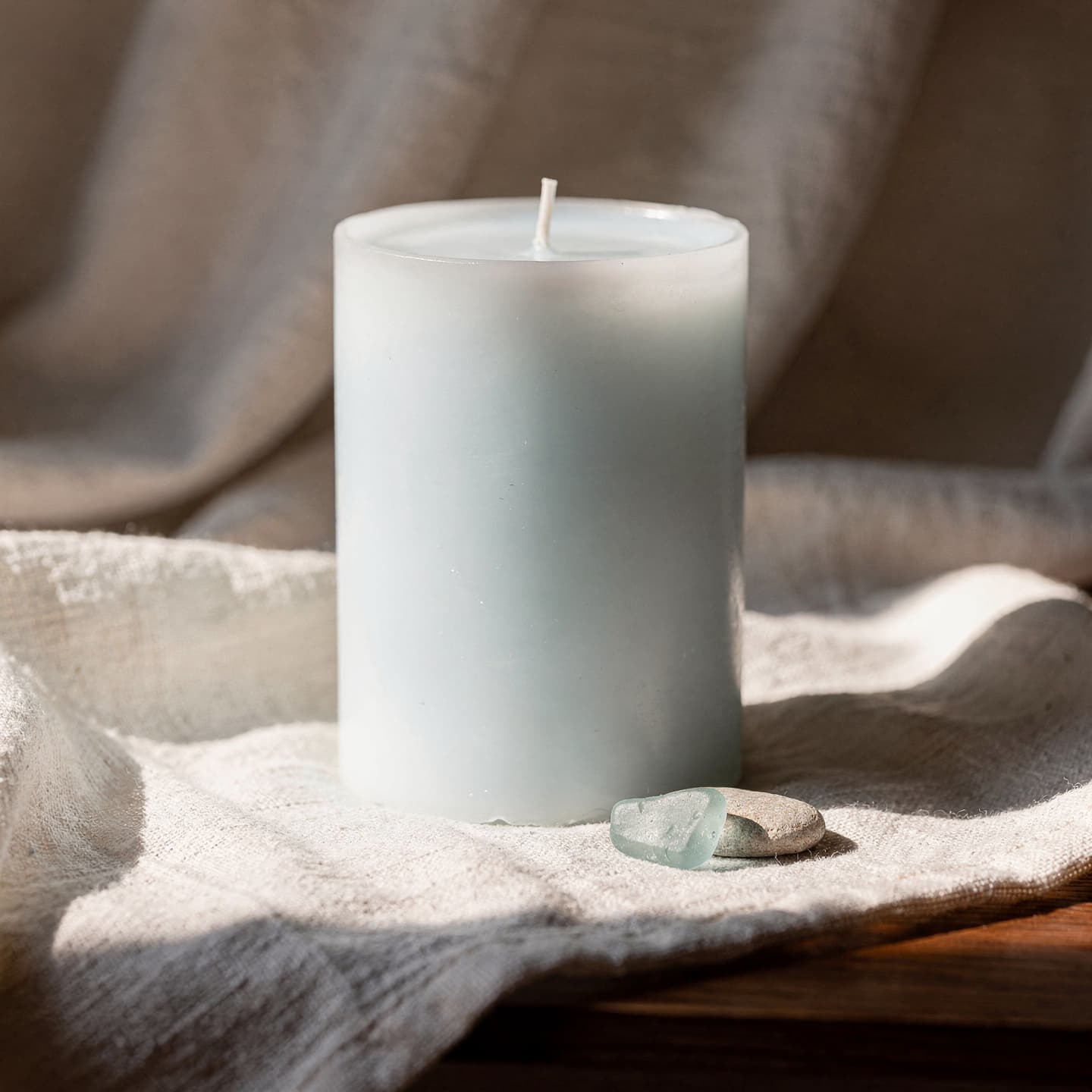
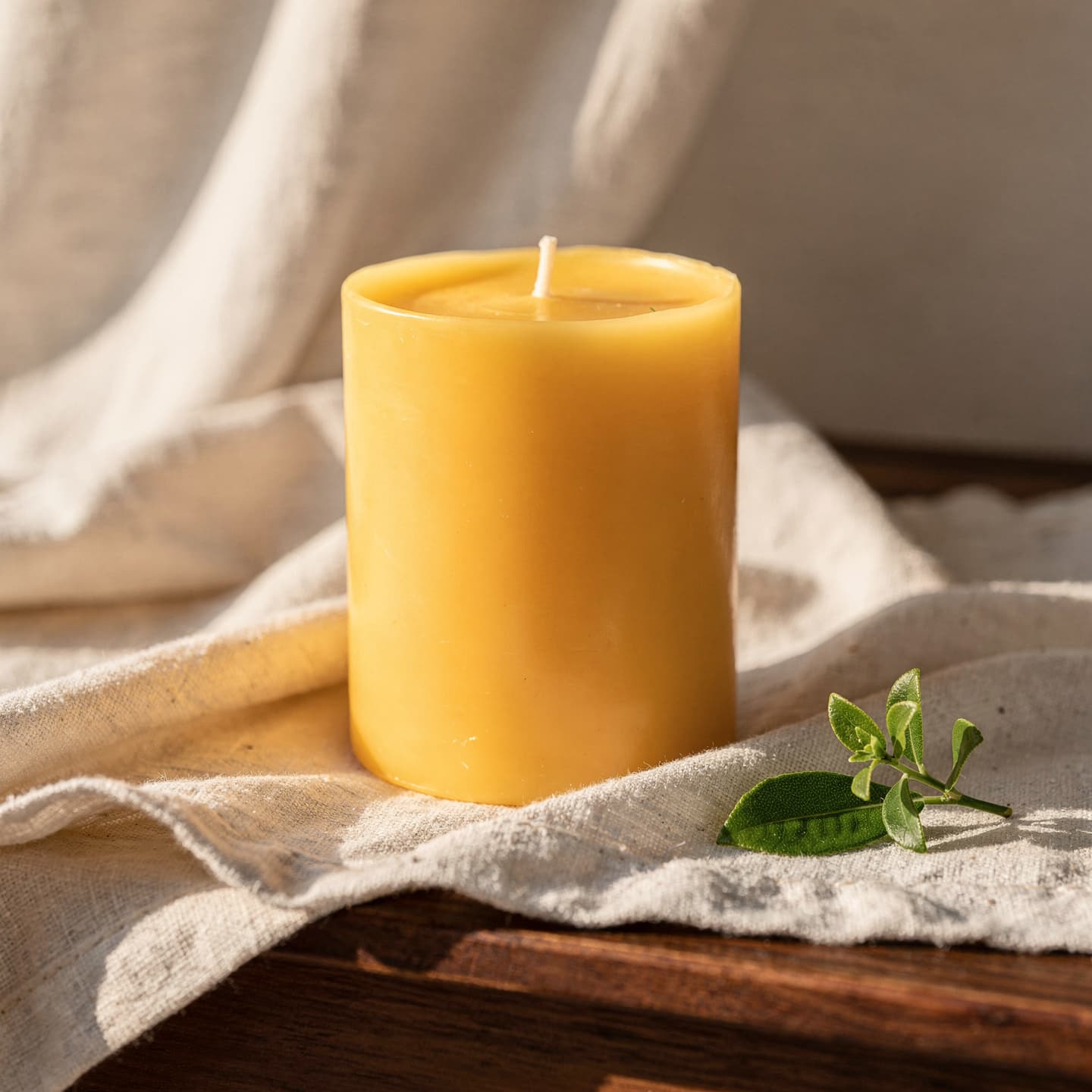
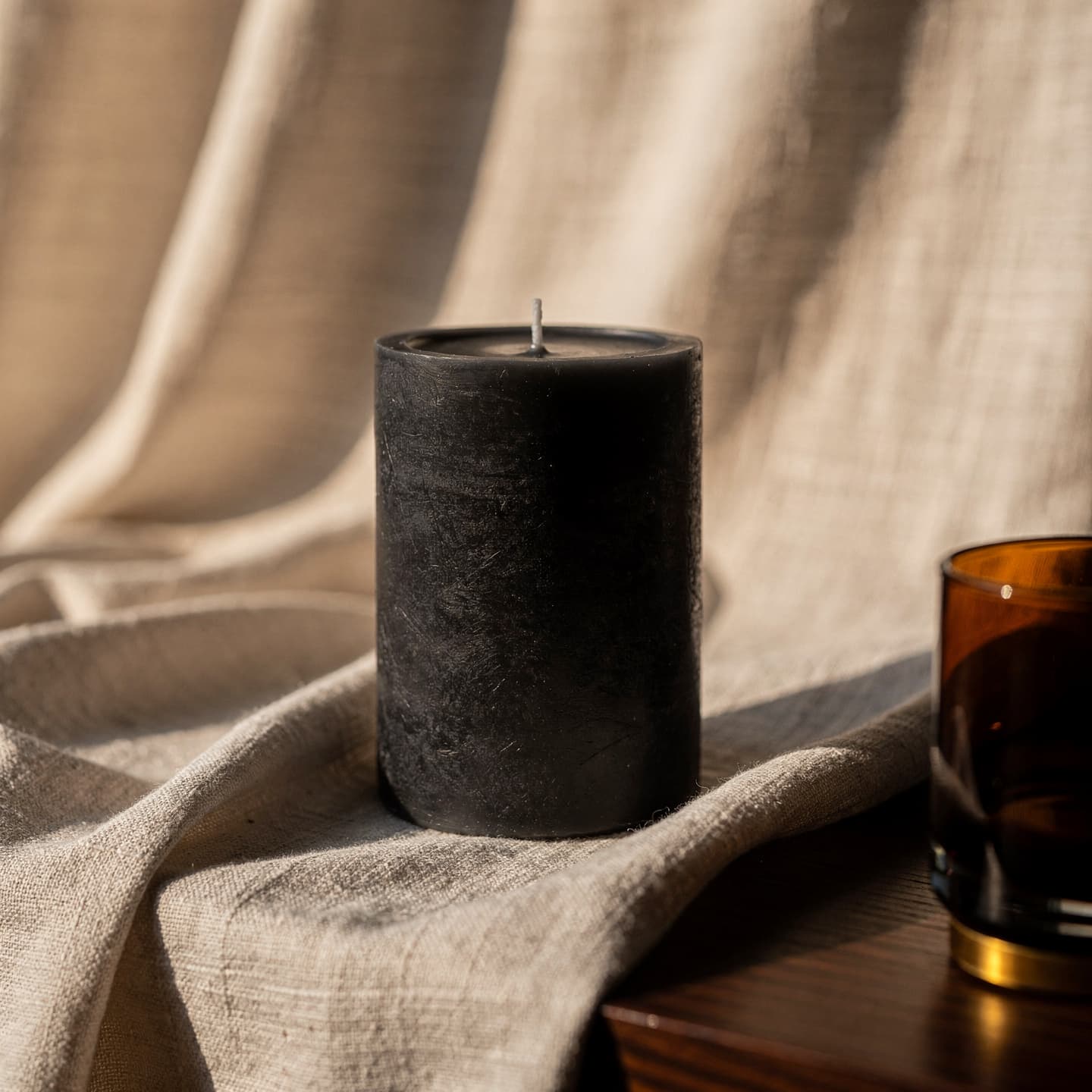
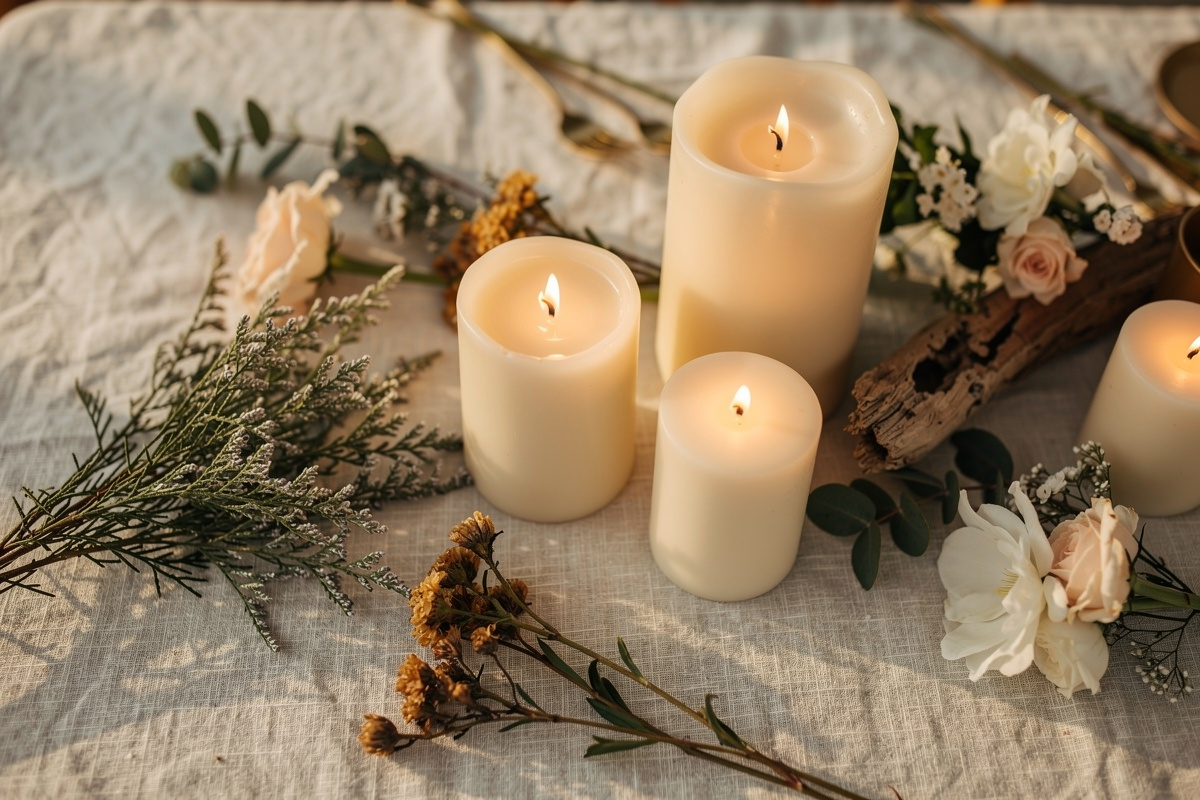
For truly ceremonial moments—a festive table centrepiece, a formal dinner focal point—pillar candles work differently. They're architectural. They don't require a vessel to be moved or managed; they sit stable and sculptural, unscented or lightly scented so they don't overwhelm a dining experience. They're about presence, not projection.
Choosing Your Scent: A Decision Framework
Start with your space. If you're entertaining indoors—a formal dining room, a lounge—you have flexibility: go warm (Manor collection works here), go fresh (Coastal), go social and spiced (Gather). Enclosed space holds fragrance; you can afford subtlety or boldness.
If you're outdoors—a garden party, a terrace, a braai in Mossel Bay—favour Coastal or Fynbos. These scents were built for open air and Garden Route weather. They won't feel lost in the wind.
Unsure? The scent quiz asks four questions—your mood, your space, your memory anchor, your gathering type—and returns a personalised recommendation. It's designed to cut through decision paralysis, especially when you're buying for an event rather than yourself.
For corporate entertaining or hotel-scale gatherings, the hospitality trade programme offers bulk pricing and custom fragrance profiles. If you're a lodge or restaurant in the Western Cape looking to distinguish your festive service, this is the route.
Frequently Asked Questions
Can I use the same festive candle indoors and outdoors? Not equally. A Coastal or Fynbos candle excels outdoors and works fine indoors, but a Manor or Gather candle (warmer, denser) will feel more present and rewarding indoors. If you're hosting both a garden pre-dinner and an indoor dessert course, consider two candles—one for each space.
How far in advance should I buy festive candles? Six to eight weeks before your event. This gives you time to test the scent in your space, ensure the burn time meets your needs, and reorder if you're hosting multiple gatherings. For custom labels (personalising a candle as a gift for guests), allow 10–12 days; visit custom labels to start your order.
What's the best burn time for a single evening celebration? A 4–6 hour burn (achievable with both tumblers and bamboo jars) is ideal. Light it one hour before guests arrive, let it burn steadily through dinner and conversation, snuff it out as the evening winds down. This maximises scent presence without waste.
Are festive candles from Claudi's different from what I'd find at a supermarket? Yes. Every candle poured in the Mossel Bay studio uses 100% natural wax, essential oils, and sustainable wicking. Mass-produced festive candles often rely on synthetic fragrance and paraffin, which don't hold scent as cleanly in warm climates. Ours are built for South African conditions—our studio is on the Garden Route, so we test in the actual humidity, salt air, and temperature swings you'll experience.
What Festive Actually Means, Here
Festive in South Africa isn't nostalgia for a December snow scene. It's gathering as the season turns green, entertaining outside without apology, choosing fragrances that complement your landscape rather than mask it. A candle lit in a Mossel Bay garden in October should smell like possibility—like the coast, like fynbos, like the place you live.
Choose a Coastal or Fynbos candle in a bamboo jar if you're celebrating across multiple days. Go tumbler if your gathering is concentrated and low-fuss. Test it in your space a week or two before the event. If you're buying for multiple guests, explore custom labels to personalise each one—a gift that's specific to your celebration, not generic.
Fragrance notes, September 2026 — Claudi's Studio, Mossel Bay.