Why Soy Candles Burn Longer Than You Expect — And What That Means for Your Home
Soy candles can burn 35–55 hours depending on vessel and wick. Here's what determines actual burn time, and how to choose one that lasts.
By Claudi·Poured in Mossel Bay, Western Cape
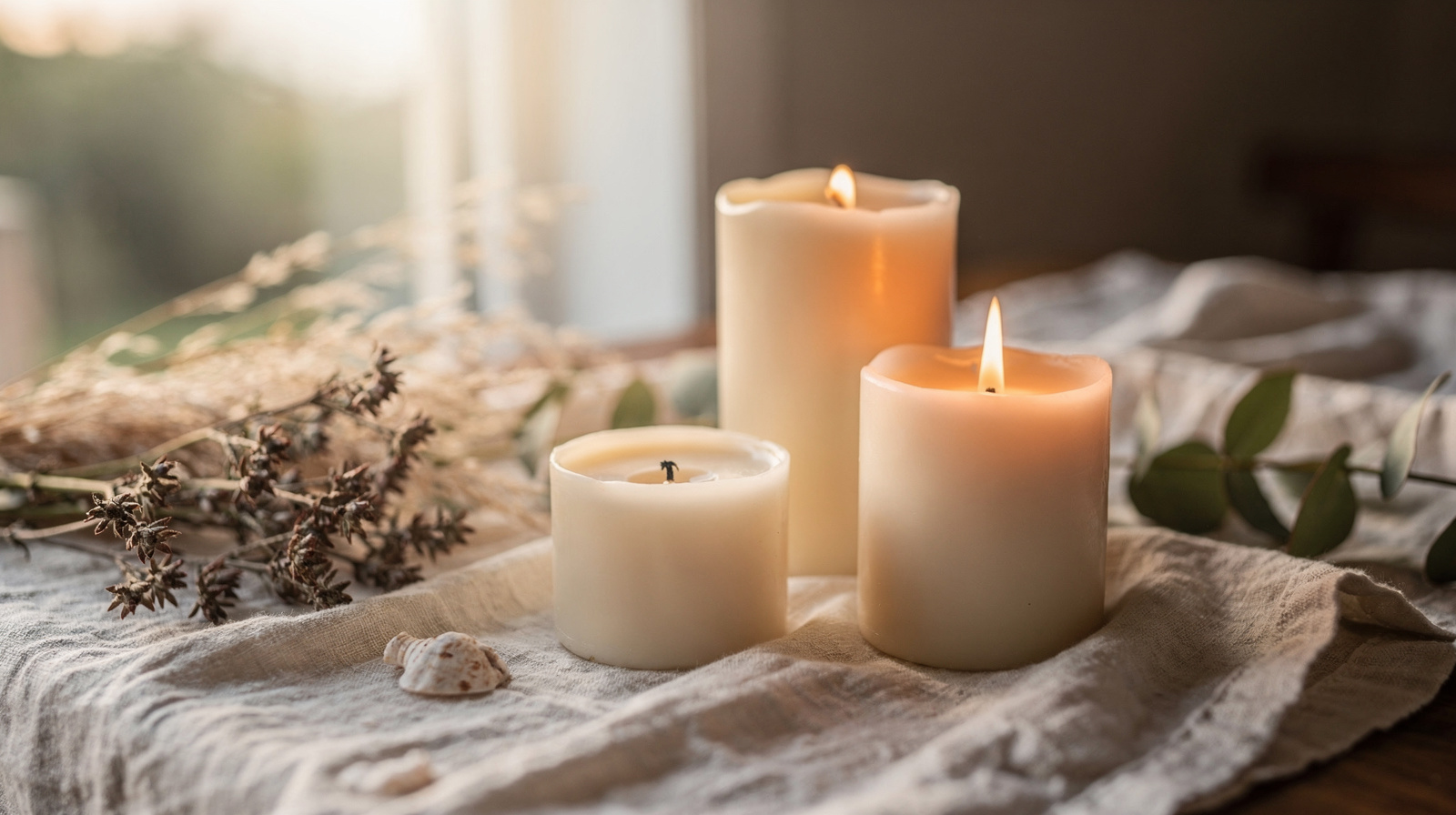
Most people buy a candle and hope it lasts. They light it once, watch the flame for ten minutes, and assume they know how long it will burn. Then they're surprised—either delighted when it outlasts their expectations, or disappointed when it's gone in a weekend. The truth is more precise than guesswork: soy candles burn longer than paraffin, but only if three conditions align: the wax quality, the wick size, and the vessel itself. Understanding this changes how you shop for candles, and why burn time varies so much between brands.
Key Takeaways
- Soy candles typically burn 35–55 hours depending on vessel size and wick gauge; a 35–45 hour tumbler burns roughly 1–2 hours per day over a month of regular use.
- Wider vessels and thinner wicks burn slower; narrow jars and thick wicks accelerate the melt pool and reduce longevity.
- A lidded bamboo jar preserves unburned scent between sessions, meaning effective fragrance life extends beyond raw burn hours.
The Science of Soy Burn Time
Soy wax burns slower than paraffin because of its molecular structure. Paraffin is a petroleum byproduct that melts at a lower temperature; soy, derived from hydrogenated soybean oil, has a higher melting point and denser composition. This density means the flame consumes less wax per hour. A soy candle in a standard tumbler—typically 7 cm wide and 8 cm tall—burns at roughly 4–5 grams per hour, translating to 35–45 hours of total burn time. A wider vessel (say, 9 cm diameter) with the same wax weight might stretch to 50+ hours because the larger surface area slows the melt pool's edge regression.
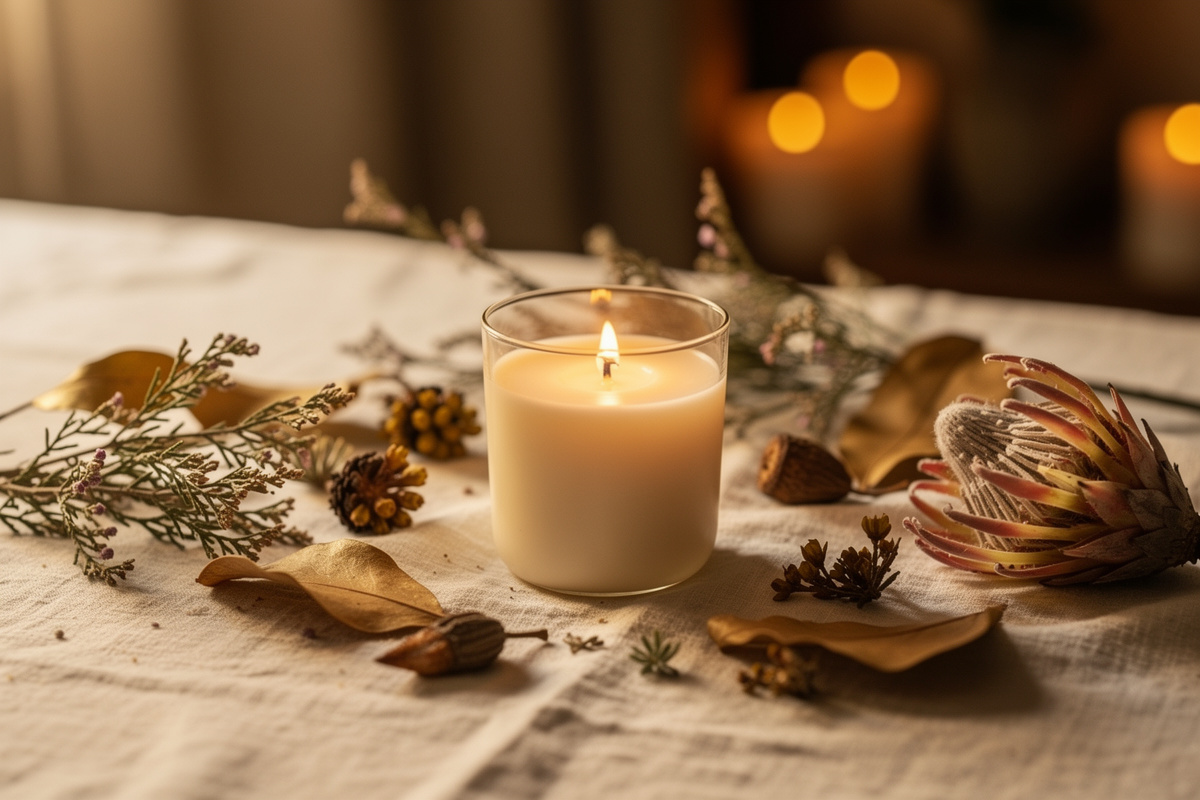
The wick matters equally. A thick wick (1.5 mm diameter, common in premium studio work) creates a larger flame and hotter melt pool, accelerating burn time. A thinner wick (1.2 mm) keeps the flame compact and the wax pool shallow, extending longevity. Most candles sold in South African boutique studios use 1.2–1.3 mm wicks to balance scent throw with duration. This is not a trade-off; it's intentional craft. A candle that burns too fast loses scent quality halfway through. One that burns too slowly fails to warm the fragrance oils enough to release them into the room.
Vessel Design and Real-World Longevity
The container is not neutral. A glass tumbler with straight sides holds heat differently than a tapered jar or a wide, shallow bowl. Poured in the studio, our tumbler candles sit in 7 cm vessels with a 1.2 mm wick, yielding 35–45 hours of burn. This figure assumes proper use: trimming the wick to 5 mm before each light, allowing the wax to pool fully (20–30 minutes on first burn), and burning in a draught-free space.
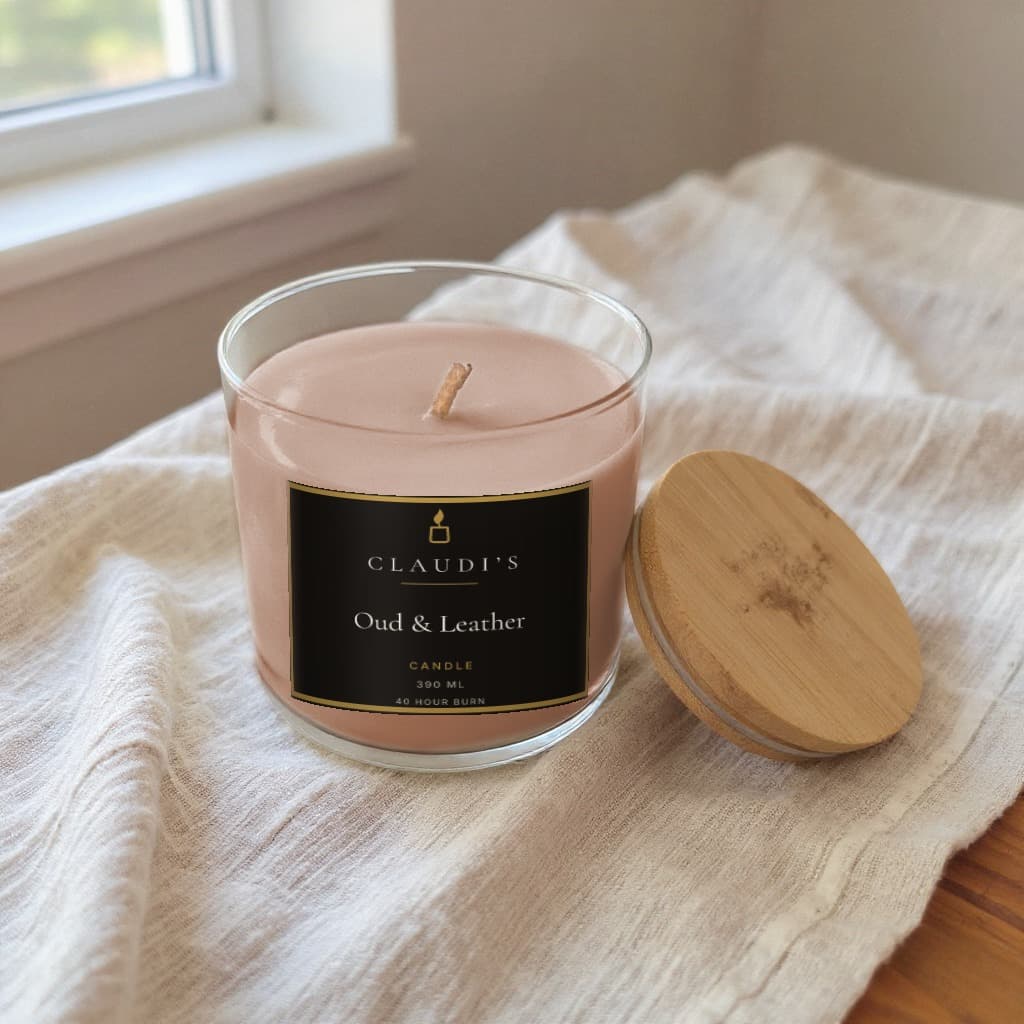
Our premium bamboo jar extends effective fragrance life beyond raw burn hours. The lid seals between sessions, preserving volatile top notes that would otherwise dissipate into the air. A 40–55 hour bamboo candle, when used with its lid, delivers consistent scent throw across all 50+ hours. Without the lid, the same candle loses olfactory presence after 30 hours as the top notes evaporate. This is why hospitality venues and gift-givers prefer lidded vessels: they protect the investment.
Burn time also depends on wax purity. Cheaper soy blends cut corners with additives or lower-grade hydrogenated oil, creating candles that burn faster and hotter. Studio-poured candles use 100% soy or high-ratio soy blends (90% soy, 10% natural additive for scent throw), which cost more but last longer and smell better. The difference is measurable: a budget soy candle might deliver 25–30 hours in the same vessel; a premium studio pour delivers 40–50.
How to Choose a Candle That Lasts as Long as You Need
Start by asking: how often will I burn this, and for how long per session? If you light a candle every evening for 3 hours, a 35–45 hour tumbler gives you 12–15 evenings of use—roughly two weeks of nightly ritual. If you burn it sporadically (weekends, or during work-from-home days), the same candle stretches to a month or more.
Next, consider the vessel's role after the candle finishes. A reusable tumbler becomes a tea light holder, a small plant pot, or a desk organizer—inherent value beyond fragrance. This matters when calculating true cost per hour of use. A premium tumbler candle at a higher price point often costs less per functional week than a cheaper candle you discard after burning.
Use our scent quiz to narrow down which fragrance family suits your space—Coastal, Fynbos, Manor, or Gather. Each burns at the same rate, but they create different moods. A high-throw Gather candle (spiced, social) fills a kitchen quickly; a subtle Coastal candle (fresh, maritime) suits a bedroom where you want presence without dominance. The wick and vessel remain constant; the scent experience varies. This matters because satisfaction isn't just about burn time—it's about whether you actually want to light the candle every day.
Frequently Asked Questions
Do soy candles really burn longer than other types? Yes. Soy wax burns at roughly 1–2 grams per hour; paraffin burns at 5–7 grams per hour in the same vessel. Studio-poured soy candles deliver 35–50+ hours depending on size and wick gauge. Paraffin candles in identical vessels typically yield 20–30 hours.
Can I make a candle burn longer by trimming the wick? Partially. Trimming the wick to 5 mm reduces flame size and slows the melt pool, extending burn time by 10–15%. However, too-short a wick creates a cool flame that doesn't warm the scent oils enough, reducing fragrance throw. The ideal balance—maintained by studio pours—is a wick that's trimmed but not starved.
Why does a lidded jar like our bamboo candle feel like it lasts longer? It does, in practical terms. The lid preserves volatile fragrance compounds between burns, so the scent intensity remains constant across all 40–55 hours. An uncovered candle loses top notes to the air; by the final burn, it smells noticeably fainter even though wax remains. A lid solves this.
How does Mossel Bay's climate affect candle burn time? Coastal humidity and temperature fluctuations (15–25°C seasonally) can slow burn slightly compared to dry inland areas. This is why studio-poured candles are tested locally: we adjust wick gauge to account for Garden Route conditions. A candle designed for Mossel Bay performs predictably here, but may burn faster in hotter, drier regions.
Close the Loop: Choose Deliberately
Burn time is real data, not marketing. When a candle claims 35–45 hours, that's measurable—it's the ratio of wax weight to wick gauge, tested and repeatable. What matters is matching that duration to your actual use. Light a candle three times a week for two hours? A 40-hour tumbler gives you two months of ritual. Burn nightly? The same candle lasts three weeks. Neither outcome is wrong; they're just different.
The finest candles in Mossel Bay's studio are poured to balance burn time with scent fidelity. A 45-hour tumbler isn't engineered for longevity alone—it's built so the fragrance remains true across all 45 hours. That's the craft. Start by understanding what you actually need, then choose a vessel and scent family that match. Browse our tumblers and bamboo jars to find your rhythm.
*Fragrance notes, September 2026 —