Why Hand-Poured Candles Take Longer—and Why That Matters
Hand-poured candles demand precision timing and real craft. Here's what happens in the Mossel Bay studio between wax and finished vessel.
By Claudi·Poured in Mossel Bay, Western Cape
Most people assume a hand-poured candle is simply melted wax poured into a container. The process is quieter, slower, and more deliberate than that. In the Mossel Bay studio, a single candle moves through five distinct stages—each one dependent on temperature, timing, and the specific vessel it's destined for. The difference between a hand-poured candle that lasts 40 hours and one that lasts 35 is often measured in degrees Celsius and minutes of cooling time. This precision isn't romantic theatricality. It's the foundation of a candle that performs.
Key Takeaways
- Hand-poured candles require precise wax temperature control (typically 75–85°C for soy blends) and staged cooling to prevent air pockets and uneven burn—a process that spans 24–48 hours per batch.
- The choice of vessel directly affects pouring technique: a bamboo jar with a lid demands a slower pour to prevent thermal shock; a tumbler requires a different cooling schedule entirely.
- Understanding the hand-pour process helps you recognize quality markers—and choose candles built to last, not just look good on a shelf.
The Hidden Stages Between Wax and Light
When wax is heated in bulk, it's not uniform. Some molecules melt faster than others. A hand-poured candle process begins not with pouring, but with temperature management. The wax is brought to a specific heat—different for soy, paraffin, or blended compositions—and held there while fragrance oil and pigment are introduced. This is where mistakes compound. Pour too hot, and the fragrance volatilizes before the candle even sets. Pour too cool, and the wax won't bond properly to the vessel, creating a hollow burn down the center.
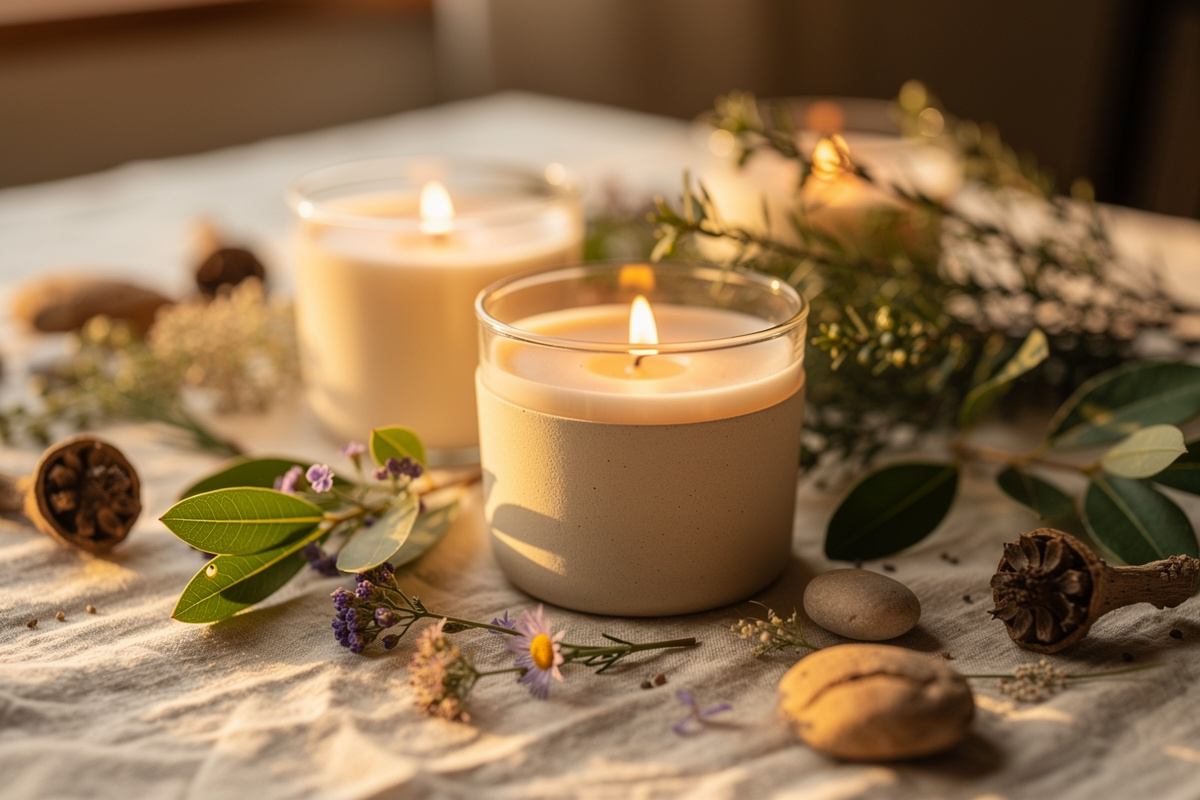
Once the wax reaches optimal temperature, it moves to the pouring station. In the Mossel Bay studio, this happens batch by batch—not assembly-line speed, but deliberate flow. Each vessel is pre-warmed (or not, depending on its material), and the wax is poured in a specific sequence: a base layer, then the main body, then a top layer that seals the surface. The wick is set during the second stage, held centered by a wick holder. This three-stage pour is what separates hand-poured from mass-produced.
Then comes cooling. This is where patience becomes craft. A tumbler candle cools differently from a pillar, which cools differently from a lidded bamboo jar. The studio monitors ambient temperature, humidity, and the thickness of the cooling wax. Fast cooling creates visible sink-holes on the surface. Slow cooling can take 36–48 hours. The chemical process happening inside the cooling wax—solidification and contraction—must happen evenly, or the burn will be uneven, and the scent throw will be weak.
Vessel Matters: Why the Container Shapes the Pour
Not all vessels behave the same way. A hand-poured candle in a tumbler has a different thermal profile than one in a pillar or a premium bamboo jar. The vessel material—glass thickness, ceramic density, or bamboo composition—affects how quickly heat dissipates. This is why candle makers who take craft seriously don't just pour the same wax into different containers and hope.
In the studio, tumbler candles (designed for 35–45 hour burns) are poured at a slightly lower temperature than tumblers with heavier glass. The bamboo jar, with its double wall and lid, requires a slower initial pour—the lid traps heat, and if the wax cools too quickly, it can separate from the glass insert. Pillar candles, poured without a vessel around them, cool in open air and demand a completely different technique: a slightly cooler initial pour and a longer waiting period before the top surface firms enough to stand unsupported.
This is why a hand-poured candle isn't just a product—it's a conversation between wax chemistry and the object that will hold it. Each vessel in the studio's collection (Coastal, Fynbos, Manor) is paired with a specific pouring protocol. The scent family matters too. A resinous Fynbos blend cools slightly faster than a smooth Manor fragrance because of the oil composition.
Quality Markers: How to Recognize Real Hand-Pour Craft
A hand-poured candle should show certain visible qualities. The surface should be smooth or deliberately textured, never cratered or bubbled. The wick should be centered, not leaning. When you light it, the wax should melt in a complete ring from edge to center—not tunnel down the middle, and not pool only at the edges.
But here's what separates discovery from decision: understanding the process helps you choose candles built to actually perform. If you're selecting a candle for a hotel suite or a wedding ceremony, knowing that your chosen candle has been through proper cooling and testing (not just poured and sold within hours) means you're buying something reliable.
This is also why custom orders take time. If you're using the custom label builder to personalize a candle for a gift or event, the team doesn't just add your design and ship. They honor the same pouring timeline because the label doesn't change the wax science—it just makes the candle more meaningful to the recipient.
A Practical Framework: What to Ask Before You Buy
When evaluating hand-poured candles, ask these questions:
What's the stated burn time, and does it match the vessel size? A 40-hour burn in a standard tumbler is realistic. A 60-hour burn in the same size vessel signals either a filler ingredient or inflated claims.
What's the cooling time between pour and sale? Legitimate hand-pour makers won't sell a candle the day it's poured. If a studio claims 24-hour turnaround from pour to dispatch, the candle hasn't properly cooled.
Can you see the wick? It should be centered and visible before lighting. If you can't assess wick placement, it wasn't a careful pour.
Is there a scent quiz or matching tool? Studios that help you find the right scent family—not just the prettiest vessel—are thinking about your whole experience. Try the scent quiz if you're unsure which collection suits your space.
Frequently Asked Questions
How long does the hand-pour process actually take from start to finish? From melting the wax to final cooling and quality check, a single batch takes 48–72 hours. That includes heating, fragrance mixing, pouring, initial cooling (12–24 hours), and final inspection. Rushed timelines compromise the result.
Why does hand-poured cost more than mass-produced? Hand-poured requires labor at every stage, smaller batch sizes (which means less efficiency scaling), and careful temperature control. A machine can pour 500 candles an hour. A studio pours maybe 40–60 per day, with attention to each one. The cost reflects the time and precision.
Can you pour hand-poured candles in Mossel Bay's climate? Yes—and it's actually ideal. The Garden Route's consistent temperature (not too hot, not too cold) makes cooling predictable. Extreme heat or cold climates require extra equipment or adjustments. The studio's location on the coast gives a natural advantage.
What if I want to order custom candles for a wedding or corporate event? Reach out through the weddings programme or corporate gifting page. Lead times depend on quantity and customization (labels, scent, vessel choice), but typically 3–4 weeks for a standard order. The hand-pour timeline can't be rushed, but it can be planned.
The hand-poured candle process is visible evidence of care. Each candle in the Mossel Bay studio has been heated, poured, cooled, and tested by someone who knows that a vessel matters, that timing matters, and that a scent thrown into careless wax is just wasted oil. If you're ready to move beyond discovery and find a candle built for your space, browse the Coastal collection for fresh, maritime notes