What Makes Fynbos the Most Distinctive Scent in South Africa
Fynbos carries the botanical signature of the Cape. Learn why this scent family translates to unexpected interiors—and how to choose one.
By Claudi·Poured in Mossel Bay, Western Cape
The first time you smell true fynbos, you're not smelling a single flower. You're smelling the result of 300 million years of evolutionary pressure on a single strip of coastline. The Cape Floral Region, which sits within the Garden Route and spreads across the Western Cape, produces plants found nowhere else on Earth. When a fragrance claims to carry fynbos, it's making a specific botanical claim—not a generic "herbal" or "green" one. Understanding what that means changes how you read a scent label, and how you choose a candle for your home.
Key Takeaways
- Fynbos is not a single plant; it's a fire-adapted plant community containing over 9,600 species, of which 20% exist nowhere else on Earth
- A fynbos scent typically layers resinous notes (protea, leucadendron oils) with herbaceous and sometimes smoky undertones—the olfactory equivalent of walking through burnt scrubland in spring
- Fynbos fragrances work best in spaces where you want a sense of place rather than a mood; they're architectural, not emotional
The Botanical Logic Behind Fynbos Scent
Fynbos means "fine bush" in Afrikaans, but the term describes something far more complex than shrubby vegetation. The Cape's fynbos ecosystem evolved under intense fire pressure—lightning strikes, natural burns—which shaped plants to survive and even thrive after burning. This means many fynbos botanicals carry resinous, slightly smoky, or almost peppery notes that don't read as traditionally "floral" to the untrained nose.
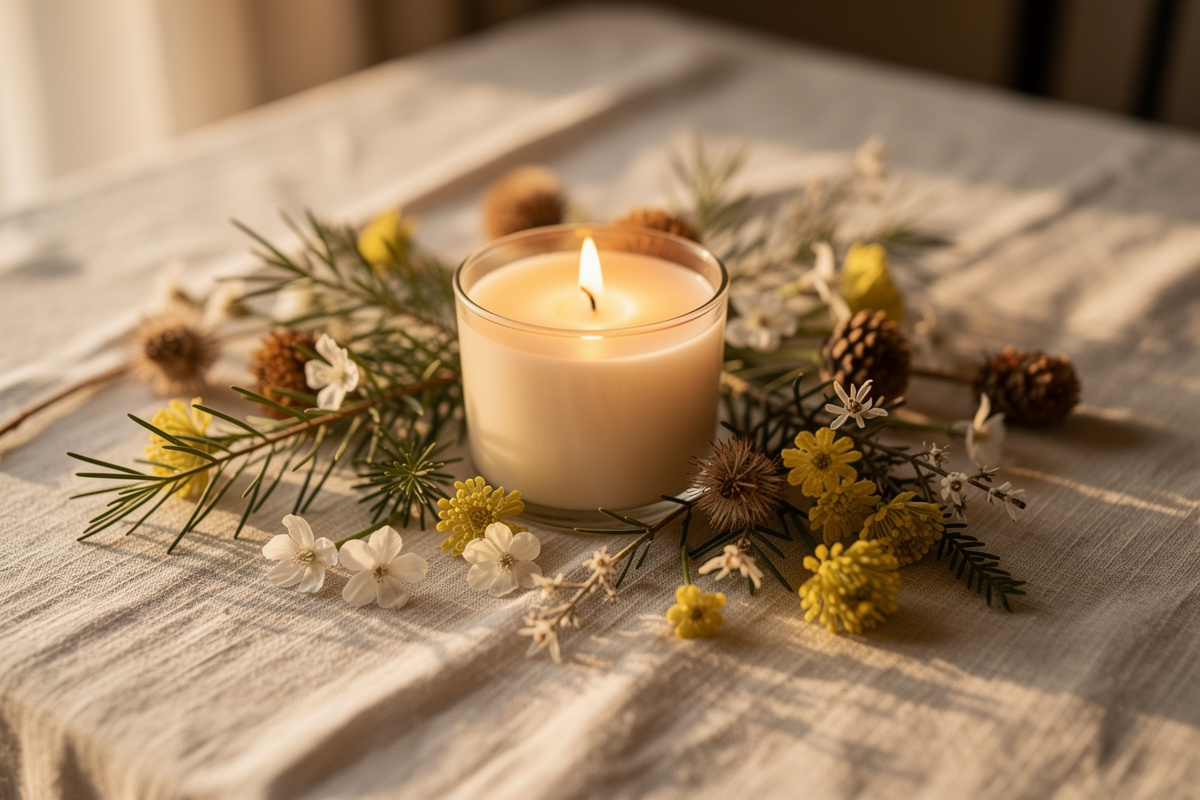
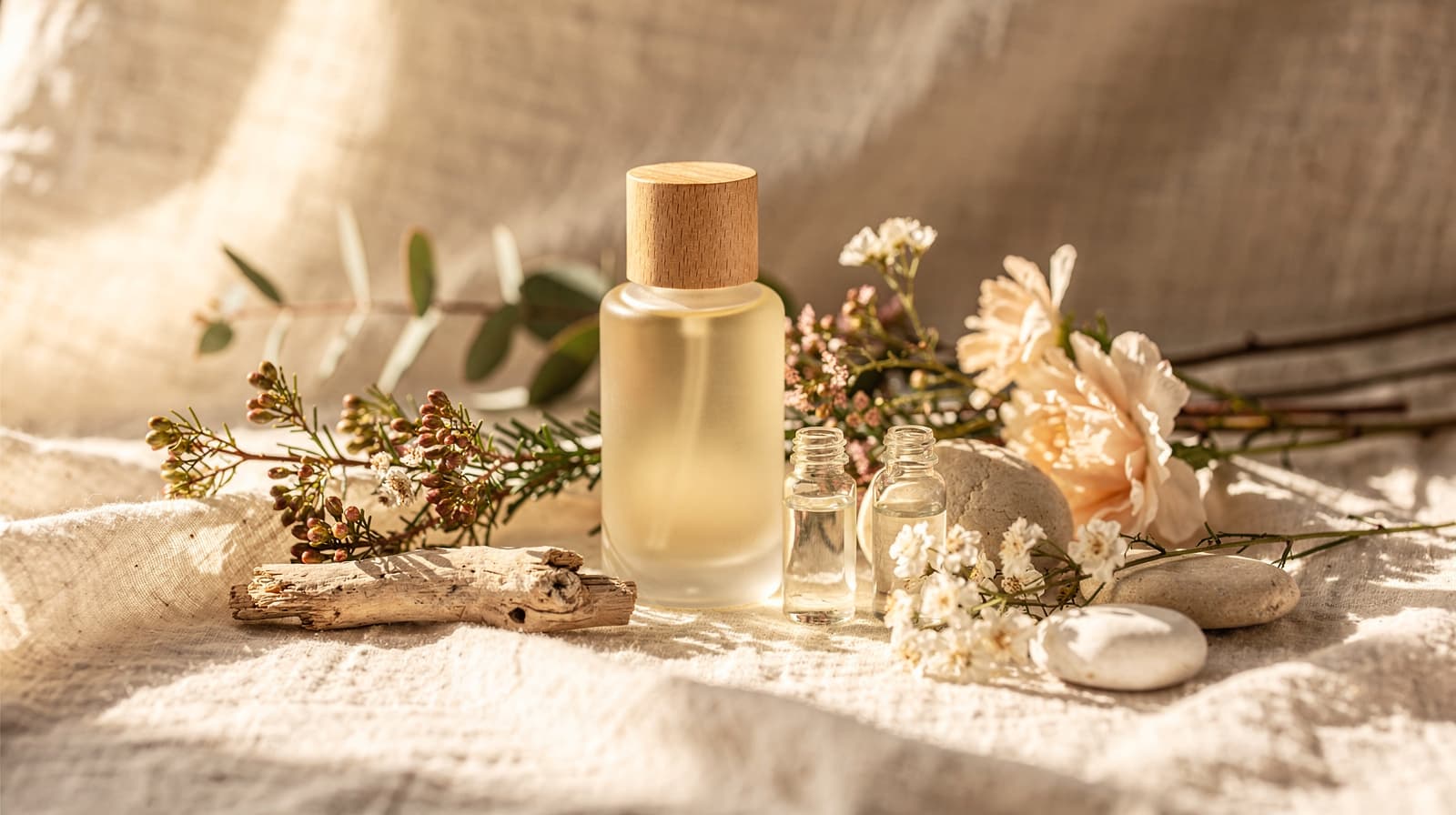
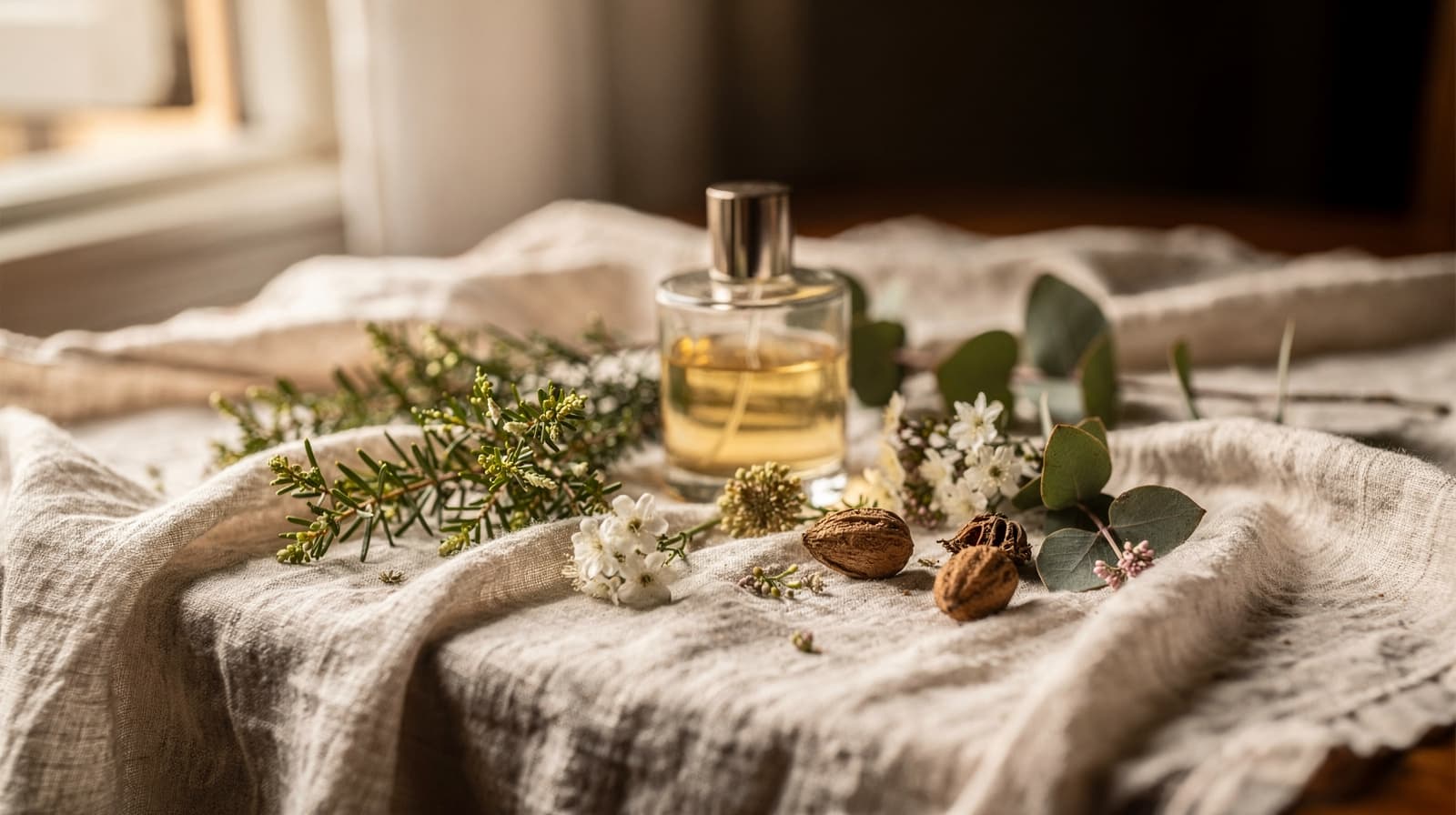
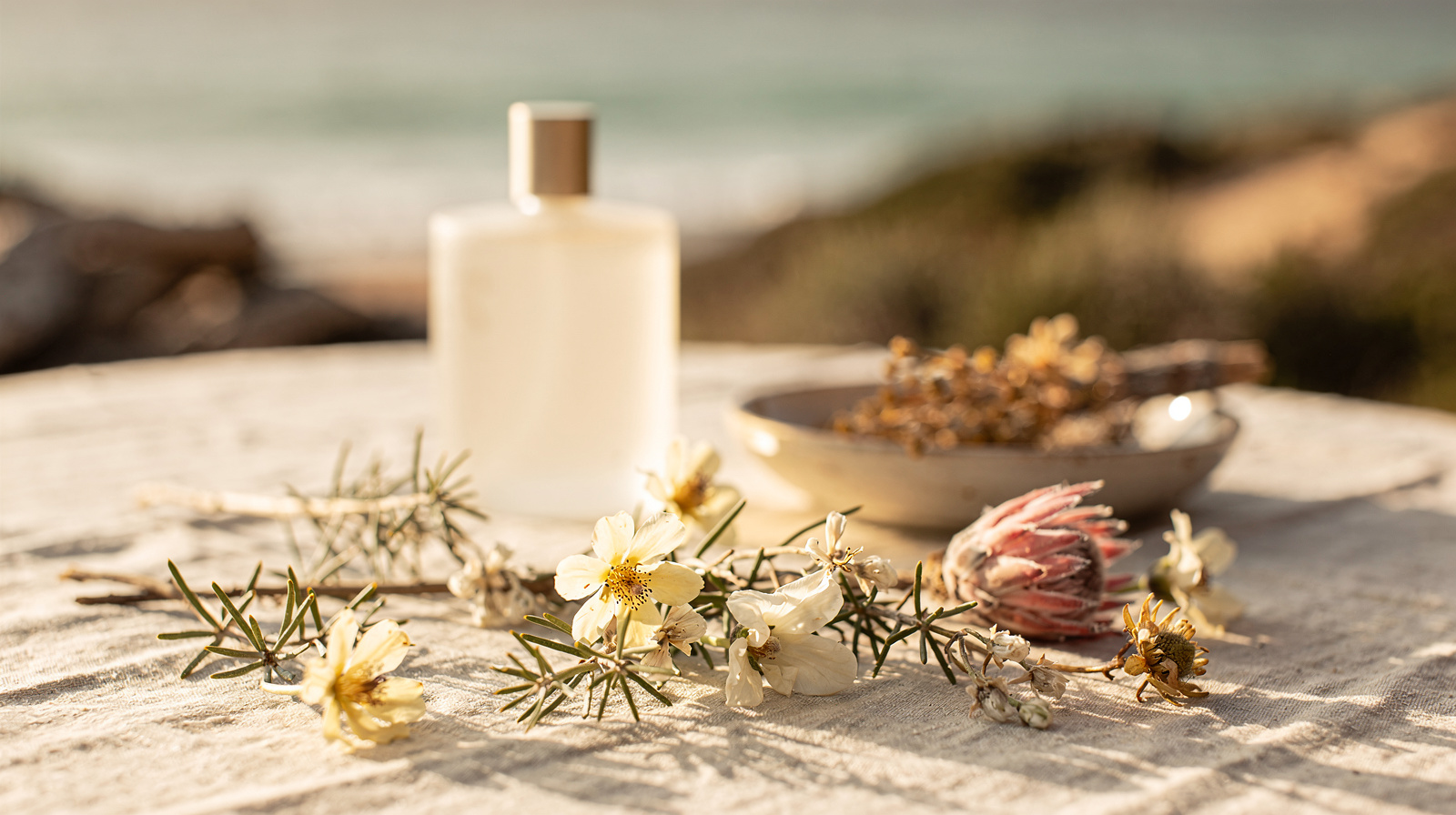
When fragrance makers work with fynbos botanicals—protea, erica, leucadendron, diosma, and wild rosemary—they're capturing the chemical signatures of survival. A single protea flower contains volatile oils that smell faintly woody and slightly astringent, nothing like a rose. The combined effect, when layered in a candle or diffuser, smells like the Garden Route itself: herbaceous, resinous, with an almost mineral undertone. This is why fynbos scent in South Africa reads as a sense of place rather than a fragrance trend. It's literally the smell of home if you live within sight of Table Mountain or the Mossel Bay coastline. For those further afield, it's an invitation to a landscape most people have never walked through—and that's its power.
How Claudi's Interprets Fynbos in the Studio
The Fynbos collection from the Mossel Bay studio approaches this scent family with the precision it deserves. Rather than relying on a single botanical or a synthetic "fynbos" fragrance note, each candle in the collection layers actual plant extracts—diosma oil, protea absolute, wild rosemary—in compositions that respect how these plants smell in the landscape, not how marketing wants them to smell in a bottle.
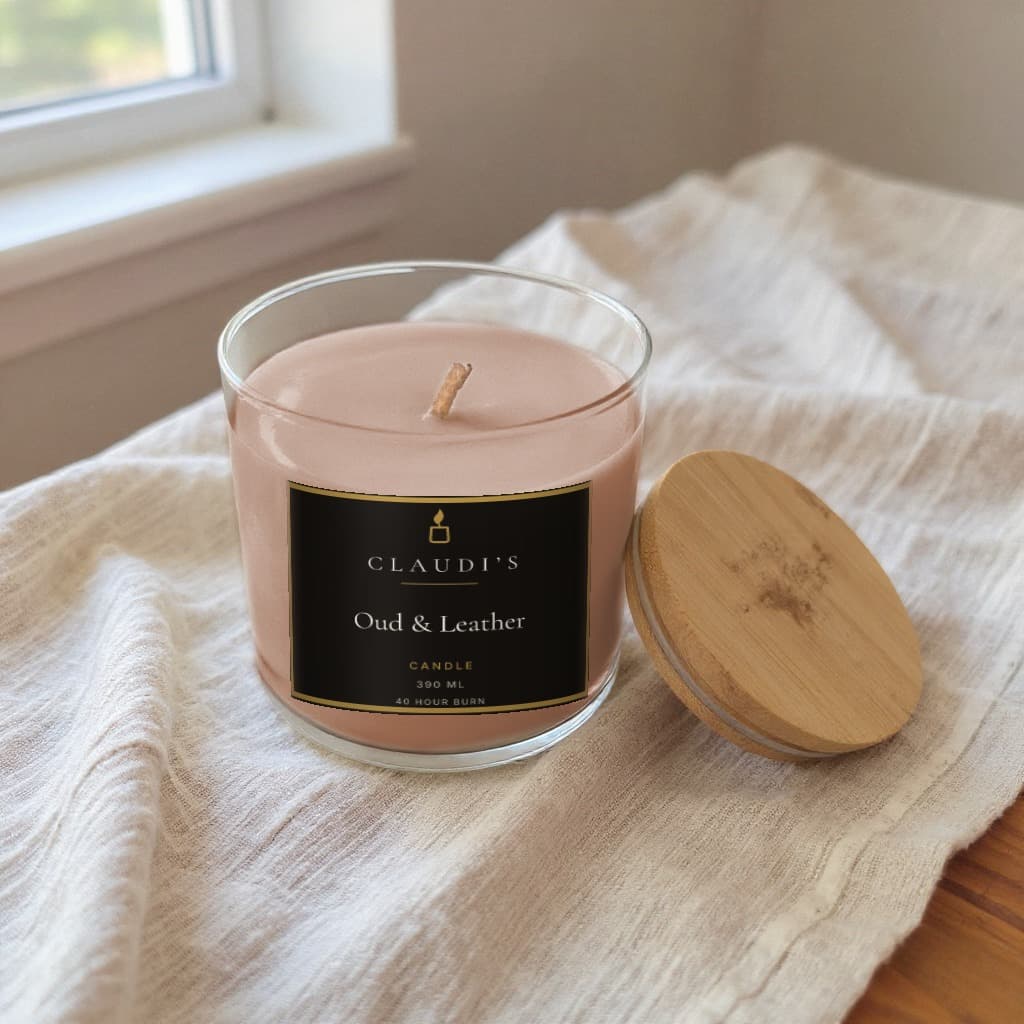
A 35–45 hour tumbler candle poured in the studio carries enough fragrance load to translate these subtle, resinous notes across a room without overwhelming it. The vessel itself becomes a design object once burned—a functional container that stays on a shelf or desk. For hospitality settings—hotels, lodges, spas across the Garden Route—the premium Bamboo jar offers a lidded option that preserves the scent between burns, extending the life of a 40–55 hour candle and protecting the guest experience across multiple seatings. The lid isn't decorative; it's a craft decision. Fynbos fragrances are volatile. A closed lid means the scent stays where you left it.
Choosing a Fynbos Scent for Your Space
Fynbos works in interiors that want presence without noise. It's not a background scent. If you light a fynbos candle in a room, the space shifts. The air develops a botanical charge that feels intentional, almost architectural. This means your choice should be deliberate.
First, consider the existing materials in your space. Fynbos pairs exceptionally well with natural wood, stone, and linen—materials that already carry earthy undertones. A fynbos candle in a room with synthetic finishes or competing scents (air fresheners, cleaning products) will feel at odds. Second, think about what you want from the scent. Are you trying to anchor a memory of the Cape? Or are you using scent as a design layer in an interior scheme? Both are valid. A traveler who visited Mossel Bay might reach for our Fynbos collection to resurrect that place in their home. A designer might specify fynbos candles in a luxury hotel lobby to create a coherent sensory identity.
If you're uncertain which fynbos scent aligns with your space or taste, the scent quiz asks practical questions about the light in your room, the materials you live with, and the feeling you want—then suggests a specific collection and, often, a specific candle. For gifting, the custom label builder lets you personalize a candle with a name, date, or location, turning a fynbos candle into a more specific gesture than a generic purchase.
Frequently Asked Questions
Is fynbos scent the same as "herbal" or "green" fragrance?
No. Herbal and green fragrances often use synthetic aromachemicals or common botanicals like lavender or rosemary. Fynbos is a regional scent family rooted in the Cape's specific plant community. A true fynbos scent carries the resinous, slightly smoky character of plants that evolved under fire—diosma, erica, protea. It reads as herbaceous, yes, but with a mineral, almost austere quality that generic green fragrances don't have.
How long does a fynbos candle burn, and does the scent fade over time?
A tumbler candle poured in the studio typically burns 35–45 hours with consistent scent throw. A Bamboo jar extends to 40–55 hours. The scent does evolve slightly as the candle burns—the initial resinous top notes soften, and deeper woody and herbal notes become more prominent—but this is by design, not fade. Using the lid between burns (in the Bamboo option) helps preserve the initial scent profile for longer.
Can I find fynbos scents outside South Africa, or is this a regional thing?
Fynbos as a scent identity is strongest in South Africa because the botanicals are native here. You can source fynbos fragrances internationally, but authenticity matters. Candles poured in the Mossel Bay studio have direct access to Cape botanicals and to the landscape itself—the reference point for accuracy. Fragrance houses outside the region work from description and imported extracts, which is perfectly valid, but it's a different starting point.
What's the difference between a fynbos candle and a coastal candle?
Fynbos is botanical and resinous—it smells like the interior landscape, the scrubland and hillsides of the Cape. Coastal is fresher and more maritime—salt air, seaweed, driftwood, citrus. If you live near the ocean and want to amplify that environment, Coastal works. If you're drawn to the botanical landscape or the interior of the Garden Route, Fynbos is the choice.
The Sense of Place That Fynbos Carries
Fynbos scent isn't aspirational marketing. It's a genuine translation of a specific place into fragrance form. The Cape Floral Region is one of the world's rarest ecosystems, and the plants that grow here carry olfactory signatures that don't exist elsewhere. When you light a fynbos candle poured in the Mossel Bay studio, you're working with extracts of that actual biodiversity—the resinous oils of protea, the herbaceous punch of diosma, the mineral undertone of wild rosemary. This is what distinguishes a fynbos scent from a generic her